

This joint resolution proposes a constitutional amendment prohibiting total outlays for a fiscal year from exceeding total receipts for that fiscal year unless Congress authorizes the excess by a three-fifths roll call vote of each chamber. The prohibition excludes outlays for repayment of debt principal and receipts derived from borrowing. The amendment requires roll call votes of (1) three-fifths of each chamber of Congress to increase the public debt limit, and (2) a majority of each chamber for legislation increasing revenue. It also requires the President to submit a balanced budget to Congress annually. Congress is authorized to waive these requirements when a declaration of war is in effect or if the United States is engaged in a military conflict which causes an imminent and serious military threat to national security.
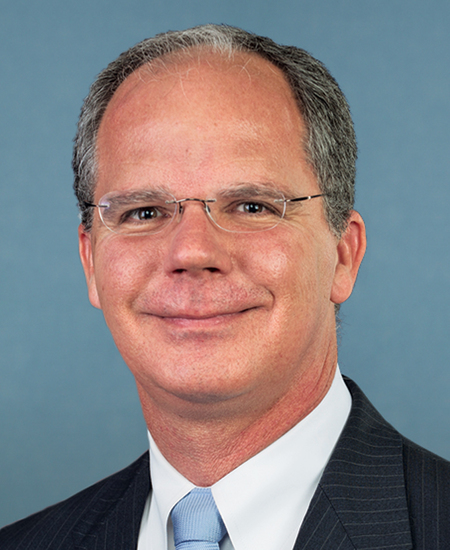
Rep. Brett Guthrie
Sponsored bills
This joint resolution proposes an amendment to the Constitution to require that the Supreme Court consist of nine Justices.
Hearing Protection Act This bill removes silencers from the definition of firearms for purposes of the National Firearms Act. It also treats persons acquiring or possessing a firearm silencer as meeting any registration and licensing requirements of such Act. The Department of Justice must destroy certain records relating to the registration, transfer, or making of a silencer. The bill also revises the definitions of firearm silencer and firearm muffler under the federal criminal code and includes such items in the 10% excise tax category.
Concealed Carry Reciprocity Act This bill establishes a federal statutory framework to regulate the carry or possession of concealed firearms across state lines. Specifically, an individual who is eligible to carry a concealed firearm in one state may carry or possess a concealed handgun (other than a machine gun or destructive device) in another state that allows its residents to carry concealed firearms. It sets forth requirements for the lawful concealed carry across state lines. The bill preempts most state and local laws related to concealed carry and establishes a private right of action for a person adversely affected by interference with a concealed-carry right established by this bill.
This concurrent resolution expresses the sense of Congress that school administrators should safely reopen schools for in-person instruction as soon as possible.
Keystone XL Pipeline Construction and Jobs Preservation Act This bill authorizes the TransCanada Keystone Pipeline to construct, connect, operate, and maintain the pipeline facilities in Phillips County, Montana, for the import of oil from Canada to the United States.
National Right-to-Work Act This bill repeals those provisions of the National Labor Relations Act and the Railway Labor Act that permit employers to make an agreement with a labor union to require employees to join such union as a condition of employment. Currently, at least 27 states have enacted laws prohibiting employers from compelling employees to become members of a union as a condition of employment.
This resolution honors the life and legacy of Rush Limbaugh and commends him for his devotion to the United States.
Creating Hope and Opportunity through Increased Choice in Education Act or the CHOICE Act This bill directs the Department of Education to make grants to parents of eligible students for certain education-related expenses. Eligible student refers to a student who (1) is served by a local educational agency that will not provide in-person instruction in a manner consistent with the 2019-2020 school year, and (2) is from a household with a household income that is less than 200% of the reduced-price lunch rate income. Grant funds may be used for tuition and fees for private elementary or secondary schools, private tutoring, home school expenses, or educational materials.
Timely Replacement Under Secure and Trusted for Early and Dependable Broadband Networks Act or the TRUSTED Broadband Networks Act This bill excludes from specified environmental and historic preservation reviews a project to permanently remove and replace communications equipment or services that the Federal Communications Commission has determined pose a threat to national security.