

Living Donor Protection Act of 2021 This bill prohibits certain insurance carriers from discriminating against, and provides other protections for, living organ donors. Specifically, carriers may not deny, cancel, or otherwise impose conditions on policies for life insurance, disability insurance, or long-term care insurance based on an individual's status as a living organ donor. The bill also expressly specifies that recovery from organ-donation surgery constitutes a serious health condition that entitles eligible employees to job-protected medical leave. In addition, the Department of Health and Human Services must update educational materials on live organ donation to include information about the benefits of live organ donation and about access to insurance for living organ donors.
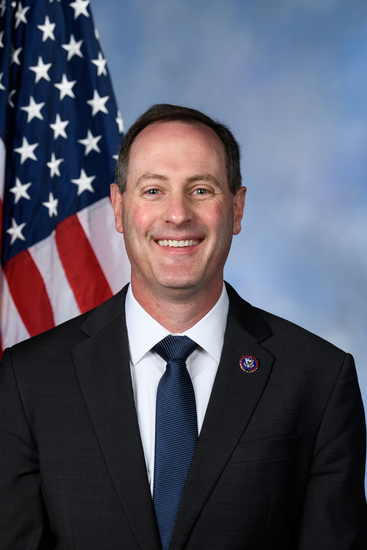
Rep. Tracey Mann
Sponsored bills
Protecting Our Wealth of Energy Resources Act or the POWER Act This bill requires the President and federal agencies to obtain the approval of Congress before prohibiting or substantially delaying certain new energy or mineral leases or permits on federal lands, including oil and gas leases, coal leases, hard rock leases, or critical minerals leases. In addition, the President and agencies must obtain the approval of Congress before withdrawing certain federal lands from mineral and geothermal leasing activities.
Saving America's Energy Future Act This bill prohibits the Department of Agriculture and the Department of the Interior from declaring a moratorium on issuing new oil and gas leases and drill permits on certain federal lands. In addition, the bill prohibits the departments from declaring a moratorium on renewals of such permits.
ABLE Age Adjustment Act This bill increases from 26 to 46 the age threshold for tax-favored ABLE (Achieving a Better Life Experience) accounts. (ABLE accounts are designed to enable individuals with disabilities to save for and pay for disability-related expenses. To establish an account, an individual must have a qualifying impairment that began before the individual attained the age threshold.)
Stopping Chinese Communist Involvement in the Power Grid Act This bill provides statutory authority for Executive Order 13920, which set forth requirements related to securing the U.S. bulk-power system.
Iran Hostages Congressional Gold Medal Act This bill requires the Speaker of the House of Representatives and the President pro tempore of the Senate to arrange for the award of a Congressional Gold Medal commemorating the bravery and endurance of the 53 hostages of the Iran Hostage Crisis. Following its award, the medal shall be given to the National Museum of American History of the Smithsonian Institution for display and research. The Department of the Treasury must strike duplicate medals in silver for presentation to a hostage (or the personal representative of a deceased hostage), and Treasury may also strike and sell duplicate medals in bronze.
Safeguarding Oil and Gas Leasing and Permitting Act of 2021 This bill requires the President and the Department of the Interior to obtain the approval of Congress before implementing a moratorium on oil and gas leasing in the Gulf of Mexico region of the outer Continental Shelf.
This resolution requests that the President transmit to the House of Representatives documents related to the amount of funding that was provided in specified laws regarding COVID-19 (i.e., coronavirus disease 2019) and is currently unspent. The specified laws include the Coronavirus Preparedness and Response Supplemental Appropriations Act, 2020; the Families First Coronavirus Response Act; the Coronavirus Aid, Relief, and Economic Security Act (CARES Act); the Paycheck Protection Program and Health Care Enhancement Act; and Division N of the Consolidated Appropriations Act, 2021.
This resolution expresses support for the formal resubmission of the United States' withdrawal from the Paris Agreement.
Law Enforcement Officers Equity Act This bill expands the definition of law enforcement officer under provisions of the Federal Employees Retirement System (FERS) and the Civil Service Retirement System (CSRS). Specifically, the bill expands the definition to include (1) federal employees whose duties encompass the investigation or apprehension of suspected or convicted criminals and who are authorized to carry a firearm; (2) Internal Revenue Service employees whose duties are primarily the collection of delinquent taxes and the securing of delinquent returns; (3) U.S. Postal Inspection Service employees; (4) Department of Veterans Affairs police officers; and (5) certain U.S. Customs and Border Protection employees who are seized-property specialists with duties relating to custody, management, and disposition of seized and forfeited property. The bill deems service performed by an incumbent law enforcement officer on or after the enactment date of this bill to be service performed as a law enforcement officer for retirement purposes. The past service of such incumbents shall be treated as service performed by a law enforcement officer for retirement purposes only if a written election is submitted to the Office of Personnel Management within five years after the enactment of this bill or before separation from government service, whichever is earlier. An incumbent who makes an election before the enactment of this bill may pay a deposit into the Civil Service Retirement and Disability Fund to cover prior service. A law enforcement officer shall not be subject to mandatory separation during the three-year period beginning on the enactment of this bill.