

Maddy summaryHR 7171, the Distribution Transformer Efficiency and Supply Chain Reliability Act of 2024, prevents the Department of Energy from finalizing rules requiring liquid-immersed or dry-type distribution transformers to meet efficiency standards stricter than "trial standard level 2" (as outlined in a 2023 proposed rule). The bill also mandates that any finalized rule implementing "trial standard level 1" or "level 2" efficiency standards cannot take effect for at least 10 years after the rule's finalization date. This directly affects transformer manufacturers and utilities by delaying stricter efficiency requirements and providing extended compliance timelines. The bill aims to stabilize the supply chain for these critical grid components by limiting near-term regulatory changes.
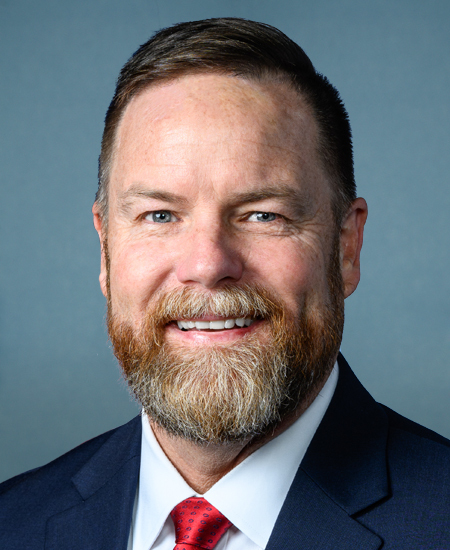
Rep. Aaron Bean
Sponsored bills
Maddy summaryHR 7083, the RAZOR Act, prohibits federal agencies from removing or altering barriers (like fences or fences) built by states along the U.S. border to prevent unlawful crossings. It directly affects federal departments and agencies, such as the Department of Homeland Security, by restricting their ability to modify state-constructed border infrastructure. The key provision is a clear ban on any federal action that would change or remove these state-built barriers. This bill makes a specific policy change regarding federal-state border infrastructure authority without altering broader immigration law.
Maddy summaryHRES 974 is a non-binding House resolution supporting the designation of January 21-27, 2024, as "National School Choice Week." It encourages parents to learn about K-12 education options - including public schools, charter schools, private schools, and homeschooling - and promotes public awareness of educational choice. The resolution does not create new laws or policies but formally expresses the House's backing for this annual observance. It directly affects parents and students by highlighting available education pathways and urging communities to host events celebrating school choice. The resolution was introduced by multiple House members and referred to the Education Committee.
Maddy summaryThe Death Tax Repeal Act would eliminate the federal estate tax and generation-skipping transfer tax for estates of people who die on or after the bill's enactment date, and for generation-skipping transfers made after that date. It would also establish a new $10 million lifetime gift tax exemption (adjusted annually for inflation) and replace the existing gift tax rate schedule with a revised structure. These changes would primarily affect high-net-worth individuals and their heirs, as the estate tax and gift tax typically apply to large estates or gifts exceeding the new exemption threshold. The bill's provisions would take effect on the date of enactment, with transitional rules for the year the bill is signed into law.
Maddy summaryThe RIFLE Act of 2024 changes how the federal government handles violations by firearms licensees, affecting gun dealers and manufacturers who hold federal licenses. It creates a graduated penalty system where non-willful violations require the Attorney General to work with licensees to fix issues before taking action, while willful violations may lead to license suspension or revocation only after proper notice, hearing, and evidence of continued noncompliance. The bill establishes new procedures for administrative hearings, defines "willful" violations more clearly, and gives licensees 90 days to liquidate inventory after license expiration or revocation, with extensions possible for reasonable cause. These changes aim to create a more transparent process for addressing violations while maintaining public safety standards.
Maddy summaryThis bill requires cabinet secretaries (like the Secretary of Defense or Health Secretary) to notify Congress in writing within 24 hours if they cannot perform their duties. It applies to all cabinet members whose appointments require Senate confirmation. If a secretary cannot notify due to a medical emergency or other urgent situation, their agency must submit the notice instead. The law aims to ensure Congress is promptly informed about temporary leadership gaps in major federal departments.
Maddy summaryHR 6734 prohibits the use of federal funds to finalize, implement, or enforce the Bureau of Alcohol, Tobacco, Firearms, and Explosives' (ATF) proposed rule (2022R-17) defining "engaged in the business as a dealer in firearms." This bill directly affects the ATF by blocking funding for this specific regulatory rule, which was proposed in August 2023. The legislation does not create new requirements but prevents federal resources from being used to advance this particular ATF regulation.
Maddy summaryHJRES 88 is a resolution seeking to block a Department of Education rule that would have improved income-driven repayment options for federal student loan borrowers. The rule, published in the Federal Register on July 10, 2023, targeted the William D. Ford Direct Loan Program and the Federal Family Education Loan (FFEL) Program. This resolution uses the Congressional Review Act process to disapprove the rule, preventing it from taking effect and preserving the current repayment structure. If enacted, it would stop the proposed changes to repayment terms without altering existing loan policies.
Maddy summaryThe DETERRENT Act requires institutions of higher education to disclose foreign gifts and contracts meeting specific value thresholds ($50,000 or more) to the Department of Education, with special rules for contracts involving "foreign countries of concern" or "foreign entities of concern." It creates a public database of these disclosures, mandates faculty and staff to report foreign gifts related to research, and establishes a waiver process for institutions seeking to contract with prohibited foreign entities. Institutions that fail to comply face fines ranging from 1% to 100% of their federal funding, depending on the violation and whether it's a first or repeat offense. The bill applies primarily to institutions receiving significant federal funding, particularly those with substantial research programs. It aims to increase transparency around foreign influence in higher education while maintaining academic freedom.
Maddy summaryHR 4666 requires the Small Business Administration's Inspector General to submit quarterly reports to Congress on fraud related to specific COVID-19 loans. These reports must detail the number and total value of covered loans, new fraud cases, resolved cases, and fraud types. Covered loans include those under SBA's 7(a) or 7(b) programs during the CARES Act-defined pandemic period. The reporting requirement ends two years after the bill's enactment and uses existing SBA funding without new appropriations.