Maddy summarySB 217 establishes a five-year Mental Health Response Pilot Program through Oklahoma's Council on Law Enforcement Education and Training (CLEET). The program certifies licensed mental health professionals to assist law enforcement during mental health crises, with specific distribution rules: 15 professionals for two large agencies (over 300,000 population), 6 for two mid-sized agencies (25,000-300,000 population), and 1 for two smaller county sheriff's offices. It creates a dedicated revolving fund in the State Treasury to finance the program, using appropriations, grants, or donations for certification and related costs. The bill takes effect November 1, 2025.
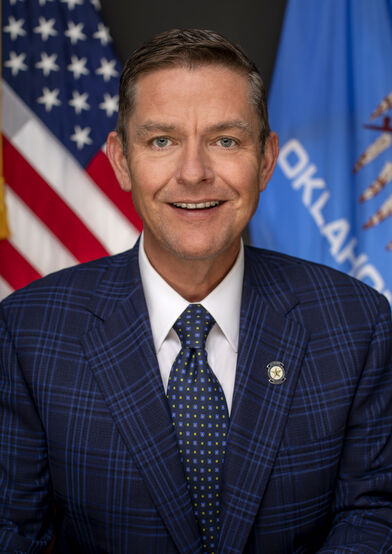
Sen. Mark Mann
Total votes
2,182
all sessions
Attendance
89%
184 missed
Lower than 86% of chamber peers
With party
97%
of cast votes
Near the chamber average
Bipartisan score
4%
crosses aisle rarely
Near the chamber average
Sponsored
62
bills & resolutions
Near the chamber average
Committees
5
assignments
62 bills and resolutions
Sponsored bills
Total
62
Primary
62
Co-sponsor
0
This page
62
matching current filters
Council on Law Enforcement Education and Training; establishing the Mental Health Response Pilot Program and Revolving Fund. Effective date.
Criminal JusticeSupports Criminal JusticeEstablishes mental health response program to divert non-violent crises from law enforcement, reducing unnecessary arrests and aligning with reform goals of enhancing police accountability and protecting civil rights during mental health interacti...
HealthcareSupports HealthcareEstablishes certified mental health professionals for crisis response, directly advancing mental health service access through law enforcement partnerships.
In committee Feb 4, 2025
0 co-sponsors
Cities and towns; Oklahoma Neighborhood Revitalization Act; creating the Oklahoma Neighborhood Revitalization Fund. Effective date. Emergency.
Maddy summarySB 151, the Oklahoma Neighborhood Revitalization Act, creates a permanent state fund to support small-town improvements. It provides funding for sidewalks, street lighting, signage, and roadside beautification in municipalities with fewer than 25,000 residents (per the latest census). To qualify, cities must contribute 20% of project costs, with individual projects capped at $500,000. The Oklahoma Department of Commerce will distribute funds after reviewing applications (due May 1, 2026), requiring projects to align with aesthetic improvement goals.
In committee Feb 4, 2025
0 co-sponsors
Ask Maddy
·
AI policy assistant
Ask Maddy about Mark Mann
Scope: oklahoma
Hi! I can help you understand Mark Mann's legislative record. What would you like to know?
Try one of these
i
Maddy answers using official bill text and legislative records. Always verify before sharing.
Sources cited inline