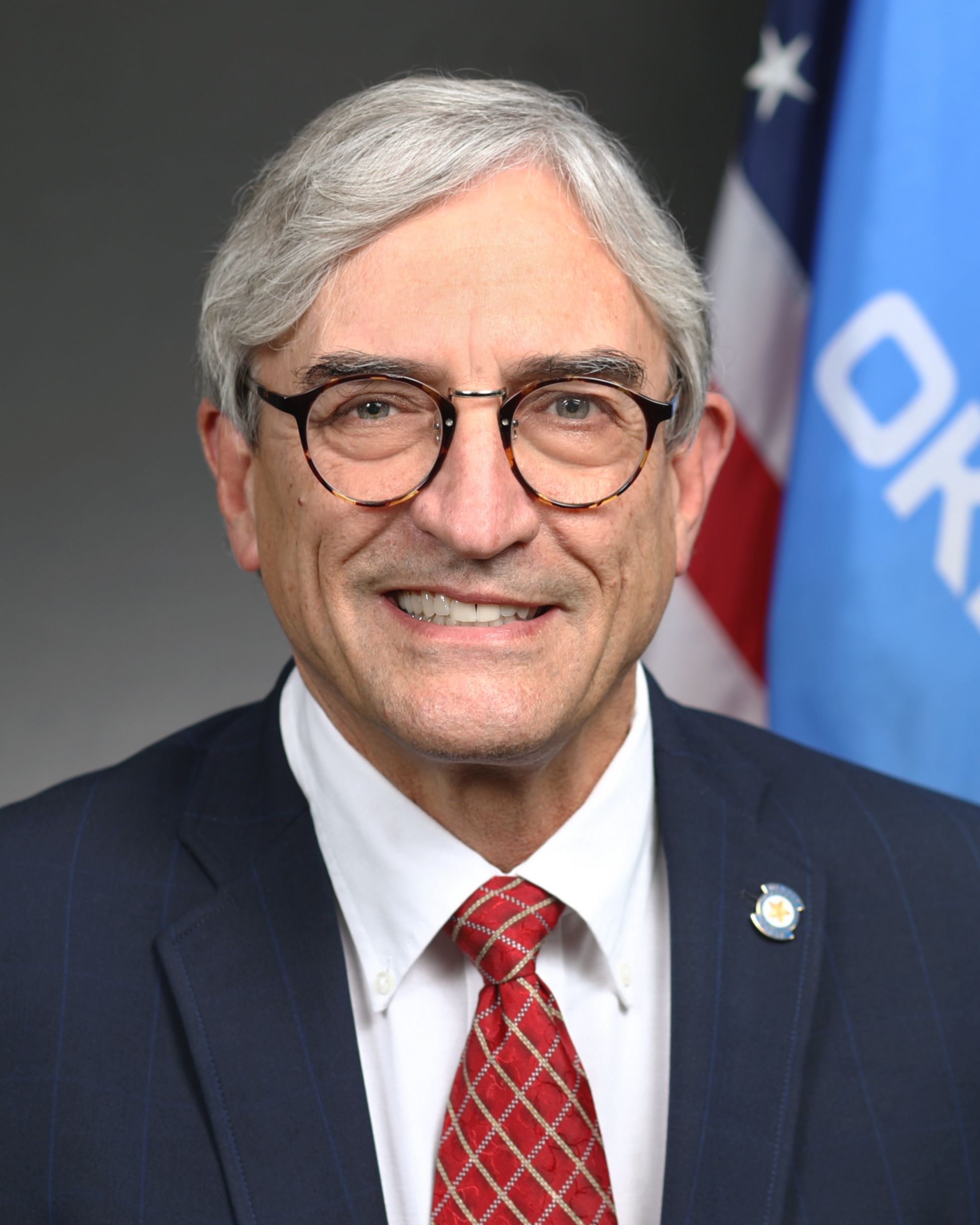
Photo of Max Wolfley
R Oklahoma House · District 95 On the 2026 ballot

Rep. Max Wolfley

Compare
Total votes
4,120
all sessions
Attendance
98%
70 missed
Higher than 88% of chamber peers
With party
92%
of cast votes
Lower than 82% of chamber peers
Bipartisan score
5%
crosses aisle rarely
Higher than 80% of chamber peers
Sponsored
114
bills & resolutions
Near the chamber average
Committees
2
assignments
114 bills and resolutions

Sponsored bills

Total
114
Primary
114
Co-sponsor
0
This page
114
matching current filters
Primary HB 2194
Passed · Oklahoma House · Lead sponsor
Revenue and taxation; retirement benefits; exemption; effective date.

Maddy summaryHB 2194 amends Oklahoma's tax code to adjust how taxable income and adjusted gross income are calculated for state tax purposes. It modifies rules for net operating loss deductions (including carryover periods and allocation methods), adds interest income from state/local obligations to taxable income, and establishes specific allocation rules for income from real property, intangible assets, and business activities based on geographic situs. The bill directly affects businesses and individuals calculating Oklahoma income tax by changing how federal tax adjustments and income sources are treated. These changes aim to align Oklahoma's tax calculations more closely with federal rules while maintaining state-specific provisions.

Passed Apr 1, 2025 0 co-sponsors
Primary HB 2197
Passed · Oklahoma House · Lead sponsor
Higher education; creating the Making College More Affordable Act; prohibitions; research universities; meal plans; effective date; emergency.

Maddy summaryHB 2197, the "Making College More Affordable Act," prohibits Oklahoma public universities from requiring students to purchase meal plans as a condition for enrollment or on-campus housing. The bill directly affects students at institutions within the Oklahoma State System of Higher Education, removing a mandatory cost tied to enrollment or housing. Key provisions ban institutions from making meal plan purchases necessary for either registering for classes or securing dormitory accommodation. The law takes effect on July 1, 2025, and was passed with strong legislative support (68-18) in March 2025.

Passed Apr 1, 2025 0 co-sponsors
Primary SB 172
In committee · Oklahoma Senate · Lead sponsor
Retirement; allowing oversight boards of state retirement systems to approve cost-of-living adjustments under certain circumstances.

Maddy summarySB 172 allows oversight boards for Oklahoma's major public employee retirement systems (including firefighters, police, teachers, and state employees) to approve cost-of-living adjustments (COLAs) under specific circumstances. The bill amends statutes governing these systems to transfer authority for COLA decisions from state legislators to the respective boards. Key provisions require boards to follow defined processes when approving adjustments but do not specify the exact circumstances triggering this authority. The change aims to streamline COLA decisions within each system's governance structure while maintaining board oversight. This affects all participants in the covered retirement systems by altering who makes COLA decisions.

In committee Mar 4, 2025 0 co-sponsors
Primary SB 26
In committee · Oklahoma Senate · Lead sponsor
Teachers' Retirement System of Oklahoma; providing for postretirement employment without earnings limitations subject to certain circumstances. Effective date.

Maddy summaryThis bill modifies Oklahoma's Teachers' Retirement System rules to allow certain retired classroom teachers to return to public school employment without earnings restrictions. Specifically, it permits retired teachers who retired as active classroom teachers by July 1, 2017 or July 1, 2021, have received benefits for at least one year, and have not worked for public schools during that year to return to classroom teaching in common or career tech districts. For three years after retirement, these teachers can earn full salary without deductions from their retirement benefits. The change applies only to those meeting the strict eligibility criteria and does not affect other retired teachers or non-classroom roles.

In committee Feb 25, 2025 0 co-sponsors
Primary HB 2193
died · Oklahoma House · Lead sponsor
Public retirement systems; cost-of-living increases; Oklahoma Firefighters Pension and Retirement System; Oklahoma Police Pension and Retirement System; Uniform Retirement System for Justices and Judges; Oklahoma Law Enforcement Retirement System; Teachers' Retirement System of Oklahoma; Oklahoma Public Employees Retirement System; codification; effective date.

Maddy summaryHB 2193 adjusts cost-of-living increases for retirees in seven Oklahoma public pension systems (firefighters, police, judges, law enforcement, teachers, and general public employees). It provides tiered annual increases of 4% (for pre-2018 retirees), 2% (2018-2023 retirees), or 0% (post-2023 retirees) on the first $60,000 of their annual retirement income, effective July 1, 2026. The bill replaces prior COLA rules and offsets any previous increases from repealed sections. It directly affects current retirees in these systems who will see adjusted benefit payments based on their retirement date.

died Feb 19, 2025 0 co-sponsors
Primary HB 2196
died · Oklahoma House · Lead sponsor
Education; Larry Dickerson Education Flexible Benefits Allowance Act; school employee dependents; effective date; emergency.

Maddy summaryHB 2196 establishes a flexible benefit allowance for Oklahoma school district employees to cover health insurance and other benefits for themselves and their dependents. The state must appropriate annual funds to cover the allowance, calculated based on the number of eligible employees (including certified personnel and support staff like bus drivers or janitors) and their dependents. School districts must offer a flexible benefits plan including health coverage, allowing employees to use the allowance for health insurance or receive unused portions as taxable pay. The bill also updates definitions of "dependent" and requires the State Board of Education to report on self-insured health plans used by school districts.

died Feb 17, 2025 0 co-sponsors
Primary HB 2196
died · Oklahoma House · Lead sponsor
Education; Larry Dickerson Education Flexible Benefits Allowance Act; school employee dependents; effective date; emergency.

Maddy summaryHB 2196 creates a flexible benefit allowance for Oklahoma school district employees to cover health care costs for themselves and their dependents. It requires school districts to offer cafeteria-style benefit plans including health coverage, with funding calculated based on the number of eligible employees (including support staff like bus drivers and janitors) and their dependents. The allowance can be used for premiums on health, dental, or other qualified insurance plans, and any unused portion is paid as taxable income to the employee. This applies to all school districts participating in the Oklahoma Employees Insurance and Benefits Board plan or self-insured health programs.

died Feb 17, 2025 0 co-sponsors
Primary HB 2198
In committee · Oklahoma House · Lead sponsor
Revenue and taxation; sales tax; exemptions; hearing aids; effective date; emergency.

Maddy summaryHB 2198 amends Oklahoma's sales tax code to exempt the purchase of hearing aids from state sales tax. This directly affects individuals in Oklahoma who buy hearing aids for personal use, as they will no longer pay the standard sales tax on these devices. The bill adds hearing aids to the existing list of tax-exempt items under Section 1357 of the Oklahoma Sales Tax Code. The exemption applies to sales made to consumers, not businesses or resellers.

In committee Feb 4, 2025 0 co-sponsors
Primary HB 2204
In committee · Oklahoma House · Lead sponsor
Crimes and punishments; creating the Oklahoma Criminal Law Act of 2025; effective date.

Maddy summaryHB 2204 is a procedural bill that names a future criminal law framework as the "Oklahoma Criminal Law Act of 2025" and sets its effective date for November 1, 2025. It does not create new criminal laws or alter existing penalties; instead, it establishes the official name for a future comprehensive criminal code. The bill is explicitly stated to be "not to be codified" in Oklahoma Statutes, meaning it serves only as a naming convention for the upcoming legislation. This is a formal procedural step with no direct policy impact or affected parties beyond future legislative drafting.

In committee Feb 4, 2025 0 co-sponsors
Primary HB 2199
In committee · Oklahoma House · Lead sponsor
Revenue and taxation; standard deduction amounts; effective date.

Maddy summaryHB 2199 modifies Oklahoma's tax code to adjust how taxable income is calculated for individuals and corporations. It specifically revises rules for net operating loss deductions (allowing businesses to carry forward losses under updated state-specific formulas) and clarifies how income from property (like rents, royalties, or investments) is allocated across states. The bill affects Oklahoma taxpayers with income from out-of-state sources, businesses using federal loss carryforwards, and entities operating across multiple jurisdictions. Key changes include updating loss carryback periods and refining allocation methods for property income to align with federal tax principles. The bill takes effect for tax years beginning after December 31, 2024.

In committee Feb 4, 2025 0 co-sponsors
Showing 21 to 30 of 114 bills
Previous 1 2 3 4 12 Next