Maddy summarySB 2182 creates a civil cause of action for Oklahomans whose intimate images (showing uncovered genitals, pubic area, anus, female nipples, or sexual conduct) are shared without consent. It allows victims to sue for damages - up to $10,000 per violation - or emotional distress if the disclosure was intentional and the victim had a reasonable expectation of privacy. The law includes exceptions for disclosures in law enforcement, medical treatment, or public interest, but bars these if the disclosure was for sexual gratification, humiliation, or profit. It also protects victims’ privacy by permitting courts to redact identifying information in legal documents.
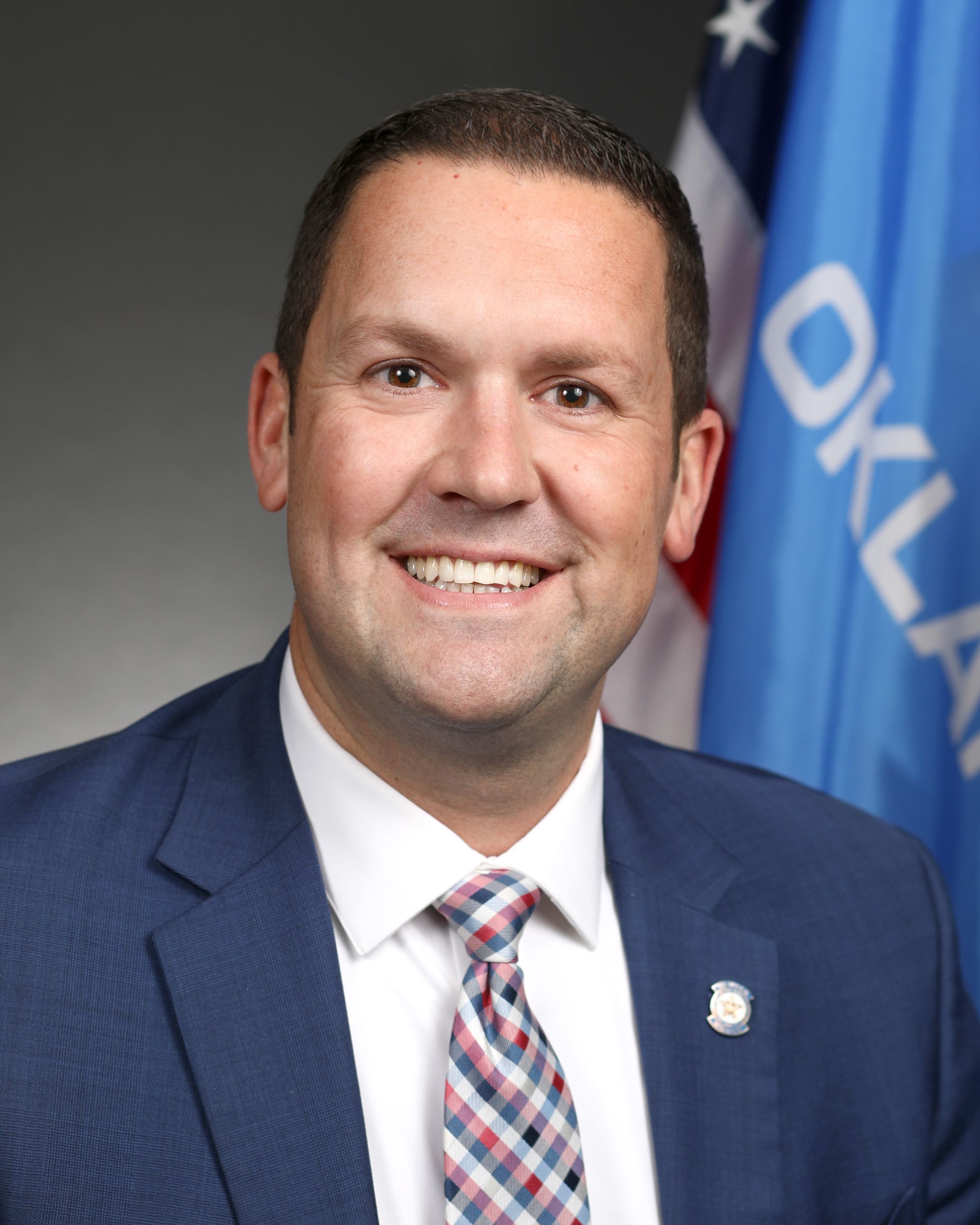
Rep. Anthony Moore
Sponsored bills
Maddy summarySB 1360 creates a three-year pilot program (2026-2027 to 2028-2029) where Oklahoma's State Department of Education assigns math instruction teams to public school districts with the lowest student math assessment scores (starting with the bottom 10% in year one, expanding to 20% and 30% in later years). These teams provide targeted support to students struggling with math, including those with dyscalculia, and help teachers improve instruction through specialized training in evidence-based math teaching methods. The bill also requires the Department to establish an Office of Mathematics Improvement to oversee the program and submit a final report evaluating its impact on student math proficiency by December 2029. The program directly affects school districts identified by assessment data and teachers seeking updated instructional resources.
Maddy summaryThis bill allows evidence of past domestic violence or abuse to be admitted in criminal trials for current domestic violence charges. Prosecutors must disclose such evidence to defendants at least 15 days before trial, including witness statements or summaries of expected testimony. It defines "domestic violence or abuse" broadly to include psychological, physical, sexual, economic, or emotional acts within qualifying relationships. The law applies specifically to criminal cases involving domestic violence in Oklahoma, effective November 1, 2026.
Maddy summarySB 1061 modifies Oklahoma's mortgage licensing fees under the Oklahoma Secure and Fair Enforcement for Mortgage Licensing Act. It establishes a $1,200 application fee for mortgage brokers and lenders, and sets a $1,000 annual renewal fee for brokers/lenders, with mortgage lender fees calculated as 0.008% of loan volume (originated/serviced in Oklahoma) capped at $40,000 annually for originations and $17,500-$27,500 for servicing. These fees affect mortgage brokers, lenders, and originators operating in Oklahoma, requiring them to pay based on business scale. The bill takes effect November 1, 2024, with revised caps for 2025 and 2026.
Maddy summaryHB 1381 modifies Oklahoma's rules for issuing and renewing alcohol licenses by removing specific grounds for denial. It specifically allows beer distributors and wine/spirits wholesalers to hold both license types (e.g., a beer distributor can also hold a wine wholesaler license) if otherwise qualified, which was previously restricted. The bill also updates language regarding prior convictions related to alcohol violations and clarifies that license applicants must comply with state tax laws. These changes apply to all license types under the Oklahoma Alcoholic Beverage Control Act, effective November 1, 2025.
Maddy summarySB 1734, the Oklahoma Responsible Technology in Schools Act, restricts AI tool use in public schools to educator-supervised settings, requiring all classroom AI applications to operate under teacher oversight ("human-in-the-loop") with educators reviewing outputs before use in instruction or assessment. It prohibits AI from determining high-stakes outcomes like grading, discipline, or student placement, and mandates school districts to adopt policies by the 2027-2028 school year covering data privacy, appropriate use, and transparency for families. The State Department of Education must develop guidance to help districts comply, while ensuring AI tools meet federal privacy laws (like FERPA) and minimize student data sharing. The bill takes effect July 1, 2026, and does not compel schools to adopt AI but sets guardrails for its responsible use.
Maddy summarySB 1597 removes a requirement for Oklahoma's Court-Appointed Special Advocate (CASA) programs to adhere to specific national standards. It affects local CASA programs and the Oklahoma Court-Appointed Special Advocate Association by eliminating this compliance obligation. The bill maintains existing requirements for CASA volunteer training, annual documentation, criminal background checks, and child welfare records searches. Key provisions remain unchanged, including the need for volunteers to complete training and pass background checks before being assigned cases. The bill takes effect November 1, 2026.
Maddy summarySB 1630 allows Oklahoma public school districts and charter schools to count up to two days (12 hours) of virtual instruction toward their annual requirement of 1,086 classroom hours, starting in the 2026-2027 school year. This applies only if the school district submits a virtual instruction plan approved by the Superintendent of Public Instruction. The bill prohibits counting virtual instruction days toward the requirement except under this limited exception, directly affecting all Oklahoma public schools and charter schools. It modifies existing school year requirements but does not change the core 1,086-hour or 181-day instructional standards.
Maddy summarySB 1448 modifies the Oklahoma Consumer Protection Act by adding a new exemption (Section 754.5) that explicitly excludes remitted tax collections from consumer protection claims. It states that the Act does not apply to "monies denominated as gross receipts tax on mixed beverages, sales tax or use tax" that have already been paid to the Oklahoma Tax Commission or other taxing authorities. This change directly affects tax collectors (like retailers) and businesses handling these taxes, clarifying that remitted tax collections cannot be challenged under consumer protection laws. The bill takes effect November 1, 2026.
Maddy summarySB 1725 allows Oklahoma public colleges and universities to charge security fees for permitted campus events like protests or gatherings, but only based on neutral factors such as event size, location, or alcohol service - not on speech content, viewpoint, or expected reaction. Institutions must publish their fee criteria online. The bill also directs the Oklahoma Free Speech Committee to develop mandatory training on these policies for students. These changes update existing free speech protections for campus activities at public higher education institutions.