Maddy summaryHB 1940 amends the Oklahoma Charter Schools Act, modifying the criteria for who can sponsor charter schools. It expands the authority of the Statewide Charter School Board to sponsor charter schools that provide educational services to youth under the supervision of a *county*, in addition to those under state supervision. This specific change applies when the charter school applicant is the Office of Juvenile Affairs or a contractor working with them. The bill is set to take effect on July 1, 2025.
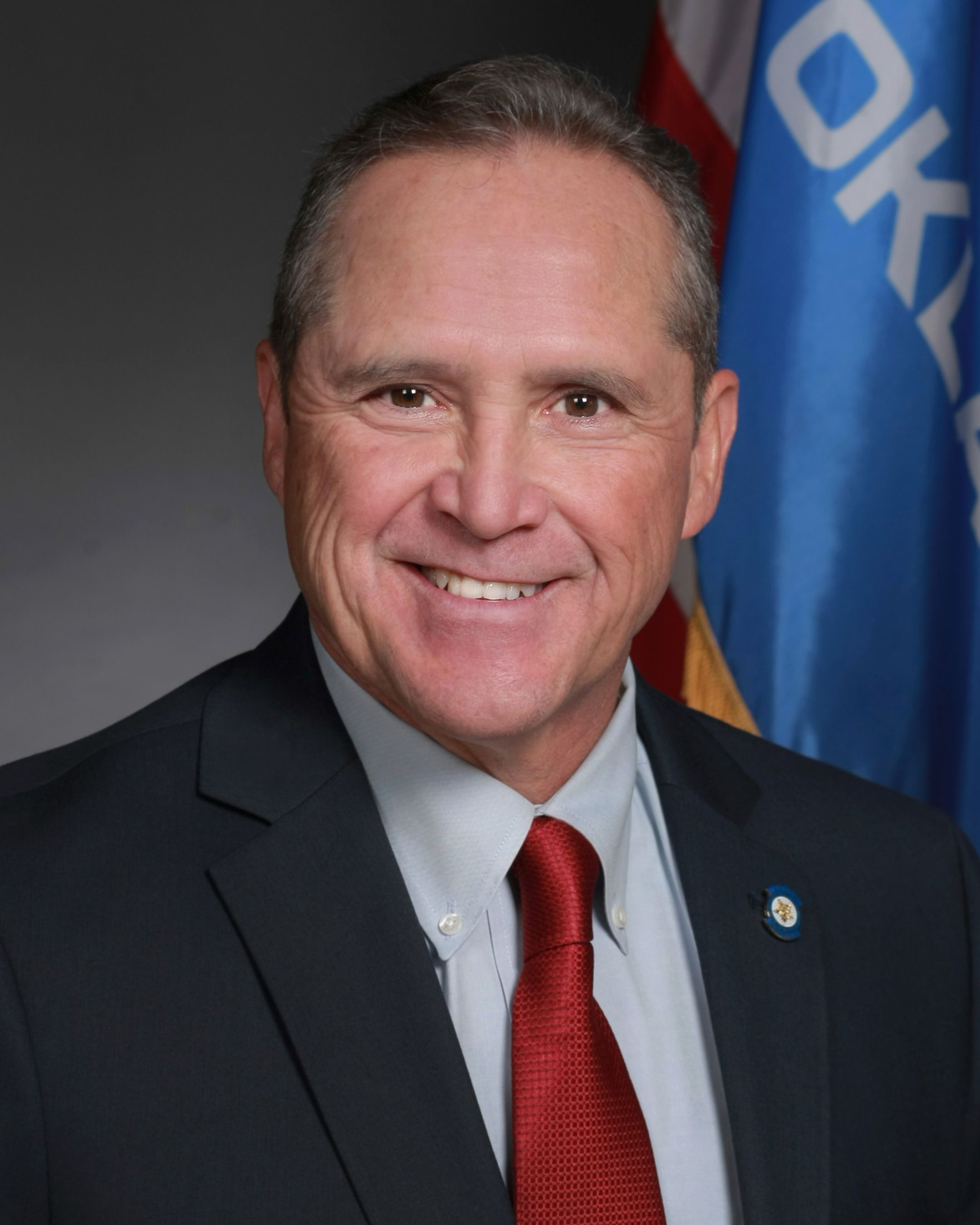
Rep. Danny Sterling
Sponsored bills
Maddy summarySenate Bill 553 requires the State Department of Education to revoke the professional certificates of school employees who are convicted of knowingly and willfully failing to report suspected child abuse or neglect. This bill amends existing state law to specifically include this offense as a mandatory reason for certificate revocation and denial of issuance. It also adds this as a basis for the State Board of Education to revoke or suspend a license or certificate.
Maddy summaryHB 1935 amends Oklahoma's statute of limitations for prosecuting certain criminal cases. It shortens the time limit for prosecuting embezzlement of public funds (including school district funds) and specific financial crimes from 7 to 5 years after discovery. For sexual crimes against children, prosecutions can now continue until the victim's 45th birthday, while cases involving DNA evidence preserved at the time of the crime may proceed even after standard time limits expire. The bill also prohibits relying solely on recovered memories from therapy in such cases and sets a 3-year limit for wildlife crimes and fraud.
Maddy summaryHouse Bill 1935 updates Oklahoma's criminal procedure by modifying the time limits for prosecuting various offenses. It adjusts how long the state has to file charges for crimes such as bribery, embezzlement of public funds, and falsification of public records. The bill also revises the prosecution periods for certain sexual crimes against children and vulnerable adults, sometimes allowing for indefinite prosecution under specific conditions like DNA evidence or a confession. Additionally, it establishes new timeframes for crimes like human trafficking and felonies involving deadly weapons, with an effective date of November 1, 2025.
Maddy summaryHB 1933, known as the "Maddix Bias Act," regulates the use and sale of nitrous oxide in Oklahoma. It prohibits individuals from inhaling, ingesting, or possessing nitrous oxide for recreational intoxication, and makes it unlawful to sell or transfer it for such purposes. Violations carry penalties including fines, imprisonment, and potential drug rehabilitation. The bill also makes it a misdemeanor for adults to sell drug paraphernalia specifically for nitrous oxide inhalation to minors. Several exemptions are provided for medical, dental, automotive, industrial, and specific culinary applications of nitrous oxide.
Maddy summaryHB 1938 requires Oklahoma school districts to conduct annual fitness assessments for students in grades 3 through 12 starting in the 2025-2026 school year. The assessments must measure aerobic capacity, body composition, and muscular strength using age- and gender-specific health standards, with exemptions for students with disabilities. School districts must report anonymized results to state education and health agencies and provide clear summaries to parents, while the State Department of Education and Health must analyze correlations between fitness results and factors like obesity, attendance, academic performance, and school meal programs. The bill also mandates an annual report to the Governor on district compliance and allows for recognition programs for schools showing fitness improvements.
Maddy summaryHB 2126, the "Shelby Johnson and Logan Deardorff Act of 2025," requires physicians and patients to report medical conditions causing momentary lapses of consciousness (like seizures or mental conditions) that could impair driving ability to Oklahoma's Service Oklahoma. This directly affects drivers diagnosed with such conditions and their healthcare providers, who must submit written reports. The bill ensures these reports are not public records and can only be used in driver's license revocation or denial cases, while granting immunity to reporters acting in good faith. It modifies existing law to clarify reporting requirements and legal protections for those involved.
Maddy summaryHB 1934, the "Jamie Lea Pearl Act," establishes rules for small medical transportation providers in Oklahoma. It requires these "medical needs motor carriers" to be 501(c)(3) nonprofit organizations, operate vehicles with a maximum weight of 5,000 pounds and capacity for five passengers (including the driver), and provide non-emergency medical transport (like dialysis or cancer treatment) at little or no cost. Key provisions include mandating $100,000 insurance per person for bodily injury, quarterly vehicle safety inspections, a 10-hour daily driving limit for drivers, and retention of background checks and drug test records for two years. The law directly affects small companies transporting patients for non-emergency medical needs, excluding regular taxis, school buses, or commercial carriers.
Maddy summaryHB 1938 requires Oklahoma school districts to conduct annual fitness assessments for students in grades 3-12 starting in the 2025-2026 school year. The assessments must measure aerobic capacity, body composition, and muscular strength/endurance using age- and gender-specific health benchmarks, with exemptions for students with disabilities. Districts must report anonymized results to the State Department of Education and provide clear summaries to parents, while the state analyzes correlations between fitness results and factors like obesity, attendance, and academic performance. The bill also mandates annual reports to the Governor on district compliance and allows for recognition programs for schools improving fitness outcomes.
Maddy summaryHB 1934, the "Jamie Lea Pearl Act," creates tax-exempt status for nonprofit medical transportation providers in Oklahoma. It directly affects companies transporting patients for nonemergency medical needs (like dialysis or cancer treatment) using small vehicles (max 5,000 lbs weight, 5 passengers) at little or no cost. Key requirements include: mandatory commercial insurance ($100k per person), quarterly vehicle safety inspections, driver background checks (5-year records, drug tests), and prohibiting service denial based on disability or other protected characteristics. The Oklahoma Corporation Commission must issue rules within 60 days to implement these provisions.