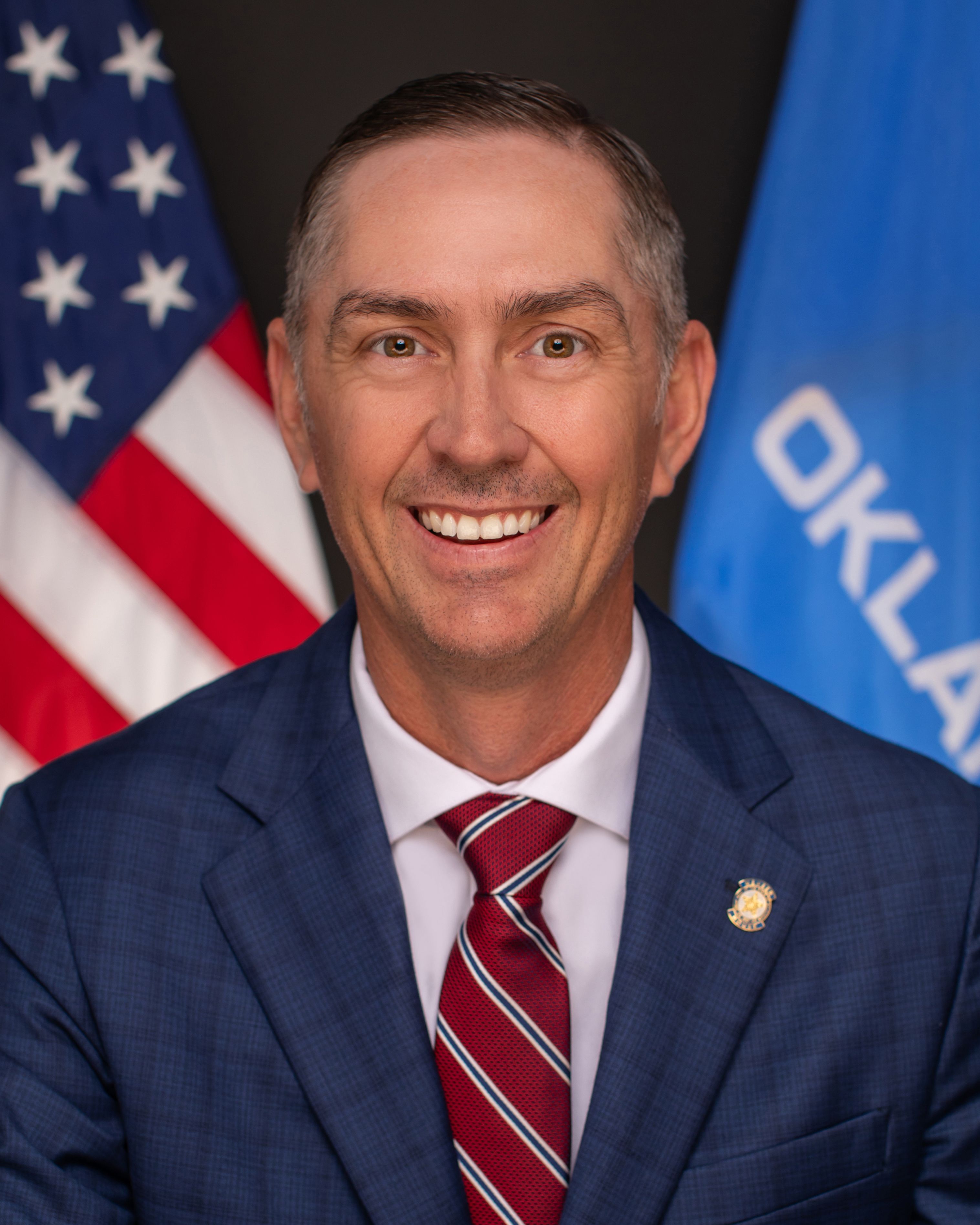
Photo of Ryan Eaves
R Oklahoma House · District 22 On the 2026 ballot

Rep. Ryan Eaves

Compare
Total votes
2,193
all sessions
Attendance
97%
60 missed
Higher than 80% of chamber peers
With party
91%
of cast votes
Near the chamber average
Bipartisan score
5%
crosses aisle rarely
Near the chamber average
Sponsored
51
bills & resolutions
Near the chamber average
Committees
4
assignments
51 bills and resolutions

Sponsored bills

Total
51
Primary
51
Co-sponsor
0
This page
51
matching current filters
Primary SJR 50
Passed · Oklahoma Senate · Lead sponsor
Constitutional amendment; Medicaid funding.

Maddy summaryThis bill approves specific permanent rules created by the Oklahoma Health Care Authority that govern how Medicaid funds are managed. The rules cover various administrative procedures and operational standards for the state's healthcare program. If passed, these regulations will become official guidelines for the agency responsible for administering Medicaid in Oklahoma. The measure also directs the Secretary of State to send copies of the resolution to the Governor and a state publication.

Passed May 14, 2026 0 co-sponsors
Primary SB 2065
Signed into law · Oklahoma Senate · Lead sponsor
State symbols; designating certain symbols. Effective date.

Maddy summarySB 2065 designates four specific insects as official Oklahoma state symbols: the European honeybee as the state agricultural pollinator, the American bumblebee as the state native insect, the Carolina mantis as the state predator insect, and the rainbow scarab as the state soil conservation insect. These designations would be added to Oklahoma Statutes under new sections 98.26 through 98.29. The bill has no direct policy impact on residents or regulations but formally recognizes these species for symbolic purposes. It becomes effective November 1, 2026, if passed.

Signed into law May 11, 2026 0 co-sponsors
Primary HJR 1067
Failed · Oklahoma House · Lead sponsor
Joint resolution; terminating effect of Medicaid expansion coverage mandate under specified condition; providing certain construction.

Maddy summaryThis bill proposes a constitutional amendment to expand Oklahoma's Medicaid program to cover low-income adults. It would require the state to maintain eligibility without additional restrictions and allow Oklahoma to halt Medicaid expansion funding if federal matching falls below 90%. The amendment must be approved by voters via ballot measure. If passed, it would change Medicaid eligibility rules and create a specific funding threshold for state coverage. The resolution directs the Secretary of State to place this proposal on the ballot for voter approval.

Failed May 5, 2026 0 co-sponsors
Primary HB 3315
Signed into law · Oklahoma House · Lead sponsor
Higher education; State Regents for Higher Education; feasibility study for three-year bachelor's degrees; emergency.

Maddy summaryHB 3315 requires the Oklahoma State Regents for Higher Education to study whether bachelor's degrees could be completed in three years (90 credit hours) instead of four, focusing on specific academic fields, credit hour reductions, and accreditation challenges. The study must analyze how such degrees would affect student outcomes and degree recognition in the job market. The Regents must submit a report to state leaders by July 1, 2027, detailing their findings. This bill does not implement three-year degrees but only evaluates their feasibility; it takes effect July 1, 2026.

Signed into law May 4, 2026 0 co-sponsors
Primary HB 3312
Passed · Oklahoma House · Lead sponsor
Education; public schools; annual instruction on firearm safety; Department of Education; Council on Law Enforcement Education and Training; effective date; emergency.

Maddy summaryHB 3312 requires all Oklahoma public schools (including charter and virtual schools) to provide annual, age-appropriate firearm safety instruction starting in the 2026-2027 school year. For K-5 students, this covers basic safety rules like "stop, don't touch, leave the area, tell an adult." Students in grades 6-12 receive instruction on safe firearm storage, handling, and responding to found firearms. The bill mandates parental opt-out options with alternative activities, prohibits live ammunition or firearms in instruction, and requires curriculum neutrality on political topics like gun rights. It becomes effective July 1, 2026.

Passed Apr 16, 2026 0 co-sponsors
Primary HB 3310
Passed · Oklahoma House · Lead sponsor
State government; State Purchasing Director; agency compliance with purchasing standards; limitations on compensation and longevity; effective date.

Maddy summaryHB 3310 amends Oklahoma's state purchasing laws to strengthen oversight of agency acquisitions. It establishes specific spending limits ($25,000 for standard purchases, $250,000 for certified agencies), requires payments for valid invoices within 60 days, and mandates the State Purchasing Director to review agency compliance. The bill creates a public report tracking agencies failing to meet payment timelines or purchasing standards. It directly affects all Oklahoma state agencies and their procurement staff by requiring certification for certain purchasing authority and enforcing new compliance rules.

Passed Apr 9, 2026 0 co-sponsors
Primary HB 3313
Passed · Oklahoma House · Lead sponsor
Retirement; Retirement Freedom Act; minimum employer contribution amount; employer matching; vesting schedule for certain funds; reemployed participants; effective date.

Maddy summaryHB 3313 establishes a new defined contribution retirement plan for Oklahoma public employees hired on or after November 1, 2015, replacing the traditional defined benefit pension for these workers. It requires a minimum 4.5% employee contribution (with a 6% employer match), allows higher voluntary contributions up to 7%, and gives participants investment choices through 401(a) and 457(b) plan structures. The bill excludes certain employees, including district attorneys, county/city officials, and some hospital staff, from this new system. Key provisions include customizable benefit forms, employer matching based on contribution rates, and requirements for the Board of Trustees to maintain tax-qualified plan status.

Passed Apr 1, 2026 0 co-sponsors
Primary HB 3314
Failed · Oklahoma House · Lead sponsor
Marijuana; public service impact tax; county option; initiative and referendum procedures; administration procedures; effective date.

Maddy summaryHB 3314 allows Oklahoma counties to impose a local tax of up to 15% on retail marijuana sales (not personal cultivation) after voter approval. Counties must hold a special election or use an initiative petition (requiring 5% of registered voters' signatures) to approve the tax, with results requiring a majority vote. Funds collected must be used exclusively for public safety (sheriffs, police, fire departments) and property improvements, and counties must specify the tax's purpose and duration to voters. The Oklahoma Tax Commission will handle tax collection for a 0.5% fee, and counties must provide 60 days' notice before rate changes. The bill takes effect November 1, 2026.

Failed Mar 25, 2026 0 co-sponsors
Primary SB 1125
In committee · Oklahoma Senate · Lead sponsor
Excise tax; authorizing counties and municipalities to levy tax on medical marijuana. Effective date.

Maddy summarySB 1125 authorizes Oklahoma counties and municipalities to levy an excise tax on medical marijuana sales, but only after voter approval via special election or initiative petition (requiring 5% of registered voters' signatures). The tax must be approved by a majority vote, cannot be re-proposed within six months if rejected, and applies only to sales within the local jurisdiction. Funds must be dedicated to specific purposes like public safety (not redirectable without new voter approval), and counties must create revolving funds for these designated uses. The bill also states that if recreational marijuana is legalized, the same tax rules would automatically apply to it.

In committee Mar 10, 2026 0 co-sponsors
Primary HJR 1053
In committee · Oklahoma House · Lead sponsor
Oklahoma Constitution; ad valorem taxation; revenue neutral tax rates; procedures; ballot title; filing.

Maddy summaryHJR 1053 proposes a constitutional amendment requiring Oklahoma local governments to calculate a "revenue neutral rate" for property taxes each year, which would generate the same revenue as the previous year based on current property valuations. If a county, city, or school district seeks to exceed this rate, it must hold a public hearing, provide detailed written notice to property taxpayers 10 days in advance (including comparisons to prior tax rates), and obtain a majority vote from its governing body. The bill mandates refunds to taxpayers if local governments fail to follow these procedures when levying taxes above the revenue neutral rate. It excludes taxing districts receiving under $5,000 annually in property tax revenue.

In committee Mar 5, 2026 0 co-sponsors
Showing 1 to 10 of 51 bills
1 2 3 6 Next