Issue · Energy

Energy

Every energy bill, vote, and legislator stance in Oklahoma, automatically classified by Maddy, our AI policy reader.

Total bills
39
2026 Regular Session
Top supporter
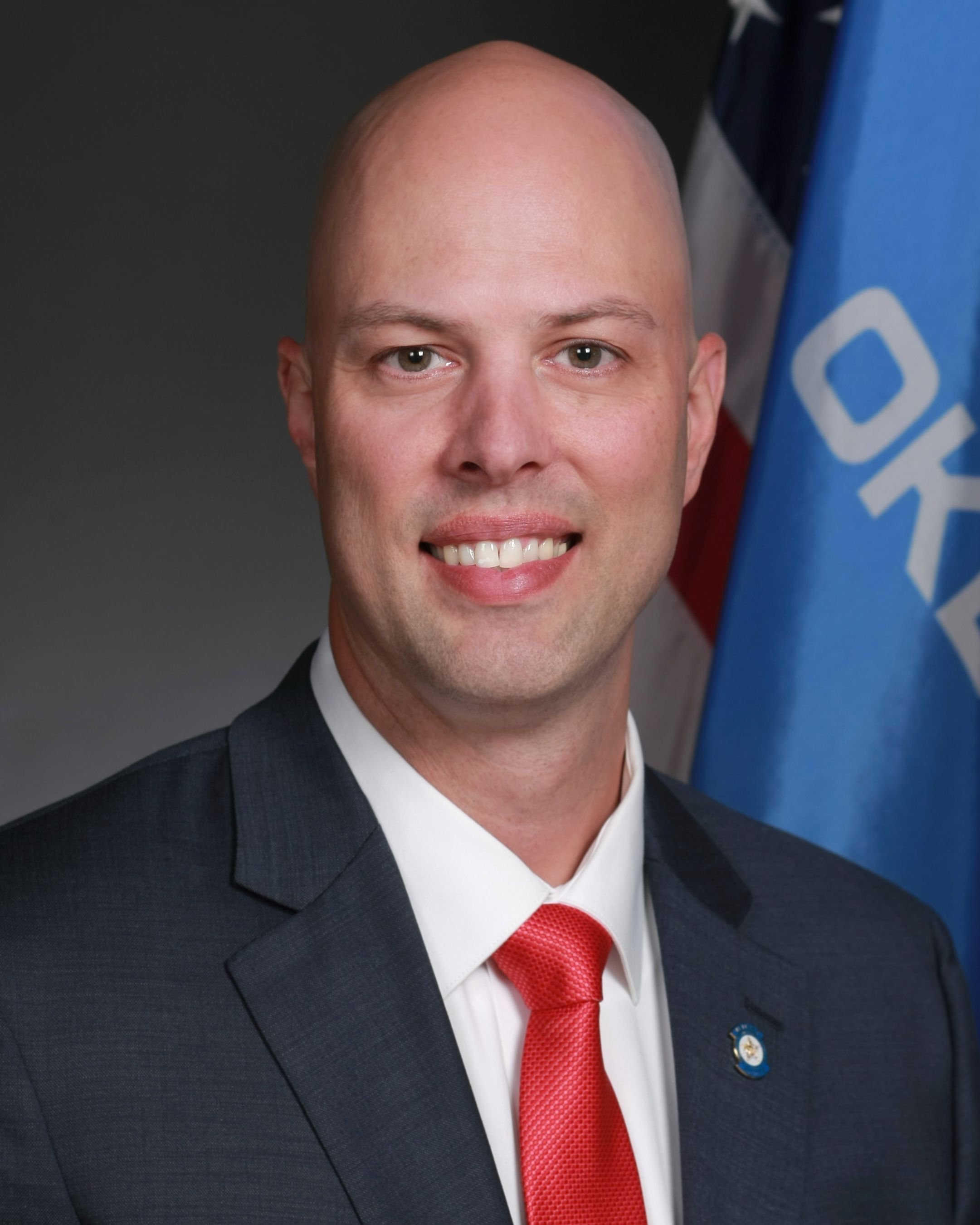
Spencer Kern
82% support rate
Top opponent
Dillon Travis
11% support rate
Ranked legislators
10
5 support · 5 oppose
Key legislators

Who's moving energy in Oklahoma

Legislators moving energy in Oklahoma
Legislator Party Stance Support rate Votes
Spencer Kern
Spencer Kern Senate · District 31
R
Strong +
82% 152
Brenda Stanley
Brenda Stanley Senate · District 42
R
Support
79% 129
Dave Rader
Dave Rader Senate · District 39
R
Support
78% 173
Grant Green
Grant Green Senate · District 28
R
Support
78% 170
Lonnie Paxton
Lonnie Paxton Senate · District 23
R
Support
76% 111
DT
Dillon Travis House · District 35
R
Strong −
11% 76
David Bullard
David Bullard Senate · District 6
R
Strong −
19% 115
Jay Steagall
Jay Steagall House · District 43
R
Strong −
20% 115
Denise Crosswhite Hader
Denise Crosswhite Hader House · District 41
R
Oppose
21% 147
Jim Olsen
Jim Olsen House · District 2
R
Oppose
21% 146
Showing 1–10 of 39 bills

All energy bills

failed · Oklahoma · House Apr 20, 2026

HB 2155: Corporation Commission; creating the Renewable Energy Facility Act; emergency.

This bill amends Oklahoma's Renewable Energy Facility Act to clarify which infrastructure projects are covered under the legislation. The key change excludes transmission and distribution lines that serve renewable energy facilities from the bill's scope, narrowing the definition of eligible projects. This amendment directly affects utility companies and developers by specifying that only the renewable energy generation facilities themselves are included, not the power lines connecting them to the grid. The change aims to provide clearer boundaries for what types of infrastructure fall under the act's regulations and incentives.
Sub-Topics Renewable Energy
in committee · Oklahoma · Senate Feb 4, 2025

SB 457: Motor vehicles; creating the Oklahoma Diesel Engine Freedom Act. Emergency.

SB 457, the Oklahoma Diesel Engine Freedom Act, invalidates federal rules requiring diesel exhaust fluid (DEF) in diesel engines used within Oklahoma, declaring such requirements unconstitutional under the 10th Amendment. It prohibits state agencies and officials from enforcing federal DEF mandates and legalizes the sale and use of diesel engines that do not require DEF in the state. The bill imposes fines up to $5,000 per violation for state entities enforcing federal rules and repeals an existing Oklahoma emission control law. It applies only to vehicles operating solely within Oklahoma, not to interstate commerce.
Sub-Topics Roads & Highways
passed · Oklahoma · House May 4, 2026

HB 1170: Public finance; Public Finance Protection Act; terms; standard of care; nonpecuniary factors; vote; authority; proxy votes; Attorney General; immunity; indemnification; severability; codification.

HB 1170, the Oklahoma Public Finance Protection Act, requires state pension fund managers to base all investment decisions solely on financial factors affecting returns or risk, prohibiting consideration of environmental, social, political, or ideological goals. It directly affects all Oklahoma public pension plans (including those managed by state entities, counties, municipalities, and schools) and their fiduciaries. The law mandates that fiduciaries evaluate investments exclusively using "pecuniary factors," such as financial risk and return, and prohibits voting proxies or making investment choices to advance nonfinancial objectives, while allowing incidental consideration of factors with proven material financial impact.
in committee · Oklahoma · Senate Feb 5, 2026

SB 2078: Motor vehicles; creating the Oklahoma Diesel Engine Freedom Act. Emergency.

SB 2078, the Oklahoma Diesel Engine Freedom Act, declares federal mandates requiring diesel exhaust fluid for vehicles operating solely within Oklahoma void, asserting the state's authority under the 10th Amendment to regulate intrastate emissions. It allows the manufacture, sale, and use of diesel engines not requiring exhaust fluid within Oklahoma, prohibits state agencies from enforcing federal diesel fluid requirements, and imposes fines up to $2,500 for violations. The bill repeals an existing Oklahoma statute (47 O.S. 2021, Section 12-423) related to emission control systems. It applies specifically to vehicles engaged only in intrastate commerce, not interstate travel.
Sub-Topics Roads & Highways
in committee · Oklahoma · House Feb 3, 2026

HB 3723: Green energy projects; requiring vote of board of county commissioners before certain projects can proceed; emergency.

HB 3723 requires county commissioners in every Oklahoma county where a wind or solar project is planned to vote on approval before the project can move forward with state permitting. Developers must submit detailed plans - including engineering specs, environmental assessments, construction schedules, and decommissioning plans - at least 60 days before the vote. The county commission must hold a public vote with 15 days of notice, and landowners within the project boundary and within five miles must be notified. If residents disagree with the commission's decision, they can initiate a referendum by collecting signatures from 10% of the county's registered voters, which would be decided at the next general election.
Sub-Topics Renewable Energy Solar
in committee · Oklahoma · House Feb 3, 2026

HB 3095: Property; Rural Landowners Protection Act; definitions; real property; shares; voting; election procedures; setback provisions; effective date.

HB 3095, the Rural Landowners Protection Act, requires landowner approval for certain large-scale projects like wind energy facilities, data centers, battery storage, and carbon capture operations. It directly affects landowners within a 5-mile radius of these projects, granting each parcel one voting share. Projects need approval from at least two-thirds of all affected landowners through a county-administered election, with a 30-day window for voting after application. Failed projects cannot be resubmitted for landowner approval for three years. The bill takes effect November 1, 2026.
Sub-Topics Energy Storage Wind
signed · Oklahoma · Senate Apr 22, 2026

SB 1439: Oil and gas; prohibiting covered civil liability actions. Effective date.

SB 1439 blocks lawsuits against fossil fuel companies (including producers, sellers, and trade associations) that claim climate change or greenhouse gas emissions caused harm when their products functioned as designed. The bill prohibits any civil action seeking relief related to climate change, alleged climate effects, or emissions - covering common claims like fraud or failure to warn - but excludes cases involving violations of environmental or worker protection laws. It applies to all fossil fuels (oil, natural gas, coal, etc.) and requires courts to dismiss ongoing climate-related lawsuits immediately upon the bill's effective date. This law creates a new legal barrier for climate change litigation while preserving access to courts for environmental law enforcement.
in committee · Oklahoma · Senate Feb 3, 2026

SB 1917: Solar energy devices; stating permissible locations for installation. Emergency.

SB 1917 bans the installation of solar energy devices (like panels) on agricultural land in Oklahoma, directly affecting farmers and ranchers who use land primarily for farming or ranching. The bill restricts solar installations to single-family homes and commercial/industrial properties only, prohibiting them on any land classified as agricultural by the Oklahoma Department of Agriculture. It defines "agricultural land" as property used for farming or ranching under state agriculture department oversight. The law takes immediate effect due to an emergency declaration, with no exceptions for existing installations on farmland after the effective date.
in committee · Oklahoma · Senate Mar 2, 2026

SB 1933: Water; prohibiting certain uses and actions in certain location. Effective date.

SB 1933 prohibits nonlocal municipalities and counties from diverting water in specific river segments (Kiamichi River from Highway 3 bridge to Arkansas line, and Glover River from Little River confluence east/west branches) for commercial, agricultural, or power generation purposes. It bans building dams, impoundments, or diversion structures in these areas and restricts local farming/ranching activities there. The bill defines "nonlocal" as entities outside 10 miles of a river's main channel and exempts pre-existing water uses and structures. It becomes effective November 1, 2026.
passed · Oklahoma · House Apr 1, 2026

HB 4340: Revenue and taxation; sales tax; exemptions; frack water; effective date.

HB 4340 would add a sales tax exemption for the sale of "frack water" (wastewater from oil and gas extraction) in Oklahoma. This exemption would directly affect oil and gas companies and vendors selling this wastewater, eliminating the sales tax on such transactions. The bill amends Oklahoma's sales tax code to include this specific exemption under existing tax exemption categories. The policy change would reduce tax burdens for businesses involved in handling oil and gas extraction wastewater. The bill is currently pending in the Appropriations and Budget Natural Resources Subcommittee.
Showing 1 to 10 of 39 bills
1 2 3 4 Next