Issue · Criminal Justice

Criminal Justice (Policing)

Every criminal justice bill, vote, and legislator stance in Oklahoma, automatically classified by Maddy, our AI policy reader.

Total bills
22
2026 Regular Session
Top supporter
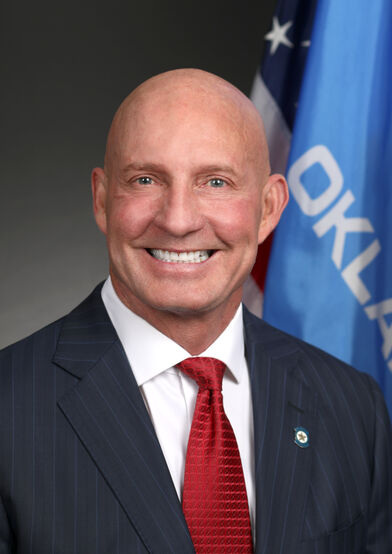
Mark Mann
100% support rate
Top opponent
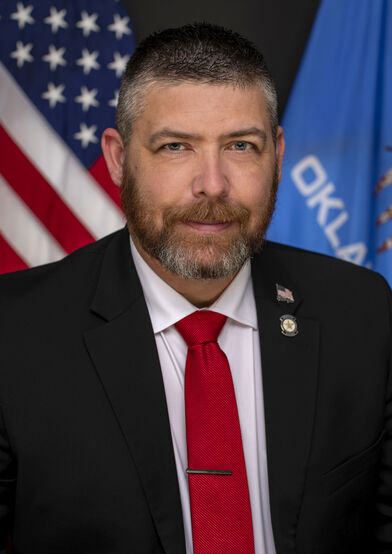
George Burns
17% support rate
Ranked legislators
10
5 support · 5 oppose
Key legislators

Who's moving policing in Oklahoma

Legislators moving policing in Oklahoma
Legislator Party Stance Support rate Votes
Mark Mann
Mark Mann Senate · District 46
D
Strong +
100% 3
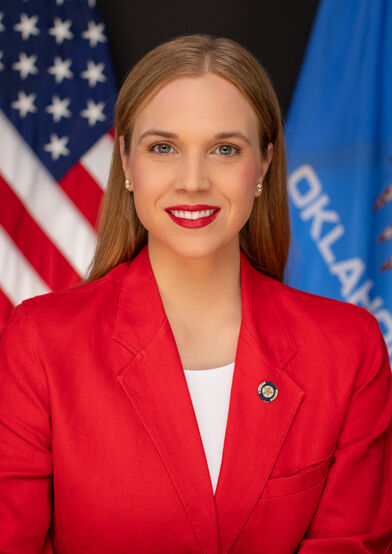
Nikki Nice
Nikki Nice Senate · District 48
D
Strong +
80% 5
Regina Goodwin
Regina Goodwin Senate · District 11
D
Strong +
80% 5
Carri Hicks
Carri Hicks Senate · District 40
D
Support
75% 4
Julia Kirt
Julia Kirt Senate · District 30
D
Support
75% 4
George Burns
George Burns Senate · District 5
R
Strong −
17% 6
Dana Prieto
Dana Prieto Senate · District 34
R
Strong −
20% 5
Darrell Weaver
Darrell Weaver Senate · District 24
R
Strong −
20% 5
Jonathan Wingard
Jonathan Wingard Senate · District 13
R
Strong −
20% 5
Kendal Sacchieri
Kendal Sacchieri Senate · District 43
R
Strong −
20% 5
Showing 11–20 of 22 bills

All criminal justice bills

signed · Oklahoma · House May 27, 2025

HB 1863: Children; Children's Code; multidisciplinary child abuse team; review; functions; secure database; protocol; Commission on Children and Youth; requirements; rules; codification; effective date.

HB 1863 requires Oklahoma counties to form multidisciplinary child abuse teams (including police, medical staff, and child welfare workers) to handle cases of child sexual abuse, physical abuse, or neglect. These teams must create joint investigation protocols to minimize trauma for child victims, use a secure database for case reviews, and eliminate duplicative efforts across agencies. The bill increases penalties for confidentiality breaches from $500 to $5,000 fines and mandates annual reviews of teams by the Commission on Children and Youth. It directly affects district attorneys' offices, child protective services, and the Commission on Children and Youth. The law standardizes procedures for investigating and reviewing child abuse cases statewide.
Sub-Topics Policing
died · Oklahoma · House Feb 5, 2025

HB 2734: Crimes and punishments; clarifying scope of certain prohibited act; effective date.

HB 2734 clarifies Oklahoma's obstruction of justice law by specifying that recording law enforcement activity in public and asking routine questions during stops, detentions, or arrests does not constitute obstruction. The bill explicitly states that such actions only count as obstruction if done with the intent to hinder, delay, or obstruct officers. It directly affects individuals interacting with police during encounters and bystanders observing such interactions. The changes take effect on November 1, 2025.
in committee · Oklahoma · Senate Feb 4, 2025

SB 828: Criminal procedure; increasing time for which certain prosecutions may be commenced. Effective date.

Oklahoma Senate Bill 828 extends the statute of limitations for prosecuting certain serious crimes, primarily affecting victims of child sexual abuse. It allows prosecution for child sexual abuse crimes (including those involving minors in pornography or child trafficking) to occur at any time until the victim turns 45, and for crimes against adults, within 20 years of the crime being reported to police. The bill also creates a key exception: if DNA evidence is preserved and later identifies the offender, prosecution can proceed at any time. This change directly impacts prosecutors, law enforcement, and victims in these specific cases, while leaving most other criminal statute of limitations unchanged.
in committee · Oklahoma · Senate Mar 24, 2025

SB 596: Asset forfeiture transparency; making certain reports available for public inspection; requiring submission of report on seizure of property. Effective date.

SB 596 requires Oklahoma law enforcement agencies to make public reports about property seizures (asset forfeiture) on a designated website. It directly affects police departments and sheriff's offices, mandating they submit detailed annual reports on seized items and their disposition. The bill updates existing laws to ensure these reports include specific details about seizures and is designed to increase transparency around how police handle seized property. Public access to these reports aims to allow citizens to review how law enforcement uses asset forfeiture powers.
signed · Oklahoma · House May 21, 2025

HB 1414: Counties and county officers; qualifications for county sheriff; military police service; effective date.

HB 1414 changes Oklahoma's requirements for county sheriff candidates by adding a four-year full-time peace officer experience prerequisite, or equivalent military police service (verified by a DD214 form). It also mandates that newly elected sheriffs complete an approved sheriff's administrative training program within 12 months of taking office or risk losing their CLEET certification. The bill applies to all candidates filing for office after November 1, 2025, and does not affect current or previous sheriffs. This update aims to standardize qualifications and training for county law enforcement leadership.
in committee · Oklahoma · House Feb 4, 2025

HB 2925: High-speed vehicular pursuits; directing law enforcement agencies to adopt certain policies and procedures; codification; effective date.

HB 2925 requires all Oklahoma law enforcement agencies (state, county, and local) to adopt written policies governing high-speed vehicle pursuits. The bill mandates specific provisions, including banning pursuits in densely populated areas, prohibiting shooting at moving vehicles, requiring supervisory approval before starting a pursuit, and limiting pursuits of misdemeanants to cases where no public harm or property damage is likely. It also strictly restricts pursuing alleged felons only when there is reasonable certainty the pursuit will prevent further harm, and prohibits pursuits for any crime not posing an immediate threat of death or serious injury (listing murder, assault, kidnapping, rape, and armed robbery as qualifying offenses). The policy changes take effect November 1, 2025.
in committee · Oklahoma · Senate Feb 3, 2026

SB 1227: Mental health; authorizing mobile crisis teams to request certain information from law enforcement. Effective date.

SB 1227 allows mobile crisis teams (groups of mental health professionals and peer specialists) to request safety-related information from police before responding to mental health, substance use, or suicidal crises. It requires local law enforcement agencies to create protocols for sharing only necessary safety details - like weapons history, violent behavior patterns, or outstanding warrants - with the teams. The bill limits disclosures to what ensures responder safety, keeps information confidential, and grants police immunity for following these protocols. This directly affects mobile crisis teams, law enforcement, and individuals in crisis by improving safety coordination during emergency responses.
vetoed · Oklahoma · House May 29, 2025

HB 1563: Criminal procedure; authorizing the issuance of subpoena duces tecum to businesses and commercial entities; codification; effective date.

HB 1563 allows criminal defendants to subpoena specific records from law enforcement and businesses in Oklahoma. It permits defendants to request body camera footage, traffic videos, incident reports, or security camera recordings covering the time of the alleged crime from businesses or commercial entities. The bill includes safeguards: law enforcement can object if records involve juvenile confidentiality, ongoing investigations, or informant privacy, and requires strict fee limits ($0.25/page for copies). This directly affects criminal defendants seeking evidence, while balancing access with protections for sensitive information.
in committee · Oklahoma · Senate Feb 4, 2025

SB 526: Firearms; directing courts and law enforcement agencies to protect certain rights. Emergency.

SB 526 (Oklahoma Senate Bill 526) prohibits Oklahoma courts and law enforcement from enforcing any order requiring firearm confiscation from law-abiding citizens, declaring such actions an infringement on Second Amendment rights. It mandates that law enforcement officers may refuse to follow orders violating the Second Amendment or their oath, and prohibits retaliation or budget cuts against officers or police departments that refuse such orders or designate their area as a "Second Amendment sanctuary." The bill defines "law-abiding citizen" as someone legally permitted to possess firearms and lawfully present in the U.S. It takes immediate effect as an emergency measure.
in committee · Oklahoma · House Feb 4, 2025

HB 1856: State government; Oklahoma 10-8 Fund; grant program; Office of the Attorney General; revolving fund; appropriation; effective date.

HB 1856 creates the "Oklahoma 10-8 Fund Grant Program" to provide one-time bonuses to new peace officers (police, deputies, troopers) who meet specific criteria. Eligible officers receive $10,000 if hired by an agency with 50+ sworn vacancies or $5,000 if hired by an agency with 15-49 vacancies, upon verification of state certification and six months of service. The program, funded by a $20 million state appropriation, prohibits agencies from reducing officer salaries due to these bonuses. It applies to officers hired after the bill’s effective date (November 1, 2025) who are either new to Oklahoma law enforcement or returning since January 2020.
Showing 11 to 20 of 22 bills