This resolution honors the life of Robert Dove, Parliamentarian Emeritus of the Senate, and offers the condolences of the Senate regarding his death.
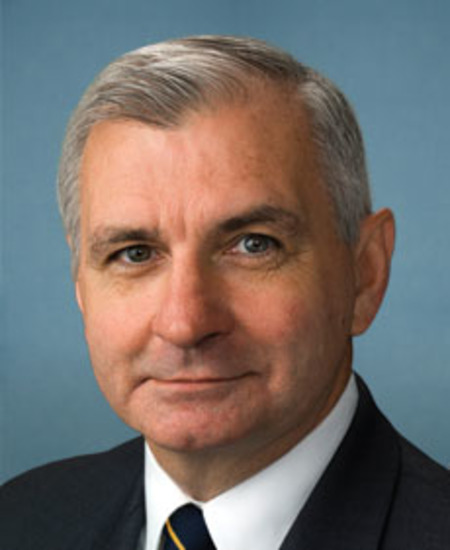
Sen. Jack Reed
Sponsored bills
This resolution honors the contributions of small businesses in the United States and supports the designation of National Small Business Week.
National Defense Authorization Act for Fiscal Year 2022 This bill authorizes Department of Defense (DOD) activities for FY2022 and addresses related issues. For example, the bill provides or extends procurement authority for certain helicopters and amphibious shipbuilding programs; requires DOD to establish executive education activities on emerging technologies for certain officers and civilian leaders; provides statutory authority related to DOD Science and Technology Reinvention Laboratories, including direct hire authority with respect to advanced degree holders for positions at such laboratories; establishes within DOD a working group to develop a plan for creating a digital development infrastructure that supports tools and processes for developing and fielding applications powered by artificial intelligence; requires DOD core processes, such as acquisition and infrastructure planning, to fully consider and make needed adjustments to account for current and emerging climate and environmental challenges and to ensure climate resilience; expands Selective Service registration to include women; requires DOD to track allegations of retaliation against individuals who have made complaints of sexual assault or sexual harassment; requires DOD to implement certain recommendations from the Independent Review Commission on Sexual Assault in the Military; repeals a preference for fixed-price contracts in the Defense Federal Acquisition Regulation Supplement; prohibits DOD from acquiring personal protective equipment from non-allied foreign nations, with some exceptions; extends and modifies authorities to assist vetted Syrian groups and individuals, provide assistance to counter the Islamic State of Iraq and Syria, and support the activities of the Office of Security Cooperation in Iraq; and extends and modifies the Indo-Pacific Maritime Security Initiative and the Pacific Deterrence Initiative.
This resolution designates the week of September 19-September 25, 2021, as National Estuaries Week.
Suicide Prevention Lifeline Improvement Act of 2021 This bill reauthorizes through FY2027 and expands the requirements for the National Suicide Prevention Lifeline Program. Specifically, the Substance Abuse and Mental Health Services Administration (SAMHSA) must undertake efforts to raise awareness about the program and improve data collection and analysis of demographic information related to the program. In addition, SAMHSA must develop a plan to ensure the provision of high-quality service. The bill also directs the Government Accountability Office to study the program.
This joint resolution proposes a constitutional amendment authorizing Congress and the states to set reasonable limits on the raising and spending of money by candidates and others to influence elections. The amendment grants Congress and the states the power to implement and enforce this amendment by legislation. They are allowed to distinguish between natural persons and corporations or other artificial entities created by law, including by prohibiting such entities from spending money to influence elections.
Do No Harm Act This bill prohibits the application of the Religious Freedom Restoration Act of 1993 (RFRA) to specified federal laws or the implementation of such laws. Currently, RFRA prohibits the government from substantially burdening a person's exercise of religion even if the burden results from a rule of general applicability, except in furtherance of a compelling governmental interest when using the least restrictive means. Under the bill, RFRA is inapplicable to laws or the implementation of laws that protect against discrimination or the promotion of equal opportunity (e.g., the Civil Rights Act of 1964); require employers to provide wages, other compensation, or benefits, including leave; protect collective activity in the workplace; protect against child labor, abuse, or exploitation; or provide for access to, information about, referrals for, provision of, or coverage for, any health care item or service. The bill prevents RFRA from being used to deny (1) goods or services the government has contracted, granted, or made an agreement to provide to a beneficiary of or participant in a program or activity funded by such government contract, grant, agreement, or other award; or (2) a person's full and equal enjoyment of a government-provided good, service, benefit, facility, privilege, advantage, or accommodation. In order for a person to assert a RFRA claim or defense in a judicial proceeding, the government must be a party to the proceeding.
This resolution expresses support for the goals of National Physician Suicide Awareness Day.
Cybersecurity Disclosure Act of 2021 This bill directs the Securities and Exchange Commission to issue final rules requiring a registered issuer of securities to disclose in its mandatory annual report or annual proxy statement whether any member of its governing body has expertise or experience in cybersecurity. If no member has such expertise or experience, the issuer must describe what other company cybersecurity aspects were taken into account by the persons responsible for identifying and evaluating nominees for the governing body.
For the People Act of 2021 This bill addresses voter access, election integrity and security, campaign finance, and ethics for the three branches of government. Specifically, the bill expands voter registration (e.g., automatic and same-day registration) and voting access (e.g., vote-by-mail and early voting). It also limits removing voters from voter rolls. The bill requires states to establish independent redistricting commissions to carry out congressional redistricting. Additionally, the bill sets forth provisions related to election security, including sharing intelligence information with state election officials, supporting states in securing their election systems, developing a national strategy to protect U.S. democratic institutions, establishing in the legislative branch the National Commission to Protect United States Democratic Institutions, and other provisions to improve the cybersecurity of election systems. Further, the bill addresses campaign finance, including by expanding the prohibition on campaign spending by foreign nationals, requiring additional disclosure of campaign-related fundraising and spending, requiring additional disclaimers regarding certain political advertising, and establishing an alternative campaign funding system for certain federal offices. The bill addresses ethics in all three branches of government, including by requiring a code of conduct for Supreme Court Justices, prohibiting Members of the House from serving on the board of a for-profit entity, and establishing additional conflict-of-interest and ethics provisions for federal employees and the White House. The bill requires the President, the Vice President, and certain candidates for those offices to disclose 10 years of tax returns.