

Protecting Americans with Pre-Existing Conditions Act of 2021 This bill nullifies specified guidance and final rule provisions pertaining to Section 1332 waivers (also known as State Innovation Waivers or State Relief and Empowerment Waivers) issued by the Department of the Treasury and the Department of Health and Human Services. The provisions allow states to forego certain requirements of the Patient Protection and Affordable Care Act in order to implement experimental plans for health care coverage, as long as the resulting coverage meets certain statutory criteria. The provisions, which supersede earlier guidance from 2015, alter agency interpretation of how states may satisfy the statutory criteria for waiver approval. For example, the provisions (1) redefine acceptable coverage under such waivers to include short-term, limited-duration insurance and association health plans; (2) allow the comprehensiveness and affordability of coverage under such waivers to be assessed based on projected availability, rather than enrollment; and (3) allow the level of coverage to be assessed based on the effects over the entire course of the waiver, rather than per year.
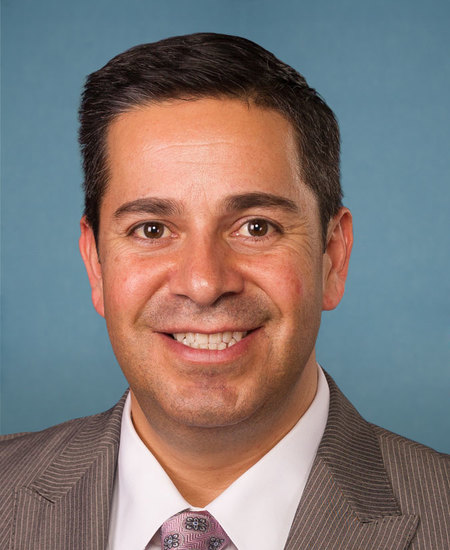
Sen. Ben Ray Luján
Sponsored bills
Accessible, Affordable Internet for All Act This bill reauthorizes through FY2026, revises, and establishes grants and activities to promote access to telecommunications services, including broadband internet. The bill addresses digital equity and inclusion through grants and by requiring studies on barriers to adopting broadband services and related matters. The bill addresses broadband affordability and access. It (1) reauthorizes and expands programs that subsidize or support broadband services for, among others, eligible households, schools, and minority communities; and (2) establishes a program for expanding broadband service for underserved areas and community support organizations (e.g., religious organizations). Additionally, the Federal Communications Commission (FCC) must expand programs that verify an individual's eligibility for subsidized telecommunications services. The bill addresses matters concerning broadband data. The FCC must (1) issue rules for collecting pricing data and labels for disclosing information about broadband plans to consumers, and (2) collaborate and share data with federal agencies and stakeholders. The bill makes financing (e.g., low-interest loans) available to communities and public-private partnerships for broadband infrastructure investments and creates grants to establish or expand certain internet exchange facilities and submarine cable landing stations. Additionally, the Department of Transportation must require states to install conduits for broadband cables as part of certain highway projects. The bill also sets up a task force on nationwide dig once requirements (i.e., policies or practices to minimize excavations of highway rights-of-way when installing telecommunications infrastructure). Further, the bill preempts state laws that prohibit certain telecommunications service providers (e.g., public providers) from providing high-speed broadband services.
Assault Weapons Ban of 2021 This bill makes it a crime to knowingly import, sell, manufacture, transfer, or possess a semiautomatic assault weapon (SAW) or large capacity ammunition feeding device (LCAFD). The prohibition does not apply to a firearm that is (1) manually operated by bolt, pump, lever, or slide action; (2) permanently inoperable; (3) an antique; or (4) a rifle or shotgun specifically identified by make and model. The bill also exempts from the prohibition the following, with respect to a SAW or LCAFD: importation, sale, manufacture, transfer, or possession related to certain law enforcement efforts, or authorized tests or experiments; importation, sale, transfer, or possession related to securing nuclear materials; and possession by a retired law enforcement officer. The bill permits continued possession, sale, or transfer of a grandfathered SAW, which must be securely stored. A licensed gun dealer must conduct a background check prior to the sale or transfer of a grandfathered SAW between private parties. The bill permits continued possession of, but prohibits sale or transfer of, a grandfathered LCAFD. Newly manufactured LCAFDs must display serial number identification. Newly manufactured SAWs and LCAFDs must display the date of manufacture. The bill also allows a state or local government to use Edward Byrne Memorial Justice Assistance Grant Program funds to compensate individuals who surrender a SAW or LCAFD under a buy-back program.
Broadband Infrastructure Finance and Innovation Act of 2021 This bill requires the National Telecommunications and Information Administration to make financing available for the construction and deployment of broadband infrastructure through a broadband infrastructure finance and innovation program. Specifically, the bill provides a means for communities and public-private partnerships to apply for low-interest secured loans, lines of credit, or loan guarantees to finance broadband infrastructure investments. The bill provides funding to carry out the program, and it requires biennial reports on the financial performance of projects carried out with program assistance.
This bill requires that the provision of Wi-Fi access on school buses be made eligible for support under the E-Rate program, which allots broadband discounts to schools and libraries.
Hello Girls Congressional Gold Medal Act of 2021 This bill provides for the award of a single Congressional Gold Medal in honor of the female telephone operators of the Army Signal Corps, commonly known as the Hello Girls , in recognition of their military service, devotion to duty, and 60-year struggle for veterans' benefits and recognition as soldiers.
Achieving Thorough Transparency and Accessibility for Information Navigation on Mental Health Act of 2021 or the ATTAIN Mental Health Act This bill requires the Department of Health and Human Services (HHS) to establish a public-facing, online dashboard to publicize federally funded mental health grants. The dashboard must contain, for example, program names and opening and closing dates for applications. In addition, HHS must establish a process to include information voluntarily provided by states about their federally supported mental health grants on the dashboard. In developing the dashboard, HHS must consult with appropriate federal departments and agencies and other stakeholders.
American Dream Employment Act of 2021 This bill permits the compensation of congressional employees who hold a current employment authorization document that was issued pursuant to a grant of (1) deferred action, including under the Deferred Action for Childhood Arrivals Program; (2) deferred enforced departure; or (3) temporary protected status. (Generally, these programs and statuses allow eligible aliens to remain and work in the United States.)
End Racial and Religious Profiling Act of 2021 or ERRPA This bill establishes a framework to eliminate racial profiling at the federal, state, and local levels. Specifically, it requires federal law enforcement agencies to maintain policies and procedures to eliminate racial profiling, including training, data collection, and complaint procedures. State, local, and tribal law enforcement agencies must maintain similar policies and procedures as a condition of receiving funds under the Edward Byrne Memorial Justice Assistance Grant program and the Community Oriented Policing Services program. To enforce violations, the bill authorizes civil suits by the Department of Justice and affected individuals.
Stop Underrides Act This bill requires the installation of rear, side, and front underride guards on certain trucks and trailers. Specifically, the Department of Transportation (DOT) must require the installation of rear, side, and front underride guards on the following a trailer or semi-trailer that is more than 10,000 pounds, and a single unit truck for which the bottom of the carriage is greater than 22 inches above the ground and that is more than 10,000 pounds. For rear and side underride guards, DOT must require adherence to a performance standard that requires the guards to be able to prevent intrusion from the body or frame of a trailer, semi-trailer, or truck into the passenger compartment of the motor vehicle that contacts the guard while traveling at 35 miles per hour. In addition, DOT must require drivers to (1) conduct a pre-trip inspection of the underride protection system on their vehicles; (2) identify rusted metal compromising structural integrity, cracked welds, or missing or loose fasteners; and (3) complete any necessary repairs. DOT must establish a Committee on Underride Protection to oversee the ongoing underride guard rulemaking process. DOT must publish data on victims of truck underride crashes.