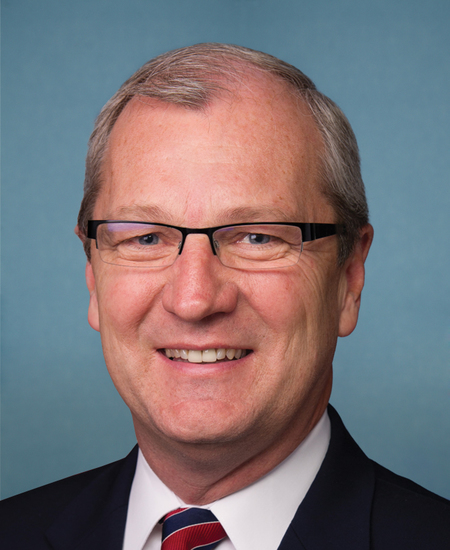
Veterans 2nd Amendment Protection Act of 2025 This bill prohibits the Department of Veterans Affairs (VA) from transmitting certain information to the National Instant Criminal Background Check System (NICS) utilized by licensed importers or dealers of firearms. Specifically, the bill prohibits the VA from transmitting personally identifying information of a veteran or a beneficiary to the NICS solely on the basis that such veteran or beneficiary has an appointed fiduciary to manage their benefits, unless there is an order or finding of a judicial authority that such veteran or beneficiary is a danger to themselves or others.
Sponsored bills
Maddy summaryThe Restore VA Accountability Act of 2025 establishes new rules for disciplining VA supervisors and management officials (excluding senior executives and political appointees) for poor performance or misconduct. It requires the VA Secretary to use specific, written criteria - like the offense's severity, the employee's role, and past record - when deciding on removal, demotion, or suspension, and mandates decisions within 15 business days. The bill creates an internal grievance process for affected employees and strengthens whistleblower protections by requiring Special Counsel approval before disciplining someone who disclosed wrongdoing. It also limits judicial review to cases of arbitrary or capricious decisions and explicitly prohibits courts from reducing penalties. The law applies to VA employees covered under the bill's definition, effective from the 2017 VA Accountability Act's enactment date.
Maddy summaryThis bill authorizes the U.S. Mint to produce commemorative coins honoring Roberto Clemente, a Hall of Fame baseball player and humanitarian, including $5 gold, $1 silver, and half-dollar coins. The coins, to be minted between January 1, 2027, and December 31, 2027, will feature designs reflecting Clemente's baseball career and activism, with surcharges funding the Roberto Clemente Foundation's youth sports, education, and disaster relief programs. The foundation will receive all surcharges ($5-$35 per coin) to support its mission, while the coins themselves are legal tender. This procedural bill does not create new policy but commemorates Clemente's legacy through a limited coin issuance.
Maddy summaryThis bill amends the Natural Gas Act to give the Federal Energy Regulatory Commission (FERC) exclusive authority to approve or deny applications for LNG terminals (including those for export or import). It requires FERC to deem such projects "consistent with the public interest" when making decisions. The bill also clarifies that the President retains existing authority under laws like the International Emergency Economic Powers Act to block LNG exports to countries designated as "state sponsors of terrorism." This directly affects LNG terminal developers and FERC, streamlining approval processes while preserving presidential sanctions powers.
Maddy summaryThe Choice in Affordable Housing Act of 2025 aims to improve the Housing Choice Voucher program by increasing landlord participation, particularly in high-opportunity neighborhoods (census tracts with poverty rates below 20%). It authorizes one-time payments to landlords (up to 200% of monthly housing assistance), security deposit payments to reduce tenant barriers, and bonuses for public housing agencies that employ dedicated landlord liaisons. The bill establishes a $100 million annual fund (2025-2029) to support these initiatives through the Herschel Lashkowitz Housing Partnership Fund. This legislation directly affects low-income families using vouchers, landlords who participate in the program, and public housing agencies administering the program.
Maddy summaryS 903, the PASS Act, requires the Committee on Foreign Investment in the United States (CFIUS) to review foreign purchases of U.S. agricultural land or businesses near military installations or sensitive government facilities. It specifically targets transactions involving foreign entities acting on behalf of designated "covered countries" (China, Russia, Iran, and North Korea), prohibiting such deals unless the President grants a national interest waiver. The bill defines "agricultural land" broadly and mandates CFIUS to determine within 30 days if a transaction qualifies for review, with the President having authority to block purchases near security-sensitive sites. This law directly affects foreign investors from the listed countries seeking to acquire U.S. farmland or agribusinesses in areas near military bases or government properties.
Maddy summaryThis bill requires the Department of Veterans Affairs (VA) to cover hyperbaric oxygen therapy (HBOT) as a treatment option for veterans diagnosed with traumatic brain injury (TBI) or post-traumatic stress disorder (PTSD) who have already tried at least two other evidence-based treatments. It directly affects veterans with these conditions who are at high risk of suicide or self-harm, as specified in the bill's findings. The key provision mandates that the VA provide HBOT under VA health care programs without requiring prescription drugs, opioids, or invasive procedures. This policy change expands access to a non-drug treatment option for eligible veterans, focusing on proven alternatives for TBI and PTSD management.
Maddy summaryThe ACRE Act of 2025 excludes interest income from certain rural and agricultural loans from taxable income for specific lenders. It directly affects qualified lenders (like banks, farm credit institutions, and insurance companies) and borrowers securing loans for rural property, including single-family homes in rural areas or agricultural land. Key provisions allow lenders to not count interest on qualifying loans as taxable income, provided the loans are secured by eligible rural/agricultural property, don’t exceed $750,000 for single-family homes, and avoid "foreign adversary entities" (like China, Russia, or Iran). The bill also requires a Treasury report on the policy’s impact after five years.
Maddy summarySCONRES 8 is a Senate concurrent resolution supporting the Local Radio Freedom Act. It urges Congress not to impose a new fee or charge on local radio stations for playing music over the air, or on businesses like bars and restaurants that play radio broadcasts publicly. The resolution argues that such a fee would disrupt the current system where radio stations provide free promotional support to the music industry and essential local services like emergency weather updates. It claims the existing model has fostered a thriving music and broadcasting sector without harming small businesses or consumers. This resolution does not create law but expresses congressional support for maintaining the current fee-free system.
Maddy summaryThis bill establishes a federal research program to improve the identification, plugging, and repurposing of abandoned oil and gas wells. It directs the Secretary to create a program focused on developing better remote sensing technologies, understanding methane emissions from wells, and finding cost-effective methods for plugging and repurposing wells (like for geothermal energy). The program requires coordination with universities, national labs, and private companies, and authorizes $30 million in 2026 increasing to $35 million by 2030. It directly affects federal agencies managing energy and environmental programs, and aims to address environmental risks from wells no longer in use.