

Maddy summaryThe Unleashing AI Innovation in Financial Services Act creates a new pathway for financial institutions to test AI-powered financial products with regulatory flexibility. Financial institutions can apply to their regulatory agency for an "alternative compliance strategy" that would temporarily waive or modify certain regulations for a limited time, provided they demonstrate how the AI test project serves the public interest, improves consumer access, and manages risks. Regulatory agencies must review applications within 120 days and report annually to Congress on outcomes of these AI test projects without disclosing proprietary information. This law directly affects banks, brokerages, investment firms, and other financial institutions regulated by agencies like the SEC, CFPB, and FDIC.
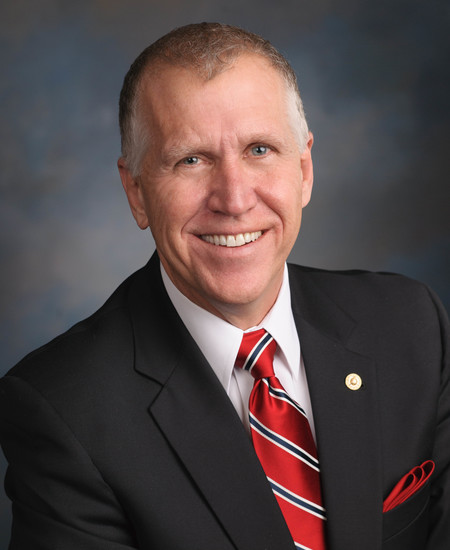
Sen. Thom Tillis
Sponsored bills
Maddy summaryThe Transformation to Competitive Integrated Employment Act (S 2438) aims to transition people with disabilities from special certificates (which allow employers to pay below minimum wage) to competitive integrated employment. It establishes grant programs for states and eligible entities to help employers transform their business models to provide competitive wages (at least minimum wage or customary rates for similar work) and integrated services. The bill phases out special certificates with a 5-year sunset provision (ending 5 years after enactment) and requires employers to transition employees to competitive integrated employment settings. It also mandates data collection, evaluation, and stakeholder engagement, with a focus on involving people with disabilities and their families in the transition process.
Maddy summaryThis bill expands Medicare Part B coverage to include specific pharmacist services, directly affecting Medicare beneficiaries and pharmacists who provide these services. It defines "pharmacist services" as evaluations and treatments for illnesses like COVID-19, flu, RSV, or strep throat, or services addressing public health emergencies, requiring collaboration with physicians as state law permits. Medicare would pay 80% of the lower of the actual charge or 85% of the physician payment rate (100% for public health emergencies), and prohibits balance billing for these services. The changes take effect January 1, 2026.
Maddy summaryThis bill allows tribal law enforcement officers who contract with federal programs to enforce federal law within tribal lands after meeting specific training and certification standards set by the Bureau of Justice Services. It deems these officers as federal law enforcement officers for key legal protections under Titles 18, 5, and 28 of U.S. Code, including liability coverage and retirement benefits. Officers must complete training comparable to federal counterparts, pass background checks, and receive Bureau certification. The Department of Justice must establish certification procedures within two years and coordinate public safety oversight in tribal communities through the Attorney General’s office.
Maddy summaryThis bill extends tax deferral for company stock sold to employee stock ownership plans (ESOPs) and fixes a rule that previously caused small businesses to lose government benefits after 49% ownership transferred to an ESOP. It creates a new Treasury Department office to provide education and technical assistance for companies adopting ESOPs, and establishes a Labor Department Advocate for Employee Ownership to coordinate federal efforts and promote employee ownership. These changes directly affect S corporations considering ESOPs, current ESOP-owned businesses, and small businesses seeking to maintain eligibility for government programs. The bill focuses on removing barriers to employee ownership through concrete tax, eligibility, and support mechanisms.
Maddy summaryS 2414, the Housing Supply Expansion Act of 2025, updates federal rules for manufactured homes by requiring states to treat homes without permanent chassis equally to those with chassis under state laws. States must certify this parity within 1-2 years of the bill’s enactment, covering areas like financing, insurance, and installation. States that miss deadlines face prohibitions on selling or installing "covered" manufactured homes (built after enactment without a permanent chassis). The bill directly affects states (through their regulations), manufactured home manufacturers, sellers, and buyers by standardizing how these homes are regulated nationwide.
Maddy summaryThe CLEAR Waters Act (S 2421) clarifies the definition of "navigable waters" under the Clean Water Act by explicitly excluding certain water features from federal regulation. It directly affects wastewater treatment facilities (like lagoons and ponds), seasonal streams that flow only after rain, and groundwater by removing them from the Clean Water Act's jurisdiction. Key provisions add specific exclusions to the definition, including waste treatment systems, ephemeral features, groundwater, and future exclusions determined by the EPA and Army Corps. This changes which water bodies require federal permits for pollution control, shifting oversight away from these excluded features.
Maddy summaryThis bill amends federal law to include rioting as a form of "racketeering activity" under the Racketeer Influenced and Corrupt Organizations (RICO) Act. It does so by adding a reference to section 2101 (which defines rioting as a federal crime) into the existing list of racketeering activities. This change would allow federal prosecutors to pursue RICO charges against individuals or groups who engage in rioting as part of a larger pattern of organized criminal conduct. The bill directly affects those whose rioting activities are linked to organized criminal enterprises, potentially subjecting them to enhanced penalties under RICO.
Maddy summaryS 2362, the Ending Lending to China Act of 2025, directs the U.S. Treasury to instruct American representatives at multilateral development banks (like the World Bank and Asian Development Bank) to oppose all new loans and financial assistance to China. It targets China specifically because the bill states China has "graduated" from needing such aid (exceeding the income threshold for borrowing since 2016). The bill requires the Treasury to submit annual reports to Congress on China’s borrowing status, voting power at these banks, and efforts to encourage other countries to graduate from borrowing eligibility. This legislation changes U.S. voting policy at these institutions but does not alter China’s actual eligibility or stop existing loans.
Maddy summaryThis bill protects U.S. businesses and citizens whose property (specifically ports, harbors, or marine terminals) in Western Hemisphere countries with U.S. free trade agreements has been taken without compensation by foreign governments. It requires the Secretary of Homeland Security to identify and publicly list these "prohibited properties" within 60 days of the bill's enactment. The law then prohibits vessels using these listed ports from importing goods into the U.S., docking passenger vessels, or conducting maintenance in U.S. ports. It directly affects U.S. property owners in those countries and foreign governments that have seized such assets.