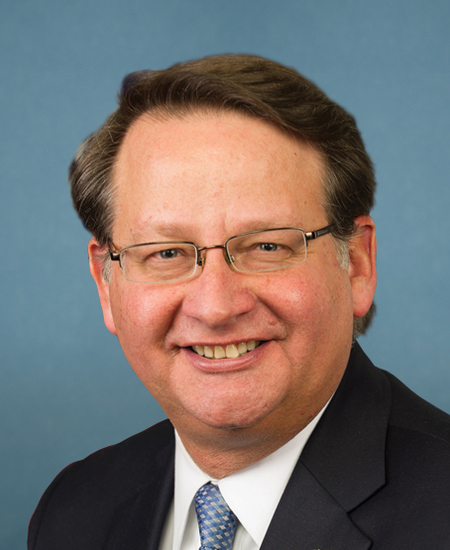
This resolution supports the designation of February 2021 as Career and Technical Education Month to celebrate career and technical education across the United States.
Sponsored bills
Protecting Domestic Violence and Stalking Victims Act of 2021 This bill establishes new federal firearms restrictions for individuals who are convicted of misdemeanor stalking offenses. The bill expands the categories of persons who are prohibited from receiving, possessing, shipping, or transporting a firearm or ammunition. Specifically, it adds a new category of prohibited persons: persons convicted of a misdemeanor crime of stalking. The term misdemeanor crime of stalking means a misdemeanor stalking offense under federal, state, tribal, or municipal law and a course of harassment, intimidation, or surveillance of another person that (1) places such person in reasonable fear of harm to themselves, an immediate family member, a household member, or a spouse or intimate partner (including a current or former dating partner); or (2) causes emotional distress to such person. The bill also specifically prohibits dating partners who are convicted of a misdemeanor crime of domestic violence or who are subject to certain restraining orders from receiving, possessing, shipping, or transporting a firearm or ammunition. Currently, such restrictions generally only apply to spouses, co-parents, and cohabitants.
Butch Lewis Emergency Pension Plan Relief Act of 2021 This bill modifies the funding rules and provides financial assistance for certain pension plans that are underfunded or insolvent. First, the bill expands the authority of, and provides funding for, the Pension Benefit Guaranty Corporation (PBGC) to provide special partition assistance to a multiemployer pension plan that is insolvent or at risk of insolvency. The bill expands eligibility for partition assistance, provides funding for a plan to reach a projected funded ratio of 80% over a 30-year period, and does not require a plan to repay such assistance. The bill further permits a multiemployer pension plan to elect to retain its funding zone status from the previous year for either (1) the first plan year beginning during the period from March 1, 2020, through February 28, 2021; or (2) the next succeeding plan year, as designated by the plan sponsor. A plan may also extend by five years the funding improvement or rehabilitation period if the plan is designated as in endangered or critical status for a plan year beginning in 2020 or 2021. A plan in critical and declining status may not suspend payment of plan benefits. Additionally, the bill adjusts the minimum funding standards for a multiemployer pension plan to account for investment losses and other losses related to the COVID-19 pandemic and modifies the PBGC guarantee formula to increase the maximum potential benefits under a multiemployer pension plan.
Background Check Expansion Act This bill establishes new background check requirements for firearm transfers between private parties (i.e., unlicensed individuals). Specifically, it prohibits a firearm transfer between private parties unless a licensed gun dealer, manufacturer, or importer first takes possession of the firearm to conduct a background check. The prohibition does not apply to certain firearm transfers, such as a gift between spouses in good faith.
This concurrent resolution commends the service and professionalism of the U.S. Capitol personnel who ensured Congress was able to continue operating in the wake of the security breach on January 6, 2021, and it expresses appreciation for the members of the news media reporting on the work of Congress despite the risk to their own safety.
Forced Arbitration Injustice Repeal Act This bill prohibits a predispute arbitration agreement from being valid or enforceable if it requires arbitration of an employment, consumer, antitrust, or civil rights dispute.
Safe Step Act This bill requires a group health plan to establish an exception to medication step-therapy protocol in specified cases. A medication step-therapy protocol establishes a specific sequence in which prescription drugs are covered by a group health plan or a health insurance issuer. A request for such an exception to the protocol must be granted if (1) an otherwise required treatment has been ineffective, (2) such treatment is expected to be ineffective and delaying effective treatment would lead to irreversible consequences, (3) such treatment will cause or is likely to cause an adverse reaction to the individual, (4) such treatment is expected to prevent the individual from performing daily activities or occupational responsibilities, (5) the individual is stable based on the prescription drugs already selected, or (6) there are other circumstances as determined by the Employee Benefits Security Administration. The bill requires a group health plan to implement and make readily available a clear process for an individual to request an exception to the protocol, including required information and criteria for granting an exception. The bill further specifies timelines under which plans must respond to such requests.
Coronavirus Medicaid Response Act This bill increases the Medicaid federal matching rate, also known as the Federal Medical Assistance Percentage (FMAP), for states and U.S. territories that experience economic downturns (i.e., high unemployment) beginning on or after January 1, 2020, in accordance with specified requirements and limitations. The bill's increase is in addition to previously enacted FMAP increases relating to COVID-19 (i.e., coronavirus disease 2019) but may not result in an FMAP greater than 95%.
COVID-19 Health Disparities Action Act of 2021 This bill requires the Centers for Disease Control and Prevention (CDC) to raise awareness about COVID-19 (i.e., coronavirus disease 2019) and promote vaccination among racial and ethnic minority groups and other populations that have experienced health disparities related to the disease. The CDC must conduct, subject to available funding, a public awareness campaign that targets those populations. The CDC must coordinate the campaign with the White House COVID-19 Health Equity Task Force and other federal, state, tribal, and local entities. The CDC must also award grants to health departments for similar COVID-19 awareness campaigns. Grant-funded campaigns must complement the CDC's campaign, as well as other efforts to inform the public about the disease. In addition, the Department of Health and Human Services must develop prototype materials for grantees to use in their campaigns.
Continued Funding for Senior Services During COVID-19 Act This bill provides additional funding for FY2021 to the Administration for Community Living for social services and programs for individuals aged 60 years or older, including to mitigate and prevent COVID-19 (i.e., coronavirus disease 2019). With respect to the additional funding, the bill waives matching requirements that typically apply to funding for these services and programs.