

Maddy summaryThis bill, known as the TAP Promotion Act, would allow representatives from recognized veterans service organizations to join presentations that inform service members about benefits they can access after leaving the military. These presentations are part of the Transition Assistance Program, which helps veterans prepare for civilian life, and the law requires that they be standardized and approved by the Department of Veterans Affairs before being used. The bill also mandates that the presentations include information on how veterans service organizations can help with filing benefit claims, while prohibiting any effort to encourage members to join a specific organization. Additionally, the Department of Veterans Affairs must submit an annual report to Congress detailing which organizations participated in these sessions and how many service members attended.
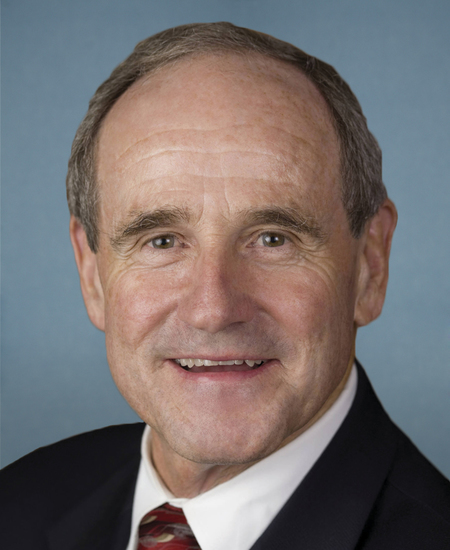
Sen. James E. Risch
Sponsored bills
Maddy summarySRES 613 is a Senate resolution (not a law) recognizing the Army-Navy football game as "America’s Game." It expresses the Senate’s view that the annual game between the U.S. Military Academy and U.S. Naval Academy - held since 1890 - should remain the only major college football game played on the second Saturday of December. The resolution urges broadcasters, athletic conferences, and universities to avoid scheduling competing games during this time slot to preserve the event’s national prominence and its role in honoring military service. It does not create new laws or funding but calls for federal agencies to review policies supporting the game’s civic significance. (Note: This is a symbolic resolution, not a bill with binding effects.)
Maddy summaryS 3917, "The Dalilah Law," prohibits states from issuing or renewing commercial driver's licenses (CDLs) to individuals who are not U.S. citizens, lawful permanent residents, or certain nonimmigrant visa holders (like H-2B workers). It requires all current CDL holders to recertify within 180 days of enactment, verifying citizenship/residency status, English proficiency, and passing English-language tests. States that fail to enforce these requirements face withholding of federal transportation funding. The law directly affects commercial drivers and state licensing agencies, with specific rules for visa holders and English language requirements for CDL operations.
Maddy summaryThis bill requires the U.S. Department of Agriculture and Trade Representative to annually report to Congress on foreign trade barriers affecting U.S. specialty crop exports (like fruits, vegetables, and nuts). The report must identify specific foreign tariffs, quotas, or non-tariff barriers (such as sanitary rules), estimate their economic impact, and detail U.S. actions taken to address them (e.g., WTO disputes or negotiations). It also mandates public comment before drafting the report and requires the unclassified version to be publicly available in machine-readable format. The bill directly affects specialty crop producers and exporters by providing transparency on trade obstacles.
Maddy summaryThe Gun Owner Registration Information Protection Act (S 3916) prohibits federal funding for state or local databases that track lawfully owned firearms or their owners. It defines such databases as those listing firearms possessed by individuals or the individuals themselves who legally own firearms. The bill allows federal funding for databases tracking lost or stolen firearms and their owners, but not for general ownership records. This would require states and localities to cover costs for firearms ownership databases using non-federal funds, shifting financial responsibility away from federal support.
Maddy summaryThis bill terminates a specific tax rate (the Hazardous Substance Superfund financing rate) used to fund hazardous waste cleanup efforts after December 31, 2025, with the change taking effect January 1, 2026. It also modifies how the government repays advances from the Superfund, requiring quarterly payments from unobligated funds until fully repaid, effective upon the bill's enactment. The bill directly affects the federal government's funding mechanisms for the Superfund program, not consumers or businesses. It makes concrete changes to tax code provisions and repayment procedures without altering the program's core purpose or directly impacting gasoline prices (despite the misleading bill title).
Critical Mineral Consistency Act of 2025 This bill modifies the Energy Act of 2020 to expand the definition of critical minerals used by the U.S. Geological Survey (USGS) to include critical materials designated by the Department of Energy (DOE). It also directs USGS to update its list within 45 days of DOE adding a mineral, element, substance, or material to its critical materials list. Thus, the bill requires the lists to be treated consistently and makes critical materials eligible for the same benefits (e.g., financing support or clean energy tax credits) provided to critical minerals. By way of background, DOE's critical materials list contains certain materials that are essential for energy, including those on the critical minerals list of the USGS. The USGS's list, which contains certain minerals that are essential to the nation's economic or national security, is currently not required to include the materials on DOE's list.
Mining Regulatory Clarity Act This bill allows mining operators to use federal lands for activities ancillary to mining, such as waste disposal, regardless of whether those lands contain mineral deposits valuable enough to be mined (mineral validity). It also establishes the Abandoned Hardrock Mine Fund. The bill addresses a 2022 decision in the U.S. Court of Appeals for the Ninth Circuit related to the Rosemont Copper Mine in Arizona (commonly known as the Rosemont decision , described further in CRS Report R48166 ). The court held that mining claims are only allowed where mineral validity has been established and that mill site claims are more appropriate means for establishing a mining waste disposal site under the Mining Act. The bill allows a mining operator to (1) locate and include within its plan of operations as many mill site claims (e.g., areas for waste rock disposal) as are reasonably necessary for its operations, and (2) use or occupy public land in accordance with an approved plan of operations. Additionally, the bill requires any revenue generated from fees for such mill site claims to be deposited into the Abandoned Hardrock Mine Fund. The Department of the Interior must use the fund for certain abandoned hardrock mine reclamation activities.
Ski Hill Resources for Economic Development Act This bill allows National Forest System (NFS) units to keep the majority of ski area permit rental fees that were generated within their boundaries and outlines how revenues from those fees may be used. Such fees are collected by the Department of Agriculture (USDA) from ski area operators on NFS land. Within the NFS unit where the fees were generated, USDA must expend (1) 60%-48% of the collected fees for activities such as administration of the ski area permit program, visitor information, or reducing the likelihood of wildfire in or adjacent to a recreation site; and (2) 20% of the collected fees for activities such as repair of a Forest Service-owned facility, habitat restoration, or search and rescue activities. The remainder of the collected fees must be expended by USDA at any NFS unit for any of the activities specified in this bill.
Maddy summaryThe ARC Act of 2026 establishes a $3.6 billion federal program to provide cost certainty for advanced nuclear energy projects seeking loan guarantees under the Energy Policy Act of 2005. It requires qualifying projects to submit detailed cost estimates, schedule risk analyses, and a project delivery plan to demonstrate on-time, on-budget construction. Borrowers cover cost overruns up to 120% of the base cost estimate, after which the program covers up to 30% of that base estimate (capped at $1.2 billion per project). This directly affects advanced nuclear reactor developers and project owners seeking federal loan guarantees, with strict oversight requirements including quarterly progress reviews and annual schedule updates.