Maddy summarySRES 811 is a non-binding Senate resolution condemning the September 4, 2024, shooting at Apalachee High School in Winder, Georgia, which killed four people (students Christian Angulo and Mason Schermerhorn, and teachers Richard Aspinwall and Cristina Irimie) and injured nine others. The resolution honors the victims by name, extends condolences to their families and the Winder community, and expresses support for those injured. It also thanks first responders and reaffirms the Senate’s commitment to public safety. As a symbolic measure, it does not create new laws or alter policies but formally recognizes the tragedy and its impact.
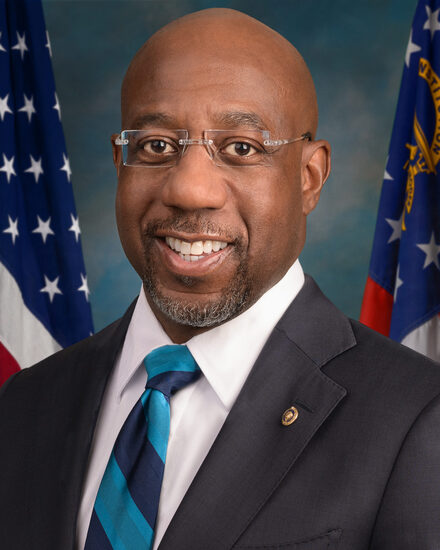
Sen. Raphael G. Warnock
Sponsored bills
Maddy summaryS 4973, the "No Kings Act," removes presidential and vice presidential immunity from federal criminal prosecution, requiring such cases to be handled in federal district courts with appeals limited to the D.C. Circuit. The bill specifically bars the Supreme Court from reviewing cases involving claims of presidential immunity for official acts, including dismissals of indictments or overturning convictions. It directly affects current and former presidents and vice presidents by subjecting them to the same federal criminal accountability as all other citizens. Key provisions prevent courts from considering whether alleged crimes were part of official duties unless Congress specifies otherwise, and clarify that state criminal laws remain applicable.
Maddy summaryThis bill reauthorizes an existing program that provides support and treatment services for law enforcement officers experiencing mental health crises. It extends the funding period for this program from 2020-2024 to 2025-2029 under the Omnibus Crime Control and Safe Streets Act. The key mechanism is simply updating the expiration dates in the law to continue current funding without altering the program's scope or eligibility. The bill directly affects law enforcement officers who access these crisis support services through participating agencies.
Maddy summarySRES 797 designates August 16, 2024, as National Airborne Day to honor the history and contributions of U.S. airborne forces, commemorating the first official U.S. Army parachute jump on August 16, 1940. The resolution calls on the American public to observe the day with ceremonies and activities recognizing airborne forces' legacy in military operations from World War II through modern conflicts. This is a symbolic, non-binding designation with no direct legal or financial impact on specific groups.
Maddy summarySRES 800 is a symbolic Senate resolution introduced on August 1, 2024, by a bipartisan group of senators. It condemns the July 13, 2024, attempted assassination of Donald J. Trump at a Butler, Pennsylvania, rally and honors three individuals affected: Corey D. Comperatore (who died shielding his family), David Dutch (critically injured), and James Copenhaver (critically injured). The resolution calls for national unity and civility following the violent incident. As a non-binding resolution, it does not create new laws or policies but expresses the Senate's stance on the event.
Maddy summaryThis Senate resolution (SRES 802) designates August 2024 as "National Catfish Month" to recognize the U.S. catfish industry. It highlights the industry's economic impact - supporting nearly 10,000 jobs and generating over $1.9 billion in annual output - and emphasizes that U.S. farm-raised catfish is the largest domestic seafood product by weight. The resolution also acknowledges workers in the industry and the sustainability of U.S. catfish production. As a ceremonial resolution, it has no legal effect but serves to honor the industry's contributions.
Maddy summarySRES 753 is a Senate resolution introduced by Senators Ossoff and Warnock calling for the immediate release of George Glezmann, a U.S. citizen wrongfully detained by the Taliban in Afghanistan since December 2022. The resolution demands the Taliban release Glezmann and all other Americans wrongfully detained, urges the Taliban to respect his human rights and provide medical access, and directs the U.S. President to press for his release. It also encourages Qatar (the U.S. protecting power in Afghanistan) to continue health checks and efforts to secure his freedom. The resolution condemns the Taliban’s practice of detaining U.S. citizens without charge and expresses support for Glezmann’s family.
Maddy summaryThis bill amends a Medicare payment provision to adjust the annual budget cap for physician fee adjustments. It replaces a fixed $20 million cap with a new formula: $20 million for years before 2026, $53 million for 2026, and then annual increases based on the previous year's amount starting in 2027. For 2031 and every fifth year after, the cap will be increased by the cumulative medical inflation (MEI) for physicians' services over the prior five years. The bill directly affects Medicare's payment structure for physicians by changing how the annual budget neutrality threshold for fee adjustments is calculated and adjusted.
Maddy summaryThe George Floyd Justice in Policing Act of 2024 establishes new accountability measures for law enforcement by requiring data collection on use of force, stops, and racial profiling; creating a national misconduct registry; banning chokeholds and no-knock warrants in drug cases; and mandating body cameras for officers. The bill would affect all Federal, State, Tribal, and local law enforcement agencies receiving federal funding, particularly those participating in Byrne or COPS grant programs. It includes requirements for agencies to collect and report data on stops and searches disaggregated by race, ethnicity, and gender, and to implement training on racial bias and de-escalation techniques. The legislation also creates new reporting requirements for use of force incidents and establishes penalties for agencies failing to comply with these provisions.
Maddy summaryThis resolution designates July 30, 2024, as "National Whistleblower Appreciation Day" to honor individuals who report government misconduct. It directs federal agencies to inform employees, contractors, and the public about their legal right to report waste, fraud, or misconduct through honest and good-faith disclosures. Agencies must also acknowledge whistleblowers' contributions to combating fraud and protecting public funds. The resolution is ceremonial and does not create new legal protections or alter existing whistleblower laws. It focuses on raising awareness and recognizing the role of whistleblowers in safeguarding taxpayer resources.