

Maddy summaryThe Make Elections Great Again Act (HR 7300) would require voters to present photo identification to cast ballots in person or by mail for federal elections, with limited exceptions for religious objections or military voters. It would establish new requirements for proving U.S. citizenship during voter registration, including documentary proof of citizenship and proof of state residency. The bill would change mail-in ballot procedures by requiring voters to request mail-in ballots (rather than universal mail-in voting), implementing barcode tracking for mail-in ballots, and setting strict deadlines for ballot receipt. These provisions would apply to all states for federal elections held in 2027 or later, affecting how voters register, vote in person, and submit mail-in ballots for federal office elections.
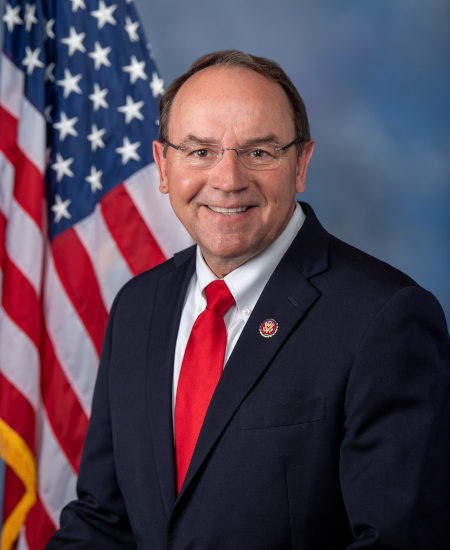
Rep. Thomas P. Tiffany
Sponsored bills
Safeguard American Voter Eligibility Act or the SAVE America Act This bill requires individuals to provide documentary proof of U.S. citizenship when registering to vote, and requires photo identification to vote, in federal elections. Specifically, the bill prohibits states from accepting and processing an application to register to vote in a federal election unless the applicant presents documentary proof of U.S. citizenship. The bill specifies what documents are considered acceptable proof of U.S. citizenship, such as identification that complies with the REAL ID Act of 2005 that indicates U.S. citizenship. Further, the bill (1) prohibits states from registering an individual to vote in a federal election unless, at the time the individual applies to register to vote, the individual provides documentary proof of U.S. citizenship; and (2) requires states to establish an alternative process to demonstrate U.S. citizenship. Each state must take affirmative steps on an ongoing basis to ensure that only U.S. citizens are registered to vote, which shall include establishing a program to identify individuals who are not U.S. citizens using information supplied by certain sources. Additionally, states must remove noncitizens from their official lists of eligible voters. The bill (1) provides for a private right of action for certain violations, and (2) establishes criminal penalties for certain offenses. Individuals voting in federal elections must present an eligible photo identification document. An individual who votes by absentee ballot must submit a copy of their identification document with both the request for, and the submission of, the absentee ballot.
Maddy summaryHR 7304, the OMAR Act, amends campaign finance rules to prevent using campaign funds for spouses' or close relatives' services. It prohibits candidates' committees from compensating a candidate's spouse or immediate family member (defined as children, parents, siblings, or grandchildren) for work related to the campaign, and requires committees to disclose any such payments in regular campaign reports. The bill also adds penalties for candidates who knowingly allowed violations, including preventing committees from reimbursing candidates for fines paid due to these violations. These changes apply to campaign payments made after the bill's enactment.
Maddy summaryHR 7235, the "Protecting Motherhood Act," requires all federal agencies to stop using the term "birthing person" in official documents and instead use specific terms like "female," "mother," "pregnant woman," or "woman." It directly affects federal agencies that produce regulations, forms, or communications, mandating the use of these defined terms when referring to individuals based on biological sex. The bill provides detailed definitions for terms like "female" (based on biological sex at conception) and "pregnant woman" (an adult human female carrying a child). The law takes effect 30 days after enactment. This is a procedural change focused solely on terminology in government documents, with no direct impact on healthcare access or services.
Maddy summaryHR 4255, the Enhancing Safety for Animals Act of 2025, would remove the Mexican wolf (Canis lupus baileyi) from the U.S. Endangered Species Act protections. It directly affects ranchers in the Mexican Wolf Experimental Population Area, who report livestock losses and safety concerns, and shifts regulatory authority from the U.S. Fish and Wildlife Service to state and local management. Key provisions include formally delisting the wolf, nullifying two existing federal rules governing the species, and prohibiting future consideration of Mexican wolf populations in Mexico when making ESA decisions. The bill aims to streamline livestock compensation for ranchers by changing evidentiary standards for wolf depredation claims.
Maddy summaryHR 7186, the American Family Housing Act, restricts large investment firms from purchasing single-family homes or gaining controlling ownership in companies that own many homes. Specifically, it prohibits any "large-scale company" (defined as an investment firm or private fund with over $100 billion in assets under management) from buying single-family residences or holding more than 49% equity in a company owning over 100 such homes, beginning 100 days after enactment. The bill defines "single-family residence" as a standalone home without shared walls or utilities, excluding condos and co-ops. This directly affects major institutional investors in the housing market, limiting their ability to expand ownership of single-family properties. The law aims to curb institutional investment in residential real estate through these specific financial and ownership restrictions.
Maddy summaryThis bill, titled the Divesting from Communist China’s Military Act of 2026, requires the U.S. Treasury Department to add certain Chinese military companies to a government list that restricts investments. The Secretary of the Treasury must list entities identified by the Department of Defense as Chinese military companies within 90 days. Once an entity is listed, U.S. persons are generally prohibited from buying or selling its publicly traded securities, consistent with existing executive orders. The bill includes a one-year period during which U.S. persons may sell off their existing investments in these newly listed companies, solely for divestment purposes.
Maddy summaryThis bill prohibits large card issuers (with over $100 billion in assets) from requiring credit card transactions to process through only one payment network. It allows merchants to direct transactions to any available network and bans restrictions on security technologies that favor specific networks. The Federal Reserve must issue these rules within one year of the bill's enactment. The law applies broadly to credit card processing but excludes certain 3-party payment systems.
Maddy summaryThis bill requires federal agencies to publicly disclose proposed regulatory settlements and consent decrees 60 days before court submission, including their legal basis and key terms (such as attorney fees). Agencies must accept public comments, respond to them, and include summaries of feedback in court filings. It directly affects agencies (like EPA or FDA), private parties suing over regulatory actions, and state/local governments whose rights may be impacted by settlements. The law aims to increase transparency in regulatory settlements without changing substantive regulations or agency authority.
Maddy summaryThis bill, titled "Pet and Livestock Protection Act," is misleading; it actually focuses on gray wolf management. It requires the Secretary of the Interior to reissue a 2020 rule removing gray wolves from the endangered species list within 60 days of enactment. The bill also prohibits courts from reviewing this reissuance. This directly affects gray wolf populations and management policies in states where wolves are present, shifting regulatory control away from federal endangered species protections.