PPP Flexibility for Farmers and Ranchers Act This bill expands eligibility for agricultural producers under the Paycheck Protection Program, established to support small businesses in response to COVID-19 (i.e., coronavirus disease 2019), to include certain agricultural producers organized as partnerships. Currently, only certain agricultural producers that are sole proprietorships, independent contractors, or self-employed individuals may receive support under the program.
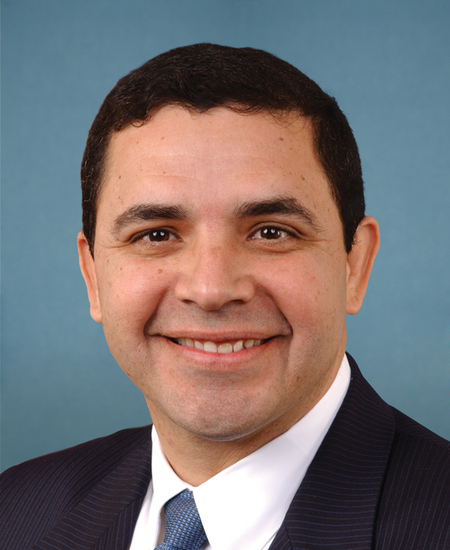
Rep. Henry Cuellar
Sponsored bills
Patient Access to Higher Quality Health Care Act of 2021 This bill repeals provisions under the Stark law (i.e., the Physician Self-Referral Law) that limit, for purposes of Medicare participation, self-referrals by newly constructed or expanded physician-owned hospitals.
Broadening Online Opportunities through Simple Technologies Act or the BOOST Act This bill allows an individual taxpayer to elect a tax credit for 75% of qualified signal booster expenditures up to $400 in a single taxable year through 2025. The bill defines qualified signal booster expenditures as amounts paid for the purchase of any communications signal booster for use by the taxpayer in a principal residence located in an underserved area. The booster is designed to increase the strength or range of a broadband communications signal.
Children's Health Insurance Program Pandemic Enhancement and Relief Act or the CHIPPER Act This bill extends through FY2022 the 11.5% increase to the enhanced federal matching rate, also known as the enhanced Federal Medical Assistance Percentage (FMAP), that is otherwise applicable under the Children's Health Insurance Program (CHIP), subject to specified conditions. For example, in order to receive the increased FMAP in FY2021 and FY2022, a state must cover, without cost-sharing, testing and treatment for COVID-19 (i.e., coronavirus disease 2019), including vaccines, specialized equipment, and therapies.
This bill provides for the presentation of a Congressional Gold Medal to the Freedom Riders, in recognition of their contribution to civil rights by fighting for equality in interstate travel.
Juneteenth National Independence Day Act This bill establishes Juneteenth Independence Day as a federal holiday.
Main Street Tax Certainty Act This bill makes permanent the tax deduction for qualified business income. (Under current law, the deduction expires after December 31, 2025.) Qualified business income is defined as the net amount of qualified items of income, gain, deduction and loss with respect to any trade or business, excluding capital gains or losses, dividends, interest income, or income earned outside the U.S.
Hospitality and Commerce Job Recovery Act of 2021 This bill extends existing and establishes new tax credits that assist the hospitality and restaurant industry. Specifically, it allows a conventionand trade show restart tax credit; extends the employee retention tax credit through 2021; suspends for taxable years 2021 through 2022, the limitation on entertainment expenses related to a trade or business, allows a restaurant and dining restart credit for businesses closed or forced to reduce services due to COVID-19 (i.e., coronavirus disease 2019); allows a 50% tax credit for travel expenditures; and allows a tax credit for unmerchantable inventory for the period between December 31, 2019, and before April 1, 2021.
American Innovation and R&D Competitiveness Act of 2021 This bill eliminates the five-year amortization requirement for research and experimental expenditures scheduled to begin in 2022, thus allowing continued expensing of such expenditures in the taxable years in which they are incurred.
Direct Interstate Retail Exemption for Certain Transactions Act or the DIRECT Act This bill allows meat and poultry products inspected by State Meat and Poultry Inspection programs to be sold by retail stores, restaurants, or similar retail-type establishments over the internet and shipped by a carrier in commerce (other than for export to a foreign country), provided the meat and poultry products so inspected are shipped directly to household consumers and in normal retail quantities. (Under the inspection programs, the Department of Agriculture Food Safety and Inspection Service allows states that meet certain requirements to inspect meat and poultry. The state-inspected products are currently limited to intrastate commerce, unless a state opts into a separate Cooperative Interstate Shipment Program.)