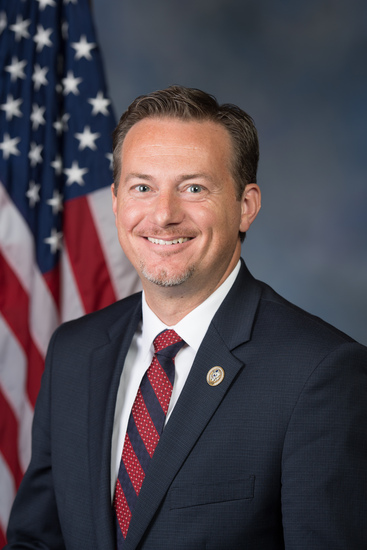
Photo of Michael Cloud
R United States House · District 27 · Texas On the 2026 ballot

Rep. Michael Cloud

Compare
Total votes
2,837
all sessions
Attendance
98%
57 missed
Near the chamber average
With party
85%
of cast votes
Lower than 96% of chamber peers
Bipartisan score
8%
crosses aisle rarely
Higher than 95% of chamber peers
Sponsored
717
bills & resolutions
Near the chamber average
Committees
7
assignments
717 bills and resolutions

Sponsored bills

Total
717
Primary
68
Co-sponsor
649
This page
717
matching current filters
Co-sponsor HJRES 107
In committee · Ohio House · Co-sponsor
Providing for congressional disapproval under chapter 8 of title 5, United States Code, of the rule submitted by the Federal Communications Commission relating to "The Infrastructure Investment and Jobs Act: Prevention and Elimination of Digital Discrimination".

Maddy summaryHJRES 107 is a congressional resolution seeking to block a Federal Communications Commission (FCC) rule published on January 22, 2024 (89 Fed. Reg. 4128). The resolution aims to disapprove the FCC's rule implementing digital discrimination protections under the Infrastructure Investment and Jobs Act, which would have required internet providers to prevent discriminatory practices. If passed, this resolution would nullify the FCC rule, preventing it from taking effect under the Congressional Review Act (Chapter 8 of Title 5, U.S. Code). The bill directly affects the FCC's regulatory authority over digital discrimination enforcement in broadband services.

In committee Feb 2, 2024 1 co-sponsor
Co-sponsor HJRES 110
In committee · Ohio House · Co-sponsor
Providing for congressional disapproval under chapter 8 of title 5, United States Code, of the rule submitted by the Department of the Treasury relating to "Coronavirus State and Local Fiscal Recovery Funds".

Maddy summaryThis resolution seeks congressional disapproval of a Treasury Department rule (88 Fed. Reg. 80584, November 2023) that established spending guidelines for $350 billion in federal Coronavirus State and Local Fiscal Recovery Funds. If passed, it would nullify the rule, preventing the Treasury from enforcing its specific restrictions on how states and localities could use these pandemic recovery funds. The bill does not alter the underlying funding program but targets the implementation rules through a procedural disapproval process under Title 5 of the U.S. Code. It directly affects the Treasury Department's authority to administer the fund distribution rules.

In committee Feb 1, 2024 1 co-sponsor
Co-sponsor HR 7083
In committee · Ohio House · Co-sponsor
RAZOR Act

Maddy summaryHR 7083, the RAZOR Act, prohibits federal agencies from removing or altering barriers (like fences or fences) built by states along the U.S. border to prevent unlawful crossings. It directly affects federal departments and agencies, such as the Department of Homeland Security, by restricting their ability to modify state-constructed border infrastructure. The key provision is a clear ban on any federal action that would change or remove these state-built barriers. This bill makes a specific policy change regarding federal-state border infrastructure authority without altering broader immigration law.

In committee Jan 25, 2024 1 co-sponsor
Co-sponsor HR 7035
In committee · Ohio House · Co-sponsor
Death Tax Repeal Act

Maddy summaryThe Death Tax Repeal Act would eliminate the federal estate tax and generation-skipping transfer tax for estates of people who die on or after the bill's enactment date, and for generation-skipping transfers made after that date. It would also establish a new $10 million lifetime gift tax exemption (adjusted annually for inflation) and replace the existing gift tax rate schedule with a revised structure. These changes would primarily affect high-net-worth individuals and their heirs, as the estate tax and gift tax typically apply to large estates or gifts exceeding the new exemption threshold. The bill's provisions would take effect on the date of enactment, with transitional rules for the year the bill is signed into law.

In committee Jan 18, 2024 1 co-sponsor
Co-sponsor HR 6744
In committee · Ohio House · Co-sponsor
No VA Resources for Illegal Aliens Act

Maddy summaryHR 6744, the "No VA Resources for Illegal Aliens Act," prohibits the Department of Veterans Affairs (VA) from providing health care or processing health care claims for individuals unlawfully present in the United States who are not already eligible for VA health care under existing law. This bill directly affects undocumented immigrants who do not qualify for VA benefits through standard veteran eligibility criteria. The key provision explicitly bars VA resources from being used for any care or claims processing for such individuals. The bill does not alter VA eligibility rules for veterans but prevents the use of VA funds for non-eligible non-citizens unlawfully present in the U.S.

In committee Jan 11, 2024 1 co-sponsor
Co-sponsor HR 1147
Passed · Ohio House · Co-sponsor
Whole Milk for Healthy Kids Act of 2023

Maddy summaryHR 1147, the Whole Milk for Healthy Kids Act of 2023, allows schools participating in the National School Lunch Program to offer whole milk as an option during lunch. It amends the school lunch law to explicitly permit schools to serve flavored and unflavored whole milk alongside reduced-fat, low-fat, and fat-free milk choices for students. The bill also requires the Secretary of Agriculture to adjust meal regulations to account for saturated fat from whole milk, ensuring it doesn't count against meal fat limits. This change directly affects participating schools and the students who receive school lunches, expanding their milk beverage options.

Passed Dec 18, 2023 1 co-sponsor
Co-sponsor HR 6734
In committee · Ohio House · Co-sponsor
Stopping Unconstitutional Background Checks Act

Maddy summaryHR 6734 prohibits the use of federal funds to finalize, implement, or enforce the Bureau of Alcohol, Tobacco, Firearms, and Explosives' (ATF) proposed rule (2022R-17) defining "engaged in the business as a dealer in firearms." This bill directly affects the ATF by blocking funding for this specific regulatory rule, which was proposed in August 2023. The legislation does not create new requirements but prevents federal resources from being used to advance this particular ATF regulation.

In committee Dec 13, 2023 1 co-sponsor
Co-sponsor HR 357
Passed · Ohio House · Co-sponsor
Ensuring Accountability in Agency Rulemaking Act

Maddy summaryHR 357, the Ensuring Accountability in Agency Rulemaking Act, requires federal agencies to have rules signed by Senate-confirmed appointees (or senior appointees for initiation), aiming to increase oversight of regulatory decisions. It directly affects all federal agencies creating rules under standard procedures (covered by 5 U.S.C. § 553), ensuring higher-level accountability for rulemaking. Exceptions exist only if an agency head certifies that compliance would impede public safety/security, with required notifications to the OIRA Administrator and Federal Register publication. The Office of Information and Regulatory Affairs (OIRA) will monitor agency compliance with these requirements.

Passed Dec 13, 2023 1 co-sponsor
Primary HR 6619
In committee · Ohio House · Lead sponsor
Preventing Aliens Through Rivers Or Land Act

Maddy summaryHR 6619, the PATROL Act, prevents the federal government from suing states for building border barriers. It specifically blocks the Attorney General from filing civil lawsuits under the 1899 Act against states that construct physical barriers (like walls, fences, or buoys) along the border to stop illegal entry or protect state territory. The law directly affects states building such barriers and the federal government’s legal authority to challenge those actions. This is a procedural change that removes a legal obstacle for states pursuing border security measures.

In committee Dec 11, 2023 0 co-sponsors
Co-sponsor HR 6612
In committee · Ohio House · Co-sponsor
Birthright Citizenship Act of 2023

Maddy summaryHR 6612, the Birthright Citizenship Act of 2023, clarifies who qualifies for U.S. citizenship at birth under the 14th Amendment. It amends immigration law to define that a child born in the U.S. is "subject to the jurisdiction" for citizenship if one parent is a U.S. citizen, a lawful permanent resident living in the U.S., or an active-duty military member. The bill directly affects children born in the U.S. to parents in these specific categories, ensuring they meet the citizenship definition without altering the constitutional right itself. It explicitly states this definition applies only to births occurring after the law's enactment, leaving existing citizenship status unaffected for those born before. The bill aims to codify existing constitutional principles through specific, narrow criteria for parental status.

In committee Dec 6, 2023 1 co-sponsor
Showing 301 to 310 of 717 bills
Previous 1 30 31 32 72 Next