Maddy summaryHR 4053, the "Stop Funding Rioters Act," blocks individuals convicted of specific offenses from accessing Small Business Administration (SBA) programs. It directly affects people convicted of assaulting police officers (as a misdemeanor or felony) or committing a felony during a riot that destroyed a small business. The bill's key provision denies eligibility for any SBA assistance, loans, or programs to these individuals. This policy change modifies SBA program access based solely on prior criminal convictions related to violence against law enforcement or riot-related property damage.
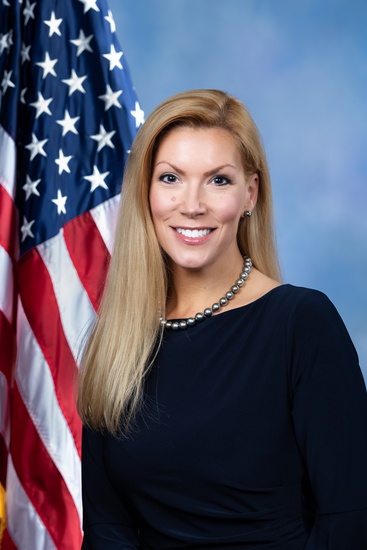
Rep. Beth Van Duyne
Sponsored bills
Patient Access to Higher Quality Health Care Act of 2025 This bill repeals provisions under the Stark law (i.e., the Physician Self-Referral Law) that limit, for purposes of Medicare participation, self-referrals by newly constructed or expanded physician-owned hospitals.
Maddy summaryThis resolution (HRES 503) is a non-binding expression of support for designating June 11, 2025, as "World Franchise Day." It does not create new laws or directly affect any individuals or businesses; instead, it symbolically recognizes franchising's economic role. The resolution cites franchising's history (tracing to Benjamin Franklin and Isaac Singer), its current scale (830,876 U.S. establishments supporting 8.8 million jobs), and its contribution to the economy (nearly 3% of GDP). It is a procedural resolution, not a policy change, meant to acknowledge franchising's significance as a business model.
Maddy summaryHRES 498 is a non-binding House resolution condemning recent antisemitic violence in the U.S., citing specific incidents like the June 2025 Boulder firebombing, May 2025 D.C. shooting at a Jewish museum, and April 2025 arson attempt targeting a Jewish governor. It affirms that while peaceful protest is protected, violence, intimidation, and support for groups linked to Hamas are criminal acts. The resolution urges investigations into these attacks, supports victims, and calls on schools and institutions to reject antisemitism and foster safe environments for Jewish Americans. It does not create new laws or policies but formally expresses the House's stance against antisemitic violence.
Maddy summaryThis bill would make non-citizens deportable if they incite or participate in riots during civil unrest involving assaults on law enforcement or military personnel, or destruction of public property, and who were unlawfully present, had DACA, or were lawful permanent residents at the time of the offense. It permanently bars such individuals from reentering the U.S. or accessing any relief from deportation, including asylum, cancellation of removal, or future DACA benefits. During declared emergencies (such as national disasters or state emergencies), the law mandates expedited removal and mandatory detention for those covered, with no discretion for enforcement.
Maddy summaryHR 2966, the American Entrepreneurs First Act of 2025, modifies requirements for certain Small Business Administration (SBA) loans by requiring applicants to provide proof of citizenship, national status, or lawful permanent residency for themselves and all business owners. It directly affects small business applicants and their owners who are non-citizens, including refugees, nonimmigrant visa holders, DACA recipients, or undocumented individuals. The bill mandates new documentation, such as alien registration numbers for lawful permanent residents, and prohibits loans if applicants fail to provide this information or if ineligible owners are involved. These changes apply to SBA 7(a) loans and Title V investment programs, altering eligibility criteria for specific loan programs.
Maddy summaryThis bill requires cities and counties with "sanctuary" policies to return unobligated federal funds received during periods they maintained such policies. It directly affects local jurisdictions that have laws or practices blocking sharing of immigration status information or refusing to comply with federal detainer requests under immigration law. Key provisions mandate fund repayment for fiscal years starting five years before the bill's effective date (excluding certain crime control funds), with a 15-day grace period for jurisdictions to correct their policies. The law targets specific funding streams, not all federal aid, and focuses on unspent funds rather than future allocations.
Maddy summaryThis bill increases penalties for nonimmigrant visa overstays under U.S. immigration law. It directly affects individuals admitted on temporary visas (like students or workers) who remain in the U.S. past their authorized stay, defining a violation as failing to maintain status for 10 cumulative days. Key provisions raise civil fines from $50-$250 to $500-$1,000 per violation, with doubled penalties for repeat offenses, and add criminal penalties of up to 6 months (first violation) or 2 years (repeat offenses). The law also clarifies that these penalties apply in addition to existing civil or criminal penalties.
Maddy summaryThis bill amends the Ysleta del Sur Pueblo and Alabama-Coushatta Indian Tribes of Texas Restoration Act to align their gaming regulations with the standard Indian Gaming Regulatory Act (IGRA). It eliminates redundant language that previously created an exception for these two tribes, ensuring they are regulated identically to all other tribes operating gaming facilities on tribal lands. The key provision adds a "Rule of construction" requiring IGRA to fully apply to their gaming activities and removes two sections (107 and 207) that caused regulatory overlap. This directly affects the Ysleta del Sur Pueblo and Alabama-Coushatta tribes in Texas, removing their unique regulatory status. The change ensures consistent federal oversight for tribal gaming across all 28 states with regulated tribal casinos.
Maddy summaryHR 3598, the Deescalation Drone Pilot Program Act of 2025, establishes a federal pilot program to test nonlethal drones for law enforcement during active shooter events. The program, managed by the FAA, will review nonlethal devices (like sound emitters or cameras) for drones, develop training and safety protocols, and assess effectiveness in indoor scenarios to increase officer safety. It requires drones to be manufactured in the U.S. and mandates a report to Congress within 3 months of the pilot's conclusion, followed by rulemaking to create a formal approval process for law enforcement use. The bill directly affects Federal, State, local, and Tribal law enforcement agencies responding to active shooter events as defined by the legislation.