Maddy summaryHR 4788 would amend a 1932 District of Columbia law to allow Members of Congress (Senators and Representatives) to carry concealed firearms in Washington, D.C., if they hold a valid concealed carry license from a state where they are permitted to carry, or are otherwise legally allowed to carry concealed in their home state. The bill requires these members to not be federally prohibited from possessing firearms, to carry a valid state-issued license or proof of residency rights, and to present photo identification. This exception applies only to Members of Congress and does not alter D.C.'s general concealed carry laws for other individuals. The provision would take effect upon the bill's enactment.
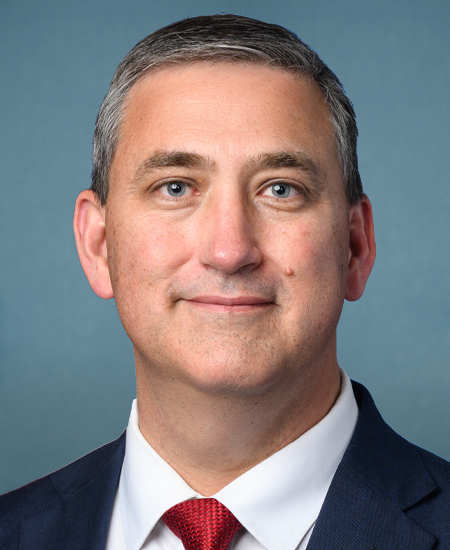
Rep. Nathaniel Moran
Sponsored bills
Maddy summaryHR 4780 (USTRx Act) creates a new Chief Pharmaceutical Trade Negotiator within the U.S. Trade Representative's office to address foreign government drug pricing policies. The bill requires annual reports assessing whether high-income countries' pharmaceutical pricing practices are unfair, non-market-based, or deny U.S. market access. If such practices are found, the USTR must submit a response plan within 30 days to Congress. This bill directly affects U.S. pharmaceutical manufacturers and consumers by aiming to ensure foreign governments pay their "fair share" for drug innovation developed in the U.S.
This joint resolution proposes a constitutional amendment that requires federal expenditures and receipts to be balanced, which may occur over more than one year. Under the amendment, expenditures include all federal expenditures except those for payment of debt. Receipts do not include receipts derived from borrowing. The amendment requires Congress to achieve balance within 10 years of the ratification of the amendment. In an emergency situation, two-thirds of the House of Representatives and the Senate may authorize additional expenditures that are not otherwise permitted by the amendment. The additional expenditures must be for a limited time, and debts incurred from the expenditures must be paid as soon as practicable.
Maddy summaryHR 4710, the No Surprises Act Enforcement Act, increases penalties for health insurance plans and issuers that violate balance billing protections, which prevent surprise medical bills. The bill raises fines from $100 to $10,000 per violation for specific balance billing rule violations and adds a new penalty of three times the difference between initial payment and out-of-network rates for late payments after Independent Dispute Resolution decisions. It requires health plans and nonparticipating providers to make timely payments within 30 days of a payment determination, with interest accruing on late payments. The bill also establishes new transparency reporting requirements for the Secretary to submit regular reports to Congress about audits, enforcement actions, and penalties. These provisions directly affect health insurance issuers, group health plans, and nonparticipating healthcare providers.
Maddy summaryThis bill (HR 4677) renames a U.S. Postal Service facility in Amarillo, Texas (located at 505 East 9th Avenue) as the "Mayor Jerry H. Hodge Post Office Building" to honor the late mayor. It updates all official U.S. government references to the building to reflect this new name. The bill has no policy impact beyond this ceremonial designation and affects no specific legislation or funding.
Maddy summaryThis bill modernizes the process for seasonal agricultural workers who need commercial driver's licenses (CDLs). It requires the Transportation Secretary to create online systems for easy license renewal (Section 2(a)) and clarifies that farm equipment like tractors and harvesters ("implements of husbandry") are not subject to commercial vehicle weight calculations (Section 2(b)). It directly affects farm-related service industries and their seasonal employees who operate restricted CDL vehicles. The changes simplify administrative processes and remove regulatory barriers for agricultural operations.
Maddy summaryThis bill establishes state-level judicial threat intelligence centers to improve safety for judges and court staff. It defines "eligible organizations" (nonprofits with judicial security expertise) and requires the State Justice Institute to fund these centers to provide security training, threat monitoring, coordinate with law enforcement, and develop standardized reporting systems. The centers will create resources for judicial officer safety, conduct security assessments, and track threats through a national database. State Justice Institute must submit annual reports detailing threat types and severity to congressional committees. The bill directly affects state and local judges, court staff, and the nonprofit organizations operating these centers.
Maddy summaryThis bill eliminates a lifetime limit on inpatient psychiatric hospital care for Medicare beneficiaries. Currently, Medicare restricts coverage to 190 days total for such care; this bill removes that cap entirely. The key change amends Section 1812 of the Social Security Act to allow unlimited coverage for inpatient psychiatric hospital services under Medicare. The provision takes effect January 1, 2027, directly affecting Medicare patients requiring long-term inpatient mental health treatment.
Maddy summaryHR 4620 amends federal law to include rioting as a form of racketeering activity under Title 18, United States Code. This change would allow prosecutors to charge individuals who organize or participate in riots as part of a larger criminal enterprise under federal racketeering laws. The bill specifically targets coordinated riot activities linked to organized crime, not isolated or spontaneous protests.
Maddy summaryThe Defending American Property Abroad Act of 2025 protects U.S. property interests in Western Hemisphere countries with U.S. free trade agreements. It requires the Secretary of Homeland Security to identify and list ports, harbors, or marine terminals where a foreign government has nationalized, expropriated, or seized U.S.-owned land (since January 2024) through actions like contract repudiation or forced control. Once listed, the President must prohibit vessels using these sites from importing goods, docking passenger vessels, or conducting maintenance in the United States. This directly affects U.S. persons (citizens or businesses) with property in designated locations.