

Maddy summaryHR 1266, the Combating Illicit Xylazine Act, adds xylazine - a veterinary sedative increasingly found in illicit drug mixtures - to Schedule III of the Controlled Substances Act, regulating its use and trafficking. It directly affects veterinarians, animal owners, and manufacturers by allowing xylazine to be legally dispensed for animal use under specific veterinary prescriptions, while prohibiting non-veterinary human use. The bill includes transition periods (60 days for practitioners, 1 year for labeling) to ease compliance for manufacturers and practitioners, and requires the DEA and FDA to expedite necessary applications. It also mandates two congressional reports on xylazine's illicit use and trafficking patterns, and directs the Sentencing Commission to review penalties for offenses involving xylazine.
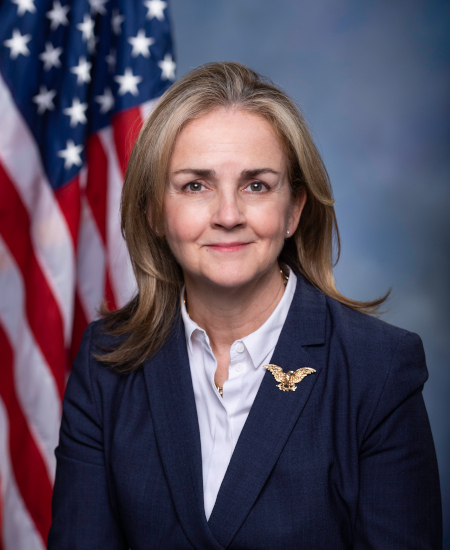
Rep. Madeleine Dean
Sponsored bills
Maddy summaryThis bill requires all new passenger vehicles manufactured for sale in the U.S. to include AM radio as standard equipment (not an optional add-on) by 2027-2028, depending on manufacturer size. It mandates that AM radio receivers must be easily accessible to drivers and allows compliance through digital AM broadcast technology. During a transition period, manufacturers must clearly label vehicles without AM radio but cannot charge extra for this feature. The bill also mandates a GAO study on AM radio's role in emergency alerts and includes a 10-year sunset provision for the rule. It preempts state laws regarding AM radio access in vehicles.
Maddy summaryH.J. Res. 216 proposes a constitutional amendment to eliminate the exception in the Thirteenth Amendment that currently permits slavery and involuntary servitude as punishment for a crime. The resolution would amend the Constitution to explicitly state that neither slavery nor involuntary servitude may be imposed on anyone as a penalty for criminal conduct. This change would directly affect incarcerated individuals by prohibiting forced labor practices within the criminal justice system, while clarifying that voluntary work programs and community service alternatives remain permissible.
Maddy summaryThe Survivors' Rights Restitution Act of 2026 establishes a federal compensation program administered by the Attorney General for victims of sexual assault, abuse, trafficking, or exploitation involving Jeffrey Epstein or Ghislaine Maxwell, as well as victims whose rights were violated by the federal government. Petitions are filed with the United States Court of Federal Claims and assigned to special adjudicators who must be mental health professionals or experts in victim services, civil rights law, or claims administration. The process is designed to be informal and less adversarial than standard litigation, with decisions required within 120 days and a minimum compensation award of $123,000. Compensation is funded by a dedicated Treasury account that accepts forfeited assets and voluntary contributions, and payments are exempt from federal income tax and means-tested benefit calculations.
Maddy summaryThe WIC for Kids Act expands eligibility for the Special Supplemental Nutrition Program for Women, Infants, and Children (WIC) to include children in households receiving Head Start services, food assistance on Indian reservations, or nutrition block grants in Puerto Rico, American Samoa, and the Northern Mariana Islands. The bill extends the standard certification period for WIC-eligible children from one year to two years and allows state agencies to align recertification dates for all eligible family members within a household. Additionally, it requires states to automatically certify infants born to participating mothers without requiring a new application and grants automatic eligibility to children in kinship care arrangements.
Maddy summaryThis House resolution formally recognizes suicide as a serious public health problem in the United States and expresses support for designating September 2026 as National Suicide Prevention Month and September 10, 2026, as World Suicide Prevention Day. The bill cites data from the CDC, SAMHSA, and the VA to highlight that suicide is a leading cause of death among young people, veterans, and during the postpartum period, while also noting the significant economic costs associated with it. It declares suicide prevention a national priority and emphasizes that mental health is as important as physical health. The resolution supports the development of strategies to improve access to quality mental health, substance abuse, and suicide prevention services for all communities.
Maddy summaryThe EBOLA Act requires the President to rejoin the World Health Organization within 30 days of enactment and immediately coordinate with that body to address an ongoing Ebola outbreak in Central and Eastern Africa. The legislation authorizes necessary funding to cover U.S. membership fees and financial obligations, as well as voluntary contributions to support international disease response efforts. By mandating this rapid re-entry into the global health agency, the bill aims to enhance the nation's ability to monitor emerging infectious diseases and prevent the spread of the virus to American soil.
Maddy summaryThis House resolution marks the 25th anniversary of the September 11, 2001 terrorist attacks by formally honoring the memory of the nearly 3,000 victims and recognizing the sacrifices made by first responders, military personnel, and the passengers of United Airlines Flight 93. The bill acknowledges the ongoing health challenges faced by survivors and responders, highlighting the role of the World Trade Center Health Program in providing long-term medical support. It also credits charitable organizations and community groups that have continued to assist victims' families and veterans over the past two decades. Finally, the resolution urges the American public to observe the anniversary with ceremonies and reaffirms Congress's commitment to remembering the events and lessons of that day.
Maddy summaryThis resolution expresses the U.S. House of Representatives' support for designating September 4, 2026, as "Taekwondo Grandmasters Appreciation Day." The bill honors the highest-ranking practitioners of Taekwondo by recognizing their contributions to physical health, mental discipline, and character development. It highlights the martial art's global reach and its status as an Olympic sport, aiming to celebrate the individuals who have dedicated themselves to mastering this Korean discipline.