

Maddy summaryThis House concurrent resolution supports designating the week of September 21 through September 25, 2026, as National Falls Prevention Awareness Week to highlight fall risks among adults over age 65. The bill cites statistics showing that falls are a leading cause of injury and death in this demographic, resulting in significant medical costs for Medicare, Medicaid, and private payors. It recognizes the effectiveness of cost-effective prevention strategies such as exercise programs, medication management, and home hazard reduction. Additionally, the resolution encourages federal investments in these programs and acknowledges the collaborative efforts of government agencies, health care providers, and community organizations to reduce fall risks.
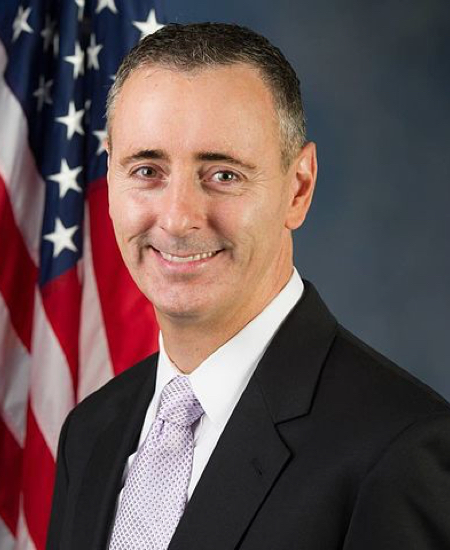
Rep. Brian K. Fitzpatrick
Sponsored bills
Maddy summaryThis House resolution supports designating the week of September 21 through September 25, 2026, as "National Hazing Awareness Week" to highlight the dangers of hazing in student organizations. The bill cites statistics indicating that a significant portion of college students involved in extracurriculars have experienced hazing and lists numerous individuals who have died or been severely injured as a result. It references the Stop Campus Hazing Act, which requires higher education institutions to report hazing incidents and provide prevention education. The resolution encourages the public to observe this week by promoting awareness and emphasizes that preventing hazing is an ongoing commitment rather than just a single-week event.
Maddy summaryThis bill, known as the Ratepayer Protection Act, modifies federal energy laws to ensure that large industrial customers pay for the specific infrastructure upgrades needed to serve their high electricity demands. It directly affects non-residential facilities with a peak power usage of 100 megawatts or more, requiring utilities to charge these customers the full incremental cost of any necessary generation, transmission, or distribution improvements. Under the new rules, large customers must also provide financial guarantees or contributions before such upgrades are made, ensuring utilities can recover costs even if the customer leaves the contract early. State regulators have two years to implement these standards, though the bill exempts utilities in states that have already enacted similar measures or are actively considering them.
Maddy summaryHR 5334, the SEED Act of 2025, expands the existing educator expense deduction under federal tax law to explicitly include early childhood educators. It revises the Internal Revenue Code to cover expenses for "early childhood educators" and broadens the educational levels affected to include "pre-kindergarten through grade 12." This change allows early childhood educators (such as preschool teachers) to deduct work-related expenses like classroom supplies and professional development costs, which they previously could not claim under the existing deduction for "kindergarten through grade 12" teachers. The amendment applies to expenses incurred in taxable years beginning after December 31, 2024.
Maddy summaryThis House resolution amends the rules governing congressional earmarks and limited tax or tariff benefits by expanding the scope of required financial interest certifications. It requires members of Congress to certify that not only themselves and their spouses, but also any immediate family member and any entity in which they hold a material financial interest, have no direct or indirect financial stake in the proposed benefit. The amendment specifically includes interests arising from business assets that could reasonably be expected to appreciate in value due to their proximity to the location of the earmarked activity.
Maddy summaryThe Relief Without Delay Act ensures that FEMA can continue disaster relief operations and access its Disaster Relief Fund even if the government shuts down due to a lapse in appropriations. It requires FEMA to submit monthly public reports detailing how disaster funds are obligated and spent, while also mandating the Department of Housing and Urban Development to assess unmet housing needs after major disasters. Additionally, the bill directs NOAA and FEMA to improve tornado detection capabilities using new technologies like artificial intelligence and establishes a grant program for communities to build storm shelters and upgrade warning systems.
Maddy summaryThis House resolution supports designating the week of September 20 through September 26, 2026, as "Gold Star Families Remembrance Week." It aims to honor the families of service members and veterans who have died in the line of duty. The bill encourages Americans to observe this annual week by performing acts of community service and celebrating the lives of those who made the ultimate sacrifice.
Maddy summaryThis House resolution expresses support for designating the week of September 13 through 19, 2026, as National Adult Education and Family Literacy Week to raise public awareness about these programs. The bill cites data showing that a significant portion of U.S. adults lack basic literacy, numeracy, or English proficiency skills, which are described as essential for economic competitiveness and national security. It encourages partnerships among educators, employers, and community organizations to expand access to training in areas such as digital literacy and workforce preparation. Additionally, the resolution calls on public, private, and nonprofit entities to support these initiatives to help individuals achieve economic mobility and strengthen their families and communities.