

In committee Sep 24, 2026
1 co-sponsor
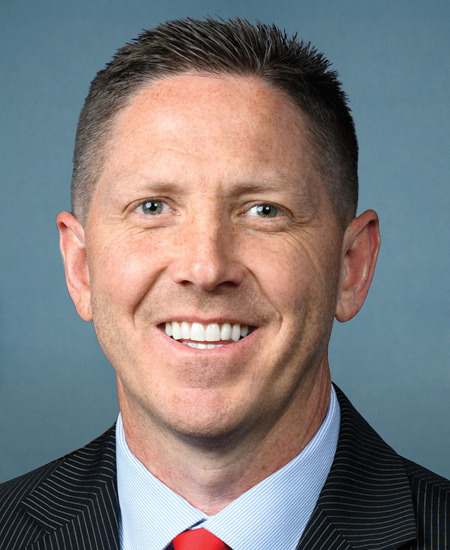
Rep. Josh Brecheen
Total votes
1,879
all sessions
Attendance
98%
45 missed
Lower than 79% of chamber peers
With party
84%
of cast votes
Lower than 98% of chamber peers
Bipartisan score
9%
crosses aisle rarely
Higher than 96% of chamber peers
Sponsored
528
bills & resolutions
Near the chamber average
Committees
4
assignments
528 bills and resolutions
Sponsored bills
Total
528
Primary
31
Co-sponsor
497
This page
528
matching current filters
MAGA Act
Maddy summaryThe Make Apportionment Great Again Act would change how U.S. House seats are distributed among states by excluding noncitizens from the population count used for apportionment. It requires the Secretary of Commerce to recalculate state populations using existing federal and state government records, without conducting a new census, and mandates that future censuses include a question on citizenship status. The bill establishes a legal presumption that any resulting changes in seat allocation are valid, allowing courts to overturn them only with clear evidence of statutory or constitutional violations. Additionally, it creates an expedited judicial process for legal challenges, requiring cases to be heard by three-judge panels and permitting direct appeal to the Supreme Court.
In committee Sep 15, 2026
1 co-sponsor
Denouncing Sharia law in the United States.
Maddy summaryThis House concurrent resolution formally denounces Sharia law and opposes its implementation within the United States. The text argues that Sharia functions as a comprehensive political and legal system that conflicts with the U.S. Constitution, specifically citing differences in criminal justice, gender equality, and individual liberties. It references historical examples of Islamic governance and recent statements by President Trump to support the claim that foreign legal systems incompatible with American values should not be applied domestically. As a concurrent resolution, this measure serves as an official expression of congressional sentiment rather than creating new binding laws or regulations.
In committee Sep 3, 2026
1 co-sponsor
No HUD Funding for Sanctuary Cities Act
Maddy summaryThis bill would prohibit any state or local government designated as a "sanctuary jurisdiction" from receiving grant funds distributed by the Department of Housing and Urban Development (HUD). A jurisdiction is defined as a sanctuary if it has laws, policies, or practices that restrict officials from sharing information about an individual's immigration status or from complying with federal requests to detain or notify about the release of individuals. The funding restriction would apply to grants distributed 180 days after the bill's enactment. To determine which jurisdictions qualify for this ineligibility, the HUD Secretary is required to consult with the Secretary of Homeland Security.
HousingOpposes HousingBill prohibits HUD grant funds for sanctuary jurisdictions, directly restricting housing development and assistance funding based on immigration policy.
ImmigrationOpposes ImmigrationBill penalizes sanctuary jurisdictions by cutting HUD funds, restricting local protections for immigrants and limiting their access to housing services.
In committee Sep 2, 2026
1 co-sponsor
Providing for the condemnation and denouncement of socialism in all its forms, and for other purposes.
This resolution states that the House of Representatives condemns and denounces socialism in all its forms, including the Democratic Socialists of America, and opposes the implementation of socialist policies in the United States; reaffirms its support for free, fair, and secure elections and calls for enactment of the SAVE America Act; reiterates that American elections are for American citizens only; and recommits itself to upholding the U.S. Constitution.
Passed Sep 1, 2026
1 co-sponsor
Billion Dollar Boondoggle Act
Billion Dollar Boondoggle Act This bill requires the Office of Management and Budget (OMB) to collect information from federal agencies and report to Congress regarding projects that are behind schedule or have expenditures that have exceeded the original cost estimate. Specifically, the bill requires OMB to issue guidance directing federal agencies to annually submit specified information to OMB regarding certain federally funded projects that (1) are more than five years behind schedule, or (2) have expenditures that are at least $1 billion more than the original cost estimate for the project. Among other information, the agencies must submit to OMB a description of each project; an explanation of any change to the original scope of the project; the original and current expected dates for the completion of the project; the original and current cost estimates adjusted for inflation; an explanation for any delays in completing the project or increases in the cost; and the amount of and rationale for any award, incentive fee, or other type of bonus awarded for the project. The bill also requires OMB to submit an annual report to Congress containing the information submitted by the agencies and post the report on the OMB website. The report must be submitted in unclassified form, but may include a classified annex.
Passed Jul 23, 2026
1 co-sponsor
Preventing Forced Abortions Act of 2026
Maddy summaryThe Preventing Forced Abortions Act of 2026 prohibits federal courts from enforcing any part of a surrogacy agreement that forces a surrogate mother to have an abortion. Instead, the law mandates that courts must uphold the financial compensation promised to the surrogate, even if the contract includes penalties or reduced payments for refusing an abortion. This legislation grants federal district courts specific authority to hear civil cases involving surrogacy contracts and defines key terms such as "abortion" and "surrogate mother" to clarify the scope of the protections.
In committee Jul 22, 2026
1 co-sponsor
Protection Against Mass Surveillance Act
Maddy summaryThe Protection Against Mass Surveillance Act prohibits federal agencies from buying, using, or contracting for automated surveillance systems that rely on license plate recognition, facial recognition, biometric identification, or other technologies designed for mass tracking. It also prevents state, local, and tribal governments from using federal funds to acquire or operate these same surveillance tools. If federal agencies obtain data in violation of these rules, the law requires them to delete the information within 30 days and bars its use as evidence in any court or administrative proceeding.
Criminal JusticeSupports Criminal JusticeBill restricts mass surveillance tools to protect civil liberties and enhance police accountability, aligning with criminal justice reform goals.
TechnologyOpposes TechnologyBill restricts the use of surveillance technologies like facial recognition and biometric ID by federal and state agencies, limiting their deployment.
In committee Jul 21, 2026
1 co-sponsor
Heat Workforce Standards Act of 2025
Maddy summaryHR 6213, the Heat Workforce Standards Act of 2025, prohibits the U.S. Department of Labor from finalizing, implementing, or enforcing OSHA's proposed "Heat Injury and Illness Prevention" standard (published August 30, 2024). This bill directly blocks the specific regulatory proposal targeting heat safety in both outdoor and indoor work settings. It does not create new requirements or affect workers; it solely prevents the implementation of the existing OSHA proposal. The bill is procedural, focusing on halting a regulatory action rather than establishing new policy.
EnvironmentOpposes EnvironmentBill blocks OSHA heat safety regulations, weakening environmental and worker protection standards related to heat exposure and pollution control.
HealthcareOpposes HealthcareBlocks OSHA's heat safety standard, preventing implementation of workplace health protections for heat-related illness prevention.
Labor & EmploymentOpposes Labor & EmploymentBlocks OSHA heat safety standard, preventing implementation of workplace safety protections for workers.
In committee Jul 21, 2026
1 co-sponsor
Illegal Alien Patient Reporting Act
Maddy summaryThis bill requires hospitals that receive federal health care funding to ask patients about their immigration status during admission and report the results to government agencies. Under the law, hospitals must include a specific statement on intake forms assuring patients that their answers will not affect their medical care or lead to a law enforcement report unless the patient is suspected of certain crimes. Hospitals must also submit quarterly reports detailing how many patients are citizens, lawful residents, or undocumented, along with the number of individuals who refused to answer or failed to provide proof of their legal status. The legislation prohibits hospitals from sharing personal identifying information with the government while allowing them to exclude non-compliant facilities from federal programs. Additionally, the bill mandates an annual report to Congress analyzing the costs of uncompensated care for undocumented patients and its impact on hospital services.
Criminal JusticeOpposes Criminal JusticeBill expands criminalization by mandating immigration status reporting in hospitals, increasing surveillance and restricting privacy rights for patients.
HealthcareOpposes HealthcareBill restricts patient access by requiring immigration status reporting, creating barriers to care and limiting patient rights.
ImmigrationOpposes ImmigrationBill mandates hospitals report immigration status, increasing enforcement cooperation and restricting access to services.
In committee Jul 13, 2026
1 co-sponsor
Ask Maddy
·
AI policy assistant
Ask Maddy about Josh Brecheen
Scope: ohio
Hi! I can help you understand Josh Brecheen's legislative record. What would you like to know?
Try one of these
i
Maddy answers using official bill text and legislative records. Always verify before sharing.
Sources cited inline