

In committee Sep 24, 2026
0 co-sponsors
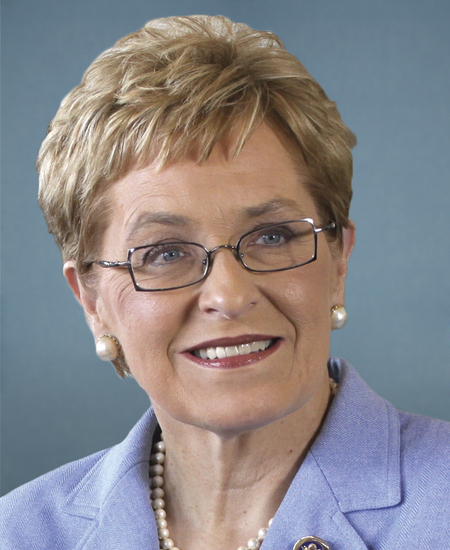
Rep. Marcy Kaptur
Total votes
2,837
all sessions
Attendance
98%
60 missed
Near the chamber average
With party
95%
of cast votes
Lower than 89% of chamber peers
Bipartisan score
3%
crosses aisle rarely
Higher than 88% of chamber peers
Sponsored
914
bills & resolutions
Near the chamber average
Committees
5
assignments
914 bills and resolutions
Sponsored bills
Total
914
Primary
56
Co-sponsor
858
This page
914
matching current filters
In committee Sep 24, 2026
1 co-sponsor
To designate the facility of the United States Postal Service located at 189 East Main Street in Xenia, Ohio, as the "Gil Whitney Post Office Building".
This bill designates the facility of the United States Postal Service located at 189 East Main Street in Xenia, Ohio, as the "Gilman 'Gil' Whitney Post Office Building".
Passed Sep 17, 2026
1 co-sponsor
Reverse Big Ugly Tax Breaks for Data Centers Act
Maddy summaryThe Reverse Big Ugly Tax Breaks for Data Centers Act removes specific tax incentives for large-scale data centers and artificial intelligence facilities. It excludes these facilities from bonus depreciation, a provision that currently allows businesses to deduct the full cost of certain equipment in the year it is purchased. Additionally, the bill prevents these properties from qualifying as opportunity zone business property, which would otherwise offer significant tax benefits for investments in designated areas. The legislation targets structures with a power capacity exceeding 50 megawatts that are dedicated to data storage, processing, or AI operations.
Budget & TaxesOpposes Budget & TaxesThe bill removes specific tax incentives for large-scale data centers and AI facilities, thereby limiting tax benefits for certain businesses.
TechnologyOpposes TechnologyThe bill removes tax incentives for data centers and AI facilities, which could hinder investment and development in the technology sector.
In committee Sep 16, 2026
1 co-sponsor
ASAP Act
Maddy summaryThis bill would require Medicare to cover early detection screening tests for Alzheimer's disease and related dementias starting January 1, 2028. It defines eligible tests as FDA-cleared genomic blood tests, blood product analyses, or equivalent medical imaging methods (like protein expression or whole genome sequencing) that detect pre-symptomatic or early-stage conditions. Medicare beneficiaries would receive this coverage without cost-sharing for these specific screenings. The bill amends Medicare coverage rules to explicitly include these tests under Section 1861(nnn) of the Social Security Act.
In committee Sep 16, 2026
1 co-sponsor
Medically Tailored Home-Delivered Meals Program Pilot Act
Maddy summaryThis bill creates a 6-year Medicare pilot program providing medically tailored home-delivered meals and nutrition counseling to specific high-risk Medicare patients after hospital discharge. It targets individuals with diet-impacted conditions (like diabetes or heart failure) who live at home, have limited mobility, and are at high risk of hospital readmission. Selected hospitals must meet quality standards, screen patients using approved tools, and deliver at least two meals daily meeting nutritional needs while respecting cultural/religious dietary requirements, all without patient cost-sharing. The program requires hospitals to submit data for the Secretary to evaluate health outcomes, readmission rates, and cost savings compared to non-participants. Funding comes from the Medicare Hospital Insurance Trust Fund, offset by reductions to other hospital payments to maintain budget neutrality.
Budget & TaxesSupports Budget & TaxesBill creates federal funding for Medicare pilot program targeting high-risk patients, advancing essential healthcare spending through government appropriation.
HealthcareSupports HealthcareCreates Medicare-funded pilot for medically tailored meals to reduce readmissions, expanding coverage for diet-impacted conditions like diabetes.
In committee Sep 16, 2026
1 co-sponsor
AM Radio for Every Vehicle Act of 2025
Maddy summaryThis bill requires all new passenger vehicles manufactured for sale in the U.S. to include AM radio as standard equipment (not an optional add-on) by 2027-2028, depending on manufacturer size. It mandates that AM radio receivers must be easily accessible to drivers and allows compliance through digital AM broadcast technology. During a transition period, manufacturers must clearly label vehicles without AM radio but cannot charge extra for this feature. The bill also mandates a GAO study on AM radio's role in emergency alerts and includes a 10-year sunset provision for the rule. It preempts state laws regarding AM radio access in vehicles.
Passed Sep 16, 2026
1 co-sponsor
To clarify and update Federal policy governing operation and maintenance of the Toussaint River Federal navigation project in Carroll Township, Ohio, as authorized under section 107 of the River and Harbor Act of 1960, and for other purposes.
Maddy summaryThis bill updates the funding rules for maintaining a federal navigation project on the Toussaint River in Carroll Township, Ohio. It changes how the costs of operating and maintaining the waterway are split between the federal government and local stakeholders by applying the cost-sharing formula from the 1986 Water Resources Development Act. The new funding structure takes effect at the start of the federal fiscal year in which the bill is enacted and applies to that year and all subsequent years.
In committee Sep 15, 2026
0 co-sponsors
To amend the Water Resources Development Act of 2000 to authorize the Secretary of the Army to carry out additional Great Lakes fishery and ecosystem restoration projects not eligible under current policy of the Department of the Army, and for other purposes.
Maddy summaryThis bill amends the Water Resources Development Act of 2000 to authorize the Secretary of the Army to fund additional fishery and ecosystem restoration projects in the Great Lakes that do not meet current Department of the Army eligibility standards. The legislation directly affects federal agencies responsible for water resources management and local communities involved in these environmental restoration efforts. A key provision sets a strict cap on spending, limiting total federal expenditures for any single project under this new authority to $20 million.
In committee Sep 15, 2026
0 co-sponsors
To amend the Water Resources Development Act of 1992 to increase the amount and purposes of funds authorized for the Secretary of the Army to carry out water and wastewater infrastructure projects in Toledo and Oregon, Ohio, and for other purposes.
Maddy summaryThis bill amends the Water Resources Development Act of 1992 to increase federal funding for water and wastewater infrastructure projects in Toledo and Oregon, Ohio. It raises the authorized amount for the Secretary of the Army from $10.5 million to $45 million. The legislation also expands the scope of eligible projects to include stormwater management, water supply, and environmental restoration efforts.
In committee Sep 15, 2026
0 co-sponsors
Ask Maddy
·
AI policy assistant
Ask Maddy about Marcy Kaptur
Scope: ohio
Hi! I can help you understand Marcy Kaptur's legislative record. What would you like to know?
Try one of these
i
Maddy answers using official bill text and legislative records. Always verify before sharing.
Sources cited inline