

Maddy summaryHR 1046, the Marc Fischer Memorial Act, requires the Bureau of Prisons to implement digital mail scanning technology at all federal prisons to detect fentanyl and other synthetic drugs in inmate mail. It mandates a strategy within 90 days of an evaluation, including 100% scanning of all mail, digital copies of mail to inmates within 24 hours, and physical mail delivery within 30 days for non-contaminated items. The bill directly affects federal prison staff, inmates, and the Bureau of Prisons by aiming to reduce drug-related overdoses and alleviate staff workload tied to mail processing. Implementation must be completed within three years, with annual reports tracking detected drugs and strategy efficiency. The legislation focuses on concrete technological and procedural changes to enhance safety, referencing a successful pilot program at two facilities.
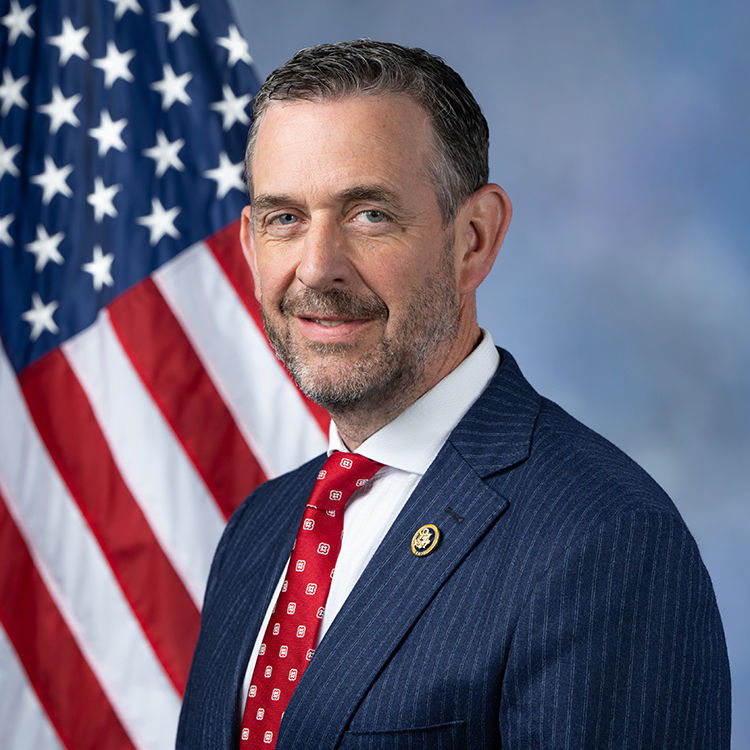
Rep. Michael A. Rulli
Sponsored bills
Maddy summaryHR 1057, the Safe Passage on Interstates Act of 2025, creates a new federal criminal offense for intentionally obstructing interstate highways. It makes it illegal to deliberately delay traffic, stand near vehicles, or endanger movement on interstates with the intent to block normal use. The bill directly affects individuals who engage in such obstruction, with penalties including fines up to $15,000 or imprisonment up to 20 years (or life if death results). Exceptions cover lawful activities authorized by federal, state, or local governments. This bill amends Title 18 of the U.S. Code to establish specific penalties for highway obstruction.
Maddy summaryHR 1102 establishes a commission to study the feasibility of creating a National Museum of Italian American History and Culture in Washington, D.C. The commission, composed of 8 members appointed by congressional leaders, will examine factors like location options, costs, fundraising potential, and impacts on existing museums, and must report back within 18 months. It will not create the museum itself but will develop recommendations for Congress on whether to proceed, with all funding coming from private sources - no federal funds may be used for the commission’s work. The bill focuses solely on the study process, not on building or operating the museum.
Maddy summaryHR 1094, the Amateur Radio Emergency Preparedness Act, prevents private restrictions (such as those in homeowners associations) from blocking amateur radio operators from installing and maintaining antennas for emergency communications. The bill directly affects over 770,000 licensed amateur radio operators in the U.S. who face such restrictions on their residential property. Key provisions include overriding unreasonable restrictions, requiring reasonable safety and building code compliance for allowed rules, setting a 45-day approval period for antenna installations (with deemed approval if not acted on), and exempting small antennas (under 1 meter, flagpoles ≤43 feet, or minimal wire antennas) from prior approval. This ensures amateur radio operators can quickly establish emergency communication systems without unnecessary delays or costs during crises.
Maddy summaryHR 71, the Veterans Health Care Freedom Act, allows eligible veterans enrolled in VA healthcare to choose from a broader network of providers, including non-VA facilities, without geographic restrictions. The bill creates a 3-year pilot program in four diverse locations (rural and urban) where veterans can select primary care and specialty providers within a defined "covered care system" (VA facilities and approved community providers), with VA coordinating care through a primary provider. After the pilot, the law permanently requires the VA to offer this same choice of providers to all enrolled veterans, removing current barriers that limited access to non-VA care outside a veteran’s local VA network. The program uses existing VA funding and mandates regular reports to Congress on implementation and results.
Maddy summaryHR 1029 would end the United States Agency for International Development (USAID) by prohibiting all federal funding for its operations starting upon the bill's enactment. It requires the rescission of all unobligated funds held by USAID as of the day before enactment and transfers the agency's remaining assets and liabilities to the Secretary of State. This bill directly affects USAID, eliminating its legal authority and funding under the Foreign Assistance Act of 1961 and other laws. The measure would effectively dissolve USAID as a functioning federal agency.
Maddy summaryThis bill prohibits access to single-sex facilities (like restrooms, locker rooms, and changing rooms) on federal property unless the individual's biological sex matches the facility's designated sex. It directly affects anyone using federal buildings, military bases, or postal facilities, requiring them to use spaces corresponding to their biological sex as defined in the bill. Key provisions define "biological sex" based on reproductive systems (male/female) and allow exceptions only for emergency medical personnel or active law enforcement during investigations. The bill does not apply to private or non-federal spaces, focusing solely on facilities owned or operated by the U.S. government.
Maddy summaryHR 1037, the Voter Eligibility Verification Act of 2025, amends a 1996 federal law to require state election officials to provide immigration status information for individuals on potential voter lists within 15 days when requested by a state Attorney General or Secretary of State. This bill directly affects state election administrators who must now verify voter eligibility using immigration data upon formal request. The key provision establishes a 15-day deadline for states to share this information, creating a new administrative requirement for voter eligibility checks. The bill focuses on modifying existing federal law to facilitate state-level verification processes without changing voter eligibility criteria.
Fair Access to Banking Act This bill places restrictions on certain banks, credit unions, and payment card networks if they refuse to do business with a person who complies with the law. Restrictions include prohibiting the use of electronic funds transfer systems and lending programs, termination of an institution's depository insurance, and specified civil penalties. Banks and other specified financial institutions are allowed to deny financial services to a person only if the denial is justified by a documented failure of that person to meet quantitative, impartial, risk-based standards established in advance by the institution. This justification may not be based upon reputational risks to the institution. The bill establishes the right for a person to bring a civil action for a violation of this bill.
Maddy summaryHR 1024, the US-Kazakhstan Trade Modernization Act, terminates the application of Title IV of the Trade Act of 1974 to Kazakhstan. This means the U.S. will no longer apply special trade restrictions tied to Kazakhstan's emigration policies, as Kazakhstan has been found compliant since 1997. The bill allows the President to determine that Title IV no longer applies and extend normal trade relations (NTR) treatment to Kazakhstan's products. As a result, Kazakhstan's exports to the U.S. will be subject to standard U.S. trade rules rather than the specific Title IV provisions.