

Maddy summaryThe Railway Safety Act of 2026 establishes new safety requirements for trains transporting hazardous materials, including speed limits, enhanced reporting, and stricter tank car standards. It mandates that high-hazard trains carrying flammable liquids or toxic materials be limited to 40 mph in urban areas, while requiring railroads to provide real-time information to emergency responders. The bill also increases penalties for safety violations, requires more frequent inspections of rail equipment, and creates a new emergency response assistance program to help communities affected by hazardous materials incidents. Additionally, it authorizes funding for research into safer tank cars and defect detection systems, and requires the Federal Railroad Administration to improve its safety workforce management.
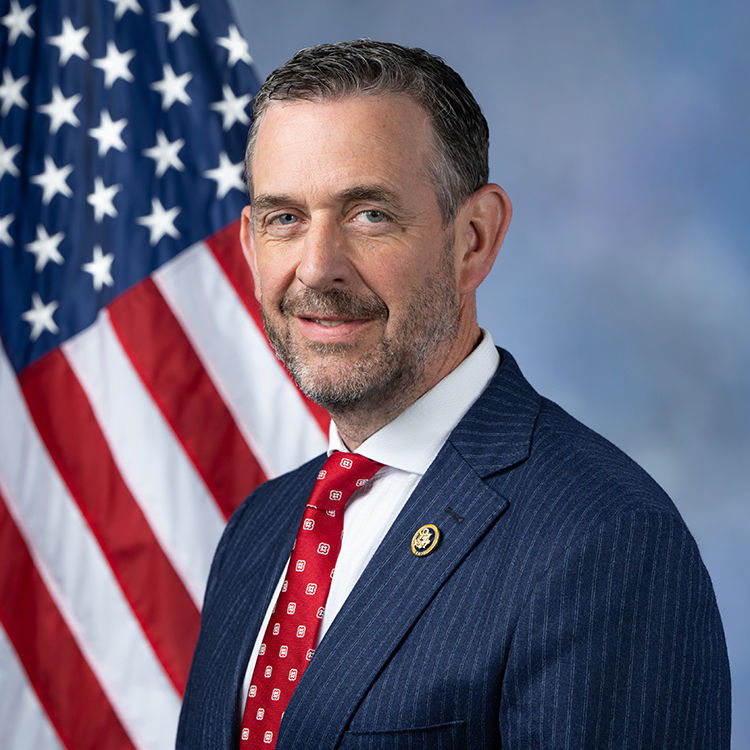
Rep. Michael A. Rulli
Sponsored bills
Maddy summaryHRES 1085 is a procedural resolution censuring Representative Al Green (D-TX) for disrupting the State of the Union address on February 24, 2026, with the House citing this as his second recent removal for violating decorum rules. The resolution requires Green to appear in the House chamber for the public reading of the censure by the Speaker. This formal reprimand directly affects Green’s standing in the House but does not impose new legal penalties or alter policy.
Maddy summaryThis bill prevents property owners from paying income tax on the profit they make when the government takes their land or buildings through eminent domain (such as for public projects) or when they sell due to immediate threat of taking. It creates a new tax exclusion in the Internal Revenue Code, meaning the government's payment for the property isn't counted as taxable income. Property owners can choose to waive this exclusion and pay tax on the gain if they prefer. The bill directly affects homeowners and businesses facing government acquisitions using eminent domain powers.
Maddy summaryHR 7678, the Gun Owner Registration Information Protection Act, prohibits federal funding for state or local databases that track lawfully owned firearms or their owners. The bill allows federal funding for databases recording lost or stolen firearms but bans it for databases listing legal gun ownership. This means states cannot use federal money to create or maintain systems that compile information about legally owned guns. The bill directly affects state and local governments that rely on federal funds for firearm ownership databases.
Maddy summaryThe Stop Illegal Alien Cops Act amends federal law to modify exemptions for government entities regarding firearms. Currently, federal, state, and local government agencies are generally exempt from many federal prohibitions when acquiring or supplying firearms for official use. This bill would remove that exemption for specific prohibitions, making it unlawful for government entities to provide firearms to or employ individuals who are unlawfully in the United States. Additionally, the bill removes the
Maddy summaryHRES 1076 is a House resolution recognizing the 10th anniversary of the first U.S. liquefied natural gas (LNG) export shipment from the lower 48 states, which occurred on February 24, 2016. The resolution celebrates this milestone as a historic achievement in American energy production, highlighting its role in supporting over 273,000 annual jobs and $400 billion in economic growth over the past decade. It honors the workers and communities involved and acknowledges LNG exports' contribution to U.S. economic growth, energy security, and global partnerships. The resolution has no binding effect or policy changes - it solely expresses recognition of a past event.
Maddy summaryHRES 1073 is a non-binding resolution designating February 21-28, 2026, as "National FFA Week" to recognize the National Future Farmers of America (FFA) Organization’s role in developing agricultural education leaders and to celebrate the 50th anniversary of Alaska’s State FFA Association. It does not create new laws or affect any specific groups or policies; instead, it formally expresses the House’s support for this commemorative week. The resolution highlights FFA’s mission to prepare students for leadership and careers in agriculture, food, and natural resources. As a symbolic gesture, it has no direct legislative or financial impact on constituents.
Maddy summaryHR 2958, the Balance the Scales Act, requires the U.S. Department of Labor to obtain written agreements with individuals before sharing information that could be used in lawsuits against employers or pension plan sponsors. The bill mandates annual reports to Congress detailing these agreements, including redacted copies, dates, types of information shared, and communications logs, while protecting privacy. It also adds a policy finding that private pension plans are vital for employee security. The law applies to any "adverse assistance" provided on or after its enactment date.
Maddy summaryHR 7539, the SAFE Act, requires the Comptroller General to study "chameleon carriers" (motor carriers evading safety rules by changing names or ownership) and develop an automated tool for the Federal Motor Carrier Safety Administration (FMCSA) to detect such applicants during Department of Transportation (DOT) number registration. The bill mandates the tool to identify patterns like shared ownership, similar addresses, insurance lapses, or continuity of operations to flag suspicious applications. It directly affects motor carriers applying for DOT numbers and FMCSA staff, who must use the tool to review applications while preserving final decision-making authority. The law also requires an appeals process for denied applications, data privacy safeguards, and a two-year effectiveness report on the tool.
Maddy summaryThe PART Act requires new vehicles to have catalytic converters marked with a unique identification number that links directly to the vehicle's identification number, stored in a law enforcement-accessible database. It establishes a $7 million grant program to help repair shops, dealers, law enforcement, and fleet owners purchase equipment for marking converters with visible, durable identifiers (using die or pin stamping and high-visibility paint). The bill also mandates that businesses buying catalytic converters keep detailed seller records (including vehicle information) for two years and use traceable payments, banning cash or cryptocurrency transactions. Additionally, it creates new federal criminal penalties for stealing or trafficking in catalytic converters, with potential sentences of up to five years in prison.