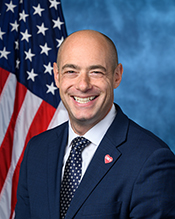
Photo of Greg Landsman
D United States House · District 1 · Ohio On the 2026 ballot

Rep. Greg Landsman

Compare
Total votes
1,879
all sessions
Attendance
97%
58 missed
Near the chamber average
With party
93%
of cast votes
Lower than 89% of chamber peers
Bipartisan score
4%
crosses aisle rarely
Higher than 88% of chamber peers
Sponsored
1,048
bills & resolutions
Higher than 87% of chamber peers
Committees
4
assignments
1,048 bills and resolutions

Sponsored bills

Total
1,048
Primary
53
Co-sponsor
995
This page
1,048
matching current filters
Co-sponsor HR 847
In committee · Ohio House · Co-sponsor
Auto Theft Prevention Act

Maddy summaryThe Auto Theft Prevention Act establishes a federal grant program to fund state and local law enforcement efforts combating auto theft and stolen vehicle trafficking, authorizing $30 million annually from 2024 to 2028. States receive funds based on prior-year auto theft rates, requiring at least 50% to be distributed to local agencies in high-theft areas and 25% to state agencies. Grants cover specific anti-theft measures like purchasing equipment (e.g., license plate readers), hiring staff, training officers, and funding data collection related to auto theft. The program also expands existing grant uses to include these anti-theft activities, with no more than 5% of funds allowed for administrative costs.

In committee Feb 6, 2023 1 co-sponsor
Co-sponsor HR 547
In committee · Ohio House · Co-sponsor
Better Care Better Jobs Act

Maddy summaryThe Better Care Better Jobs Act (HR 547) aims to improve access to home and community-based services (HCBS) for Medicaid beneficiaries by providing states with planning grants and enhanced federal funding. States that develop approved HCBS infrastructure improvement plans will receive a 10 percentage point increase in federal Medicaid funding for HCBS services, with additional incentives for self-directed care programs. The bill requires states to address barriers to access, expand workforce development, improve payment rates for direct care workers, and track demographic data on service utilization. It also establishes quality measurement requirements and mandates regular reporting on progress toward improving HCBS access and quality.

In committee Feb 3, 2023 1 co-sponsor
Co-sponsor HR 765
In committee · Ohio House · Co-sponsor
African American History Act

Maddy summaryHR 765, the African American History Act, authorizes $2 million annually for the National Museum of African American History and Culture to develop educational resources and programs about African American history. The bill directs the museum to create accessible teaching materials, support teacher professional development, and expand digital content for schools and the public, focusing on contributions, civil rights, and historical contexts. It requires annual reports to Congress and expires in 2028. The program directly supports educators, students, and families in learning about African American history through museums, schools, and online platforms.

In committee Feb 2, 2023 1 co-sponsor
Co-sponsor HR 743
In committee · Ohio House · Co-sponsor
Protect and Serve Act of 2023

Maddy summaryThis bill creates a new federal crime for assaulting law enforcement officers causing serious injury or death, with penalties up to 10 years in prison for serious injury and up to life for aggravated cases involving death, kidnapping, or attempted killing. It applies when offenses involve interstate travel, commerce, or target officers engaged in law enforcement duties. Federal prosecution requires Attorney General certification that state authorities cannot or will not handle the case, or that federal action is necessary for public safety. The law covers all law enforcement officers (state, local, and federal) who enforce criminal laws or detain individuals.

In committee Feb 2, 2023 1 co-sponsor
Co-sponsor HR 827
In committee · Ohio House · Co-sponsor
Home Internet Accessibility Act

Maddy summaryHR 827, the Home Internet Accessibility Act, requires a study of broadband access in federally assisted housing (like public housing and HUD-subsidized units) and a plan to improve it. The Comptroller General must report within one year on where broadband access exists or is lacking, including demographic breakdowns by location, and analyze retrofitting costs and challenges. The Department of Housing and Urban Development (HUD) must then develop and submit a specific plan to retrofit housing for broadband service within 18 months of the bill's enactment. This bill directly affects residents of federally assisted housing nationwide by focusing on infrastructure gaps, not by providing immediate internet service.

In committee Feb 2, 2023 1 co-sponsor
Co-sponsor HR 735
In committee · Ohio House · Co-sponsor
Susan Muffley Act of 2023

Maddy summaryHR 735 (Susan Muffley Act of 2023) requires the Pension Benefit Guaranty Corporation (PBGC) to recalculate and increase monthly pension benefits for participants and beneficiaries in six specific Delphi-related pension plans to their full vested amount. This includes making lump-sum payments for past underpayments, plus 6% annual interest on amounts owed since prior benefit calculations. The bill directly affects eligible retirees and beneficiaries in the Delphi Hourly-Rate Employees Pension Plan, Delphi Retirement Program for Salaried Employees, and four other Delphi pension plans. It does not change existing asset allocations but ensures payments reflect the full pension amount guaranteed under ERISA without prior phase-in limits.

In committee Feb 1, 2023 1 co-sponsor
Co-sponsor HR 715
In committee · Ohio House · Co-sponsor
Bipartisan Background Checks Act of 2023

Maddy summaryHR 715, the Bipartisan Background Checks Act of 2023, requires background checks for all firearm transfers between private individuals, not just those through licensed dealers. It mandates that unlicensed sellers must involve a licensed dealer to conduct a background check before transferring a firearm, with exceptions for family transfers (like spouses or parents/children), law enforcement, temporary safety transfers, and certain hunting or range activities. The bill also requires licensed dealers to provide a notice and certification form in both English and Spanish to buyers. It explicitly states it won't create a national gun registry or override state laws on the same topic. The law would take effect 180 days after enactment.

In committee Feb 1, 2023 1 co-sponsor
Co-sponsor HR 727
In committee · Ohio House · Co-sponsor
National Council on African American History and Culture Act of 2023

Maddy summaryHR 727 establishes a 12-member National Council on African American History and Culture within the National Endowment for the Humanities (NEH). The Council, appointed by the President with Senate consent, advises the NEH on preserving and celebrating African-American history and culture. Its key duties include evaluating NEH programs, gathering information on cultural trends, developing national policy recommendations, and submitting annual reports to the NEH Chair. The Council terminates 10 years after the bill's enactment, with members serving five-year terms (initially staggered) and receiving partial compensation for their service.

In committee Feb 1, 2023 1 co-sponsor
Co-sponsor HR 700
In committee · Ohio House · Co-sponsor
Supply Chain Disruptions Relief Act

Maddy summaryThis bill helps new car dealers affected by pandemic-era supply chain disruptions by changing tax rules for inventory sales. It allows dealers using LIFO accounting to treat certain sales of unsold vehicles (liquidations) between March 2020 and December 2021 as "qualified" for tax purposes. Dealers can defer recognizing income from these sales and have until 2026 to replace the sold vehicles before potential tax adjustments apply. The provision specifically targets dealers who couldn't replenish inventory during the supply chain crisis.

In committee Feb 1, 2023 1 co-sponsor
Co-sponsor HR 694
In committee · Ohio House · Co-sponsor
Job Protection Act

Maddy summaryHR 694, the Job Protection Act, expands access to family and medical leave under the FMLA by reducing eligibility requirements. It lowers the required employment period from 12 months to 90 days for most workers and removes the 50-employee threshold, requiring all employers (including small businesses with one or more employees) to provide leave. Federal, presidential, and congressional employees also see their eligibility thresholds reduced to 90 days. The bill directly affects millions of private-sector workers and small businesses nationwide by making existing leave protections more widely available. It makes no changes to leave duration or pay, only to who qualifies and which employers must comply.

In committee Feb 1, 2023 1 co-sponsor
Showing 1,021 to 1,030 of 1,048 bills