

Puppies Assisting Wounded Servicemembers for Veterans Therapy Act or the PAWS for Veterans Therapy Act This bill implements a program and a policy related to service dog therapy for veterans. Specifically, the bill requires the Department of Veterans Affairs (VA) to implement a five-year pilot program to provide canine training to eligible veterans diagnosed with post-traumatic stress disorder as an element of a complementary and integrative health program. Eligible veterans are those who are enrolled in the VA health care system and have been recommended for participation by a qualified mental health care provider or clinical team. The VA must seek to enter agreements containing specified elements with accredited nongovernmental entities that have demonstrated ability to provide canine training. Veterans who participate in the program are authorized to adopt the dog they assisted in training if their health provider determines it is in the best interest of the veteran. The VA must establish processes to document and track the progress of participating veterans with respect to health benefits and improvements. The Government Accountability Office must brief Congress and submit a report on the program. The bill also authorizes the VA to provide service dogs to veterans with mental illnesses, regardless of whether they have a mobility impairment.
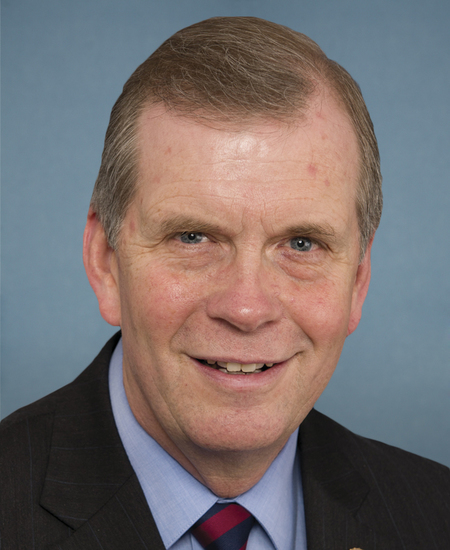
Rep. Tim Walberg
Sponsored bills
This resolution condemns the President's failure to heed military and intelligence advisors about the speed and nature of the Taliban offense in Afghanistan and urges the President to commit to maintaining the evacuation operation as long as necessary to evacuate any U.S. citizen, lawful permanent resident, or Afghan partner who requests evacuation assistance .
Preserving Direct Seller Independence Act This bill excludes a real estate agent or a direct seller of consumer products from the definition of an employee for the purpose of applying the Fair Labor Standards Act of 1938.
Border Security for America Act of 2021 This bill addresses border security and related issues. For example, the bill requires the Department of Homeland Security (DHS) to resume all activities to construct a border barrier system along the U.S.-Mexico border that were underway or planned prior to January 20, 2021; requires DHS to deploy, in addition to physical barriers, tactical infrastructure and technology to achieve situational awareness and operational control of the southwest border; authorizes U.S. Customs and Border Protection (CBP) to carry out a program to acquire innovative commercial items through a competitive selection of proposals; imposes certain requirements for DHS border security technology acquisition programs that have a total expenditure of at least $300 million; requires CBP to implement certain technologies, including a program to establish a biometric exit data system at ports of entry; requires CBP to increase or maintain certain staffing levels for agents, officers, processing coordinators, and other positions; requires CBP to implement a workload staffing model for the U.S. Border Patrol and for CBP's Air and Marine Operations; and provides statutory authority through FY2026 for Operation Stonegarden, a Federal Emergency Management Agency program that provides grants to states and territories involved in certain active CBP border security operations.
This resolution condemns the Chinese Communist Party and its violation of the human rights of the people of China.
Steel Industry Preservation Act This bill extends and modifies the production tax credit for steel industry fuel. (Under current law, steel industry fuel is a fuel that is (1) produced through a process of liquefying coal waste sludge and distributing it on coal, and (2) used as a feedstock for the manufacture of coke.) Specifically, the bill modifies the tax credit to (1) extend the credit period and the placed-in-service date for steel industry fuel producing facilities, (2) revise the definition of steel industry fuel to allow blends of coal and petroleum coke or other coke feedstock in the fuel, and (3) specify requirements for treating an owner as producing and selling steel industry fuel. The bill also allows a taxpayer that produces steel industry fuel to elect to accept an increased tax credit in lieu of certain deductions for expenses in connection with the production of steel industry fuel.
Access to Congressionally Mandated Reports Act This bill requires the Government Publishing Office (GPO) to establish and maintain a publicly available online portal containing copies of all congressionally mandated reports. A federal agency must submit a congressionally mandated report and specified information about the report to the GPO between 30 and 45 days after submission of the report to either chamber or to any congressional committee or subcommittee. Upon the written request of the chair of a congressional committee or subcommittee to the GPO, a report submitted to that committee or subcommittee shall not be submitted or published on the portal. Federally chartered corporations, the Government Accountability Office, and any elements of the intelligence community are excluded from the requirements of this bill. The Office of Management and Budget must issue guidance to federal agencies on the bill's requirement for agencies to submit copies of congressionally mandated reports and related information to the GPO.
This resolution denounces socialism and opposes the implementation of socialist policies in the United States.
Promoting United States Wireless Leadership Act of 2021 This bill requires the Department of Commerce to assist trusted companies (i.e., companies determined to pose no national security threat) and relevant stakeholders with participation in organizations that set standards for telecommunications, wireless devices, and related equipment.
Entrepreneurs Need Timely Replenishment (for) Eating Establishments Act or the ENTRÉE Act This bill provides FY2021 supplemental appropriations for the Restaurant Revitalization Fund and modifies requirements related to administration of the fund. The fund was established in response to COVID-19 to make grants to eligible food and beverage purveyors for covering specified costs such as payroll, operational expenses, and paid sick leave. The bill correspondingly rescinds unobligated amounts previously made available for the Economic Injury Disaster Loan Program and coronavirus state and local fiscal recovery funds. Further, the bill requires the Small Business Administration (SBA) to (1) review and process grant applications in the order in which they are received; (2) impose requirements on applicants that reduce waste, fraud, and abuse; and (3) submit and report monthly on an oversight and audit plan outlining the SBA's policies, procedures, and activities with respect to these grants.