Maddy summaryThe FOCA Act of 2023 requires federal agencies to stop mandating or banning contractor agreements with labor organizations (like union contracts) in construction project bids and contracts. It directly affects federal contractors, subcontractors, and agencies managing construction projects funded by the government. The bill prohibits favoring or penalizing contractors based on their labor affiliation status, aiming to promote fair competition and reduce costs. It also mandates updates to federal contracting rules within 60 days of enactment to implement these changes.
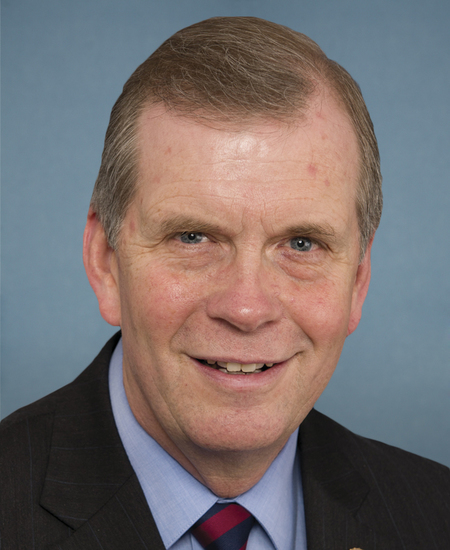
Rep. Tim Walberg
Sponsored bills
Maddy summaryThis bill formally establishes the Bureau of International Labor Affairs within the U.S. Department of Labor. It defines the Bureau's mission to promote global labor rights, combat child/forced labor and trafficking, support trade agreement enforcement, and deploy labor attachés to U.S. diplomatic posts. The bill requires the Bureau to submit annual reports to Congress on its activities, including anti-trafficking efforts and labor attaché deployments. It does not create new policy or funding but authorizes the structural framework for existing international labor work.
Maddy summaryThis bill requires Medicare Advantage plans to implement electronic prior authorization systems by 2027 and publish detailed data on their approval and denial rates for medical services by 2026. It directly affects Medicare Advantage plans (private insurers offering Medicare coverage) and their enrollees (seniors 65+), mandating transparency about prior authorization decisions, processing times, and appeal outcomes. Key provisions include requiring plans to report annual statistics on request approvals/denials, average processing times, and use of technology, with this data published publicly by the Centers for Medicare & Medicaid Services. The bill also sets timelines for plan responses to prior authorization requests and mandates reports to Congress on implementation and impacts.
Maddy summaryThis bill creates a special enrollment period for people with COBRA health coverage who become eligible for Medicare Part B. It allows them to enroll in Medicare during the time they're on COBRA plus a 3-month grace period afterward, but only once in their lifetime. The bill also prevents COBRA coverage from reducing or ending benefits just because someone is eligible for Medicare but hasn't enrolled yet. It affects individuals transitioning from employer-sponsored COBRA plans to Medicare, particularly those turning 65 or becoming Medicare-eligible. The changes take effect for COBRA coverage beginning January 1, 2025.
Maddy summaryThe Maximum Pressure Act (HR 6114) is a legislative proposal that would maintain and expand U.S. sanctions against Iran. The bill would codify existing sanctions, require Iran to meet 12 specific conditions before sanctions could be lifted (including ending support for terrorism, releasing hostages, and ending nuclear enrichment), and expand sanctions on Iran's Revolutionary Guard Corps and missile programs. It also establishes new reporting requirements for the U.S. government to monitor Iran's activities and the impact of sanctions. The legislation would require congressional review before any sanctions could be lifted or modified, preventing the executive branch from unilaterally easing restrictions.
Maddy summaryHR 5967, the Unemployment Integrity Act of 2023, requires unemployment claimants to participate in job-seeking activities to maintain benefits. Specifically, it mandates that claimants respond to work-related requests, attend reemployment interviews, and comply with reasonable requests like drug testing or skills assessments. The bill also requires states to conduct a study on increasing random audits of unemployment claims and mandates that states adopt these new requirements to receive federal funds for extended unemployment benefits. These changes apply to weeks beginning one year after the bill's enactment, with adjustments for states holding biennial legislative sessions. The law directly affects individuals claiming unemployment benefits by linking eligibility to active job-seeking participation.
Maddy summaryThis bill creates a presumption that minerals from the Democratic Republic of Congo (DRC) containing cobalt and lithium, mined with child or forced labor, cannot be imported into the United States. It requires the U.S. government to develop an enforcement strategy to identify and block such imports, including monitoring supply chains and working with international partners. The bill mandates diplomatic efforts to address child and forced labor in the DRC's mining sector and establishes sanctions against foreign entities that facilitate or engage in such labor practices. The focus is on minerals critical for electric vehicles and electronics, which are heavily sourced from the DRC and processed in China, with specific attention to Chinese mining companies like China Molybdenum that dominate the DRC's cobalt sector.
Maddy summaryThis bill prohibits Medicare from paying for certain custom-fitted or custom-fabricated orthotic and prosthetic devices delivered via "drop shipment" (direct shipping without in-person training from a qualified provider). It directly affects Medicare beneficiaries who need these devices, ensuring they receive necessary in-person fitting and training. The bill also expands which healthcare professionals (including physical therapists, occupational therapists, orthotists, and prosthetists) can prescribe these devices and updates definitions to clarify terms like "orthoses" and "prostheses." Final regulations implementing these changes must be issued within one year of the bill's enactment.
Maddy summaryThe Leveling the Playing Field 2.0 Act (HR 3882) updates U.S. trade law to better address international trade practices that disadvantage American businesses. It establishes special rules for handling multiple investigations of the same merchandise (called "successive investigations"), requiring the Commerce Department to consider previous injury determinations when making new findings. The bill also creates mechanisms to address market distortions from foreign government subsidies, including currency undervaluation, and strengthens procedures to prevent duty evasion through certification requirements for importers. These changes primarily affect foreign exporters of goods subject to U.S. antidumping and countervailing duty investigations, as well as U.S. importers of those goods.
Maddy summaryHR 2813, the Self-Insurance Protection Act, clarifies that stop-loss insurance purchased by employers with self-funded health plans is not considered "health insurance coverage" under federal law. This affects employers who self-fund employee health benefits, as it ensures stop-loss policies - which protect employers from unexpected high medical claims - remain exempt from state insurance regulations meant for traditional health insurance. The bill amends ERISA, the Public Health Service Act, and the Internal Revenue Code to explicitly exclude stop-loss coverage from definitions of health insurance, preventing states from restricting its availability. This change aims to maintain employer access to stop-loss insurance as a financial risk management tool for self-funded health plans.