

Maddy summaryHR 5267, the American Franchise Act, clarifies when franchisors can be considered joint employers of franchisee employees under federal labor laws. It defines "substantial direct and immediate control" over essential employment terms like wages, benefits, hours, hiring, and discipline - requiring franchisors to actively set these terms to be deemed joint employers. The bill explicitly excludes routine brand standards, training, or minimal safety requirements from constituting such control. This directly affects franchisors and franchisees by limiting joint employer liability to cases where franchisors exert significant, ongoing influence over core employment decisions. The law applies prospectively to new cases after enactment, not past disputes.
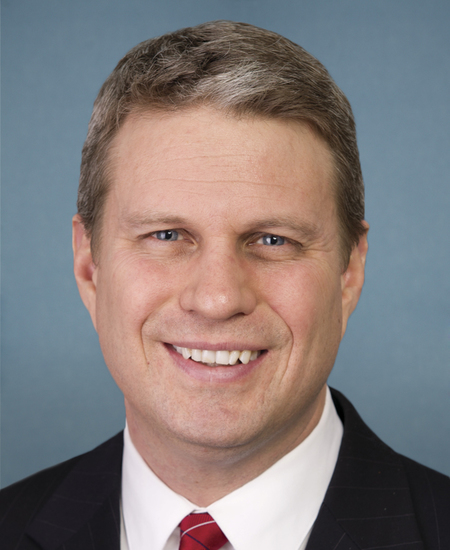
Rep. Bill Huizenga
Sponsored bills
Maddy summaryThis House resolution marks the 25th anniversary of the September 11, 2001 terrorist attacks by formally honoring the memory of the nearly 3,000 victims and recognizing the sacrifices made by first responders, military personnel, and the passengers of United Airlines Flight 93. The bill acknowledges the ongoing health challenges faced by survivors and responders, highlighting the role of the World Trade Center Health Program in providing long-term medical support. It also credits charitable organizations and community groups that have continued to assist victims' families and veterans over the past two decades. Finally, the resolution urges the American public to observe the anniversary with ceremonies and reaffirms Congress's commitment to remembering the events and lessons of that day.
Maddy summaryThis bill aims to reform the Securities and Exchange Commission by requiring the agency to analyze the costs and benefits of new regulations before issuing them and to conduct regular reviews of their impact. It mandates that the SEC Chairman testify to Congress every six months on the Commission's activities and requires an independent audit of the agency's cybersecurity and information technology systems. Additionally, the legislation transfers the Public Company Accounting Oversight Board to the SEC, establishes a minimum 60-day public comment period for new rules, and clarifies how penalties are calculated for multiple violations. The bill also directs the SEC to streamline its internal organization and consolidate regional offices to improve efficiency.
Maddy summaryThis bill prohibits the Securities and Exchange Commission (SEC) from requiring national securities exchanges, associations, or their members to report investors' personally identifiable information (PII) for consolidated audit trail purposes. It directly affects financial market participants whose personal details - like names, addresses, Social Security numbers, email addresses, or IP addresses - would otherwise be shared under SEC rules. The law specifically blocks the SEC from mandating this PII for order or reportable event reporting under existing regulations. This is a policy change to limit the types of data collected and shared in market transparency systems.
Maddy summaryH.Res. 1497 is a House resolution that commemorates the fifth anniversary of the Abbey Gate bombing, in which 13 U.S. servicemembers were killed during the withdrawal from Afghanistan. The bill lists the names of the fallen soldiers and formally condemns the Biden-Harris administration for what it describes as dereliction of duty and the forfeiture of military property to the Taliban. It asserts that the withdrawal was a disastrous failure that ignored security warnings and left Americans at risk, while also criticizing the lack of accountability from officials involved in the decision-making process.
Maddy summaryHR 7008, the Stop Insider Trading Act, restricts Members of Congress, their spouses, and dependent children from purchasing certain investments like stocks in publicly traded companies. It requires 7-14 days' advance public notice before selling any such investment, including the sale date, description, and number of shares. Exceptions apply for work-related transactions (e.g., employer compensation) and reinvesting dividends. Violations trigger a fee of $2,000 or 10% of the investment’s value (whichever is greater), plus any net gain, paid from personal funds - not congressional allowances or campaign donations. The bill aims to prevent conflicts of interest by increasing transparency around congressional financial dealings.
Maddy summaryThis bill creates a legal exemption from antitrust laws for companies and organizations that share information or coordinate actions to protect against security risks posed by artificial intelligence. Specifically, it allows these entities to exchange data or agree to temporarily delay the release or deployment of AI systems if they believe such steps are necessary to prevent threats like weaponization, attacks on critical infrastructure, or unauthorized access. To qualify for this protection, the organizations must act in good faith, use the shared information solely for security purposes, and submit a written notice to the Department of Justice before implementing any coordinated delays. The law also ensures that details submitted to the government remain confidential and allows the Attorney General to seek court orders against companies that fail to prove their actions were legitimate security measures.
This bill designates the facility of the United States Postal Service located at 324 Washington Avenue, Suite 1 in Grand Haven, Michigan, as the "Ell Thomas Simantz Post Office Building".
Maddy summaryThe Main Street Capital Access Act reduces regulatory burdens for smaller banks, particularly those with less than $10 billion in assets. Key provisions include a 3-year phase-in period for new banks to meet capital requirements, lower leverage ratio requirements for rural banks (7.5% for the first 2 years), and a 30-day review process for business plan deviations. The bill also establishes an Office of Independent Examination Review, sets specific timelines for examinations (270 days) and reports (90 days), and creates a "least cost exception" for bank resolutions to prevent excessive concentration of the banking system. These changes aim to promote new bank formation, improve regulatory efficiency, and support community banking while maintaining financial stability.
Maddy summaryThe Aquatic Invasive Species Control and Prevention Act of 2026 strengthens federal efforts to manage and prevent the spread of non-native aquatic organisms by updating existing laws and creating new funding opportunities. The bill establishes a competitive grant program to research and develop environmentally sound technologies for controlling these species, while also requiring a comprehensive study of federal regulations that might slow down rapid response actions when an invasion is detected. It mandates the creation of a national plan for inspecting and decontaminating watercraft at boat launches to stop the transfer of invasive species, and it authorizes funding to support regional panels and monitoring programs across various waterways. Additionally, the legislation updates the National Invasive Species Council's role to better coordinate federal actions and encourages the adoption of advanced ballast water management systems on ships.