Maddy summaryThis bill requires the Secretary of Labor to pay black lung benefits to eligible miners within 60 days if a liability determination (who is responsible for payment) hasn't been made. It directly affects miners diagnosed with black lung disease (pneumoconiosis) who face delays in benefit processing. The key mechanism is a 60-day deadline: if liability isn't determined by then, benefits are paid immediately from the existing trust fund. Operators later found liable must still repay the benefits, so the bill doesn't eliminate their financial responsibility. The change aims to prevent prolonged delays in critical health benefits for miners.
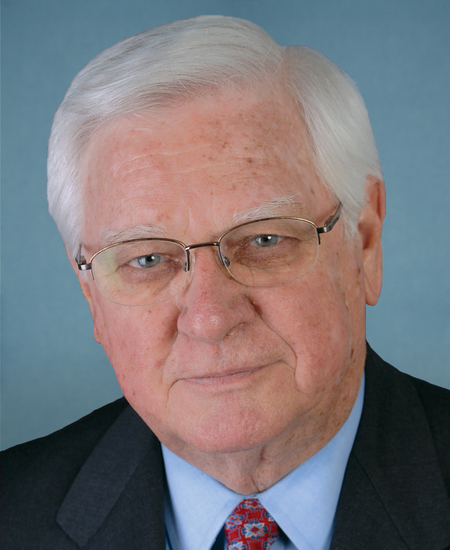
Rep. Harold Rogers
Sponsored bills
Maddy summaryHR 6375, the MARINA Act, standardizes fees and lease terms for marinas operating under commercial concessions at U.S. Army Corps of Engineers facilities. It limits rental fees to 1% of specific marina receipts (like fuel and boat sales) and establishes a tiered fee system: up to $50,000 for major land-disturbance projects, $5,000 for moderate reviews, and $1,000 for routine activities, while banning fees for standard renewals. The bill requires 50-year initial leases (25 years for renewals) and mandates a public fee schedule. It directly affects marina operators leasing space at Corps sites, ensuring consistent fee structures across all districts without altering existing leases.
Maddy summaryThis bill appropriates $14.3 billion in supplemental security funding to Israel following the October 7, 2023 attacks. The funding includes $4 billion for Iron Dome and David's Sling defense systems, $1.35 billion for the Iron Beam defense system development, and $3.5 billion for foreign military financing. The bill requires regular reporting to Congress on security assistance provided to Israel and designates all funds as "emergency requirements" under federal budget law. It also modifies existing laws to facilitate the transfer of defense articles and services to Israel, aiming to strengthen Israel's defense capabilities against rocket threats.
Maddy summary# Summary of the Commerce, Justice, Science, and Related Agencies Appropriations Act, 2024 This comprehensive appropriations bill allocates funding for the Department of Commerce, Department of Justice, National Science Foundation, National Aeronautics and Space Administration, and various related agencies for fiscal year 2024. ## Key Funding Areas: 1. **Department of Justice**: Includes significant funding for: - Office on Violence Against Women ($5,000,000 rescission) - Office of Justice Programs ($120,000,000 rescission) - Community Oriented Policing Services ($15,000,000 rescission) - Various programs including grants for law enforcement, victim services, and criminal justice initiatives 2. **Science and Technology**: - National Science Foundation: $7,866,646,000 for research and related activities - National Aeronautics and Space Administration: Significant funding for various programs including Science, Aeronautics, Space Technology, Exploration, and Space Operations 3. **Related Agencies**: - Commission on Civil Rights: $13,000,000 - Equal Employment Opportunity Commission: $420,000,000 - International Trade Commission: $122,400,000 - Legal Services Corporation: $489,000,000 - Marine Mammal Commission: $4,200,000 - U.S. Trade Representative: $56,000,000 ## Major Restrictions and Prohibitions: The bill contains numerous specific prohibitions on how funds can be used, including: - **Gun Control Restrictions**: Prohibitions on funding for gun buyback programs, red flag laws, firearm registries, and certain ATF regulations - **Diversity Restrictions**: Prohibitions on using funds for diversity, equity, inclusion, or implicit bias training, Critical Race Theory education, and certain diversity initiatives - **Foreign Policy Restrictions**: Prohibitions on funding for certain activities with China, Iran, North Korea, Russia, and other countries - **Social Policy Restrictions**: Prohibitions on funding for transgender-related services, abortion-related activities, and certain civil rights enforcement - **Research Restrictions**: Prohibitions on funding for certain types of research (e.g., related to climate change, environmental services valuation) - **Legal Restrictions**: Prohibitions on using funds to sue states over abortion or transgender laws, to enforce certain trade agreements, or to implement certain regulations The bill also includes specific rescission of funds totaling $25,000,000 from Economic Development Administration, $140,000,000 from Department of Justice accounts, and $82,572,000 from the Working Capital Fund. This bill represents a comprehensive set of funding allocations with extensive restrictions on how the funds can be used, reflecting significant policy priorities and limitations on government spending.
Maddy summaryHR 6201, the Iranian Sanctions Enforcement Act of 2023, creates the Iran Sanctions Enforcement Fund to cover costs related to seizing and forfeiting property from Iran or its designated proxies (like Hezbollah or the Revolutionary Guard Corps) that violate U.S. sanctions. The fund, initially $150 million, pays for investigative costs, property management, informant rewards, and equipment for federal, state, and local agencies involved in enforcement. It also establishes an Export Enforcement Coordination Center within Homeland Security to improve interagency cooperation on enforcing export controls targeting Iran. The bill requires annual reports on fund usage and mandates repayment of the initial $150 million by 2034, unless waived for national security reasons.
Maddy summaryThis bill amends the tax code to allow taxpayers to deduct over-the-counter naloxone purchases as medical expenses, similar to insulin. It directly affects individuals who buy naloxone without a prescription for personal or family use. The key provision adds "naloxone" to the list of deductible medical items under Section 213(b) of the Internal Revenue Code. The change applies to taxable years beginning after the bill's enactment date.
Maddy summaryHRES 771 is a non-binding resolution expressing the U.S. House of Representatives' support for Israel following Hamas' October 7, 2023, attack. It condemns Hamas' actions, affirms Israel's right to self-defense, and calls for the immediate release of hostages. The resolution also urges enforcement of existing laws restricting aid to terrorists and sanctions against Iran for supporting Hamas. It does not create new policies or allocate funds, as it is a symbolic statement of congressional support.
Maddy summaryHRES 768 is a symbolic House Resolution expressing congressional support for Israel following Hamas' October 7, 2023 attacks. It condemns Hamas' actions, reaffirms Israel's right to self-defense, and calls for the immediate release of hostages. The resolution references the U.S. commitment to Israel's security through existing military aid programs, including the 2016 U.S.-Israel Memorandum of Understanding, and emphasizes enforcement of laws like the Taylor Force Act to prevent U.S. aid from reaching terrorist groups. As a symbolic resolution, it does not create new policy but serves as a statement of congressional support for Israel.
Health Care Practitioner Disaster Protection Act This bill extends certain liability protections available for health care practitioners who provide voluntary health care services in declared emergencies through a community health center other than the one that initially sponsored them. Current law makes the liability protections available to volunteer practitioners that are sponsored by a particular community health center. This bill maintains the liability protections for a volunteer practitioner who provides services through a different community health center if the center (1) seeks the assistance of the volunteer practitioner to respond to a declared emergency, and (2) promptly notifies the Department of Health and Human Services that the volunteer practitioner will be providing services.
Maddy summaryHR 5110, the Protecting Hunting Heritage and Education Act, amends the Elementary and Secondary Education Act of 1965 to clarify that federal education funds cannot be used for certain weapons - but this restriction does not apply to archery, hunting, or other shooting sports training programs. The bill directly affects schools and educational programs seeking to use federal funds for these specific activities, such as archery clubs or hunting safety education. It adds an explicit exception to the existing prohibition, allowing funds to support "educational instruction or enrichment activities" in these sports under authorized programs. This change removes ambiguity about funding eligibility for such educational initiatives in K-12 schools.