Air America Act of 2021 This bill establishes the service of Air America employees as qualifying service for purposes of the Civil Service Retirement System. (Air America was a government-owned airline that provided air transport for certain covert operations in Southeast Asia, including Laos and Vietnam, between 1950 and 1976.) The bill applies to U.S. citizens who were employees of Air America or another affiliated company, as specified, between January 1, 1950 and December 31, 1976. Benefit applications must be filed within two years of the date of enactment of this bill.
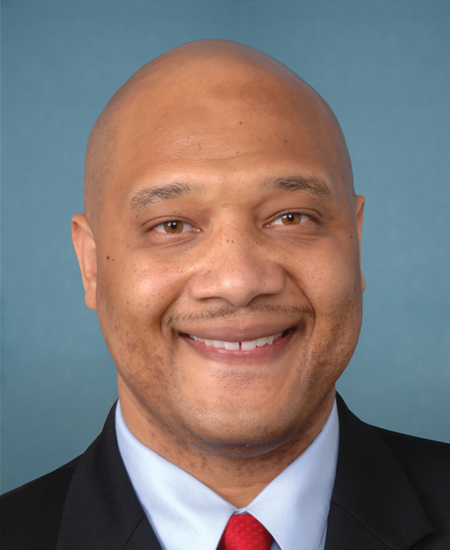
Rep. André Carson
Sponsored bills
This resolution expresses the sense of the House of Representatives that the 100th anniversary of the launching of Wonder Bread in Indianapolis, Indiana, is a moment to celebrate U.S. heritage and the innovation of the people of the United States.
Mothers and Offspring Mortality and Morbidity Awareness Act or the MOMMA's Act This bill establishes various programs and requirements to reduce maternal mortality. It also increases federal tobacco taxes and equalizes the tax treatment of different tobacco products. Specifically, the Centers for Disease Control and Prevention (CDC) must provide technical assistance and best practices for collecting data, standardizing reporting, and preventing maternal mortality. The CDC must consult with the Health Resources and Services Administration (HRSA) on this assistance. The bill also provides statutory authority for CDC grants for state-based collaboratives to improve care immediately before and after birth and to improve maternal and infant health outcomes, and a HRSA program to improve the quality and safety of maternity care. Furthermore, the Department of Health and Human Services (HHS) must establish regional centers through health professional schools and training programs to educate health care providers about implicit bias and culturally competent care. In addition, the bill expands eligibility for Medicaid, the Children's Health Insurance Program (CHIP), and other benefits for pregnant and postpartum individuals. Specifically, it extends postpartum eligibility for Medicaid and CHIP for one year; provides coverage for oral health services for pregnant and postpartum individuals under Medicaid and CHIP; and extends postpartum eligibility for the Special Supplemental Nutrition Program for Women, Infants, and Children for two years. HHS must also take steps to publicize the benefits available to pregnant and postpartum individuals under Medicaid and CHIP, and the Centers for Medicare & Medicaid Services must provide guidance on Medicaid coverage for doula services.
HOPE for HOMES Act of 2021 This bill provides support for energy efficiency upgrades in homes. Specifically, the bill directs the Department of Energy (DOE) to establish a grant program that supports training on how to efficiently retrofit homes. In addition, DOE must establish a Home Energy Savings Retrofit Rebate Program to provide rebates for homeowners to invest in energy efficiency improvements.
Long-term Opportunities for Advancing New Studies for Biomedical Research Act or the LOANS for Biomedical Research Act This bill requires the Department of Health and Human Services (HHS), in consultation with the Department of the Treasury, to establish the Biobonds Program to support loans for clinical trials for eligible drugs and medical devices. Specifically, Treasury must contract with institutions to act as fiscal agents to carry out the program. Fiscal agents must (1) purchase loans made to borrowers engaged in eligible biomedical research activities, and (2) sell bonds comprised of such loans. HHS shall guarantee a portion of the bond payments. An eligible borrower under this program is one conducting (or seeking to conduct) research related to a drug or device that is (1) intended to meet an unmet medical need; and (2) under investigation in certain types of controlled clinical trials, including a trial to investigate the safety and effectiveness of the drug or device. HHS must issue rules relating to various aspects of the program, including rules concerning (1) which loans should be prioritized for purchase, (2) the terms and conditions of the loans, and (3) the size of each bond issuance. Treasury must issue rules relating to the program's underwriting practices and compensation for the fiscal agents. The Government Accountability Office must periodically report to Congress on the program, including an analysis of the risk to the government in guaranteeing the bonds.
This joint resolution prohibits the issuance of an export license for specified defense articles, defense services, and technical data for end use by Israel.
Promoting Programming, Research, Education and Preservation in Civics and Government Act or the PREP Civics and Government Act This bill amends the National Foundation on the Arts and the Humanities Act of 1965 to include the study and interpretation of civics and government under the definition of humanities.
Hiring Incentive to Return Employment Act of 2021 or the HIRE Act of 2021 This bill increases the rate of the work opportunity tax credit from 40% to 50% of wages paid to members of the targeted groups eligible for such credit over a two-year period. It also increases to $10,000 the amount of wages taken into account for purposes of the credit.
Jobs, On-the-Job 'Earn-While-You-Learn' Training, and Apprenticeships for Young African Americans Act This bill makes changes to the national apprenticeship system aimed at promoting diversity. Specifically, the bill establishes the Diversity and Inclusion Administrator in the Office Apprenticeship within the Office of Employment and Training Administration at the Department of Labor, requires every apprenticeship program that registers or renews an apprenticeship with the Office of Apprenticeship to submit a plan to increase participation by individuals who are African American, and requires the Diversity and Inclusion Administrator to award grants to create or expand diversity in registered apprenticeship programs.
Civics Learning Act of 2021 This bill expands the use of American History and Civics Education—National Activities grants to prioritize innovative civics learning and teaching. Specifically, the bill expands the allowable uses of these grants to include before-, during-, and after-school activities and extracurricular activities; activities that include service learning and community service projects that are linked to school curriculum; activities that encourage and support student participation in school governance; and online and video game-based learning. Further, the Department of Education must ensure that specified percentages of grant funds are awarded on a diverse basis to eligible entities (e.g., institutions of higher education) that serve students and teachers at elementary schools, middle schools, and high schools.