Philippine Human Rights Act This bill imposes limitations on providing assistance to the police or military of the Philippines. No federal funds may be used to provide such assistance until the Philippines government has taken certain actions, including (1) investigating and successfully prosecuting members of its military and police forces who have violated human rights, (2) withdrawing the military from domestic policing activities, and (3) establishing that it effectively protects the rights of journalists and civil society activists. The President shall also direct U.S. representatives at multilateral development banks to vote against providing loans to the police or military of the Philippines.
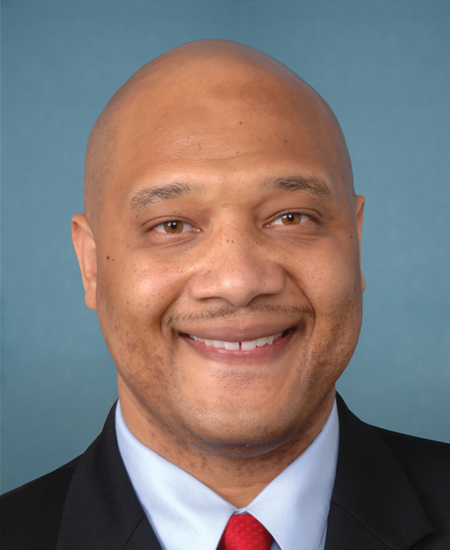
Rep. André Carson
Sponsored bills
LGBTQ Essential Data Act This bill directs the Centers for Disease Control and Prevention to more frequently collect information on the sexual orientation and gender identity of deceased individuals through the National Violent Death Reporting System.
Pink Tax Repeal Act This bill prohibits product manufacturers or service providers from selling substantially similar products at different prices based on the gender of the intended purchaser. If, for example, the only difference between two products is the color, they are substantially similar. The bill provides authority for the Federal Trade Commission and state attorneys general to enforce these requirements.
Basic Assistance for Students In College Act or the BASIC Act This bill directs the Department of Education (ED) to award planning and implementation grants to institutions of higher education in order to identify and meet the basic needs of students, including food, housing, transportation, and health care. ED must also implement an agreement to (1) share data with other federal agencies in order to identify students who may be eligible for certain federal benefits; and (2) coordinate efforts to enroll those students in federal benefits programs, including Medicaid and the Supplemental Nutrition Assistance Program.
Protecting our Students in Schools Act of 2021 This bill prohibits the use of corporal punishment in schools that receive federal funding. Specifically, the bill authorizes the Department of Education (ED) to take specified actions (e.g., withholding funds and issuing cease-and-desist orders) for schools that allow school personnel, law enforcement officers, or school security guards to subject students to corporal punishment. The bill also establishes enforcement provisions, including a private right of action for a student who has been subjected to corporal punishment. Each state educational agency (SEA) that receives federal funding must submit specified information to ED, including a school climate report that describes the SEA's policies and procedures related to exclusionary and aversive discipline practices in schools. Additionally, the bill authorizes ED to award three-year grants to SEAs and, through them, subgrants to local educational agencies to implement positive behavioral interventions and supports to address student behavior and reduce exclusionary and aversive discipline practices. ED must promulgate regulations as necessary to ensure compliance with the bill. The Department of Defense and the Department of the Interior must ensure that the schools they operate or fund also comply with these regulations.
Stronger Communities through Better Transit Act This bill requires the Department of Transportation to establish a grant program to support operating projects for public transportation (e.g., service expansion) and related capital improvements, particularly in underserved communities and areas of persistent poverty.
Physical Therapist Workforce and Patient Access Act of 2021 This bill makes physical therapists eligible for the National Health Service Corps Loan Repayment Program. This program assists primary care, mental health, and dental providers in repaying eligible student loans in exchange for working in areas with shortages of such providers.
Nullifying Opportunities for Variants to Infect and Decimate Act or the NOVID Act This bill establishes the Pandemic Preparedness and Response Program to coordinate and carry out the U.S. government's global health response to COVID-19, its variants, and other pathogens with pandemic potential. As part of the program, the bill requires, within 30 days, the development of a comprehensive strategy to end the COVID-19 pandemic. The strategy must outline efforts to increase COVID-19 vaccinations worldwide, including through the immediate release of the COVID-19 vaccine doses that the United States committed to sending abroad. The bill also requires a long-term strategy for the program to prevent future pandemics.
FAIR Leave Act or the Fair Access for Individuals to Receive Leave Act This bill repeals the limit on the aggregate number of workweeks of family and medical leave that spouses employed by the same employer may be entitled to during any 12-month period. The current limit is 12 aggregate workweeks.
African Burial Ground International Memorial Museum and Educational Center Act This bill establishes the African Burial Ground International Memorial Museum and Educational Center at the African Burial Ground National Monument in New York, New York. The National Park Service shall (1) acquire for the museum property that is located adjacent to the national monument or in any other area of the African Burial Ground National Historic Landmark in the city other than the location adjacent to the monument, and (2) construct the museum on the acquired property. The bill establishes within the Department of the Interior the African Burial Ground Advisory Council to (1) make recommendations on the construction of the museum, and (2) advise and assist Interior on all matters relating to the operation and preservation of the museum.