Maddy summaryHR 7856, the Fair Housing for Survivors Act of 2026, amends the Fair Housing Act to explicitly prohibit housing discrimination based on being a survivor of domestic violence, sexual assault, or severe trafficking in persons. It adds "survivor of domestic violence, sexual assault, or severe trafficking" as a protected class in the law, alongside existing categories like race or national origin. This means landlords, housing providers, and programs cannot deny housing, evict, or otherwise discriminate against individuals due to their status as a survivor. The bill directly affects survivors who face housing barriers, including those with protective orders, shelter histories, or past evictions linked to abuse.
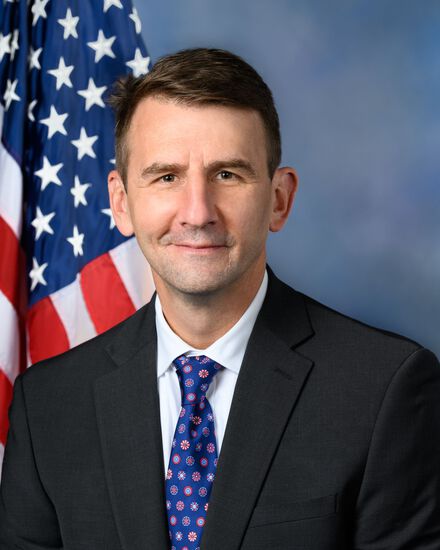
Rep. Frank J. Mrvan
Sponsored bills
Maddy summaryThis bill, known as the Direct File Act of 2026, would establish a government-run online system allowing taxpayers to prepare and file their individual income tax returns for free. The legislation prohibits the Treasury Department from entering into agreements that restrict its ability to provide tax preparation or filing services, and it voids any existing contracts with such restrictions. The program would use IRS data to simplify filing, include customer support, be available in multiple languages, and allow users to file even if they are not required to. It also enables taxpayers in participating states to file state and local returns alongside their federal returns, with funding provided to states that meet certain standards.
Maddy summaryThe DISCLOSE Act of 2026 aims to increase transparency in election spending and prevent foreign influence. It expands the ban on foreign money to cover federal, state, and local elections, including ballot initiatives and judicial nominations, and criminalizes using corporations to conceal these funds. The bill mandates that organizations spending over $10,000 on campaign-related activities, such as independent expenditures or judicial nomination advocacy, disclose their beneficial owners and top donors. Additionally, it establishes new "Stand By Every Ad" disclaimers for political communications, requiring the highest-ranking official to approve the message and, for certain ads, list their top funders. These provisions directly affect non-candidate organizations, individuals involved in political and judicial nomination spending, and foreign nationals.
End Veteran Homelessness Act of 2025 This bill requires the Department of Veterans Affairs (VA) to furnish case management to certain veterans who are eligible for the HUD-Veterans Affairs Supportive Housing (HUD-VASH) program administered by the Department of Housing and Urban Development (HUD) and the VA. Specifically, the VA must furnish case management to veterans who are eligible for HUD-VASH that the VA determines require case management. The VA must prioritize vulnerable homeless veterans in assigning case managers and providing services. The VA must take certain actions if a veteran refuses case management. HUD or a public housing authority may not revoke assistance solely on the basis that a veteran has refused case management. Additionally, a veteran may not be evicted or penalized by the owner of a property solely on the basis that they have refused case management or cannot be provided case management for health and safety reasons. The Government Accountability Office must report to Congress on veterans who are served by the HUD-VASH program, case managers and case management services provided under the program, and metrics about housing stability for veterans participating in federal housing assistance programs. The bill also provides statutory authority to expand eligibility for the HUD-VASH program to any veteran who is homeless, at risk of homelessness, or receiving assistance under another housing assistance program if the VA determines a voucher under HUD-VASH is more appropriate. (Currently, assistance is statutorily limited to certain veterans who have chronic mental illness or substance use disorders.)
Maddy summaryHR 7599 creates a federal framework for extreme risk protection orders (ERPOs), allowing family members or law enforcement to petition courts to temporarily prohibit individuals from possessing firearms when they pose a risk of harm to themselves or others. The bill establishes a process for issuing ex parte orders (up to 14 days) followed by a hearing within 72 hours to determine if a longer-term order (up to 180 days) should be issued, requiring respondents to surrender firearms to U.S. Marshals or designated law enforcement. Courts must consider specific factors like recent threats, violence, substance abuse, or cruelty to animals before issuing orders, with no fees for petitioners. The law requires law enforcement training to address bias, includes annual reporting requirements, and ensures firearms are returned once the order expires and the individual is eligible to own firearms under federal law.
Maddy summaryHR 7600, the Postal Supervisors, Managers, and Postmasters Fairness Act of 2026, requires the U.S. Postal Service to formally negotiate pay and benefits changes with unions representing supervisors, managers, and postmasters. Specifically, it mandates that the Postal Service provide written proposals to these unions 60 days before existing pay decisions expire or after new collective bargaining agreements affect these roles. The bill also shortens the dispute resolution timeline, requiring binding decisions from panels within 15 days after recommendations. This bill directly affects the Postal Service, the supervisors’ organization, and the postmasters’ organization by standardizing their negotiation process for pay and benefits.
Maddy summaryThis resolution (HRES 1063) is a symbolic measure designating February 2026 as "Career and Technical Education Month" to recognize the importance of career and technical education (CTE) programs. It does not create new policies or funding but formally supports CTE's role in preparing students for high-demand jobs by encouraging educators and parents to promote CTE as a valid educational pathway. The resolution references CTE's alignment with workforce needs and cites bipartisan support from past legislation like the 2018 Strengthening Career and Technical Education Act. It affects no specific individuals or programs, serving only as a non-binding statement of support.
Maddy summaryThis bill requires most employers to provide workers with earned paid sick leave. Employees would earn 1 hour of paid sick time for every 30 hours worked, up to 56 hours per year, which can be used for their own illness, medical care, caring for family members (including children, parents, spouses, domestic partners, or other family-like relationships), or addressing domestic violence, sexual assault, or stalking situations. The bill prohibits employers from retaliating against workers who use this leave and requires employers to inform employees about their rights. It ensures that workers who leave and return to the same employer within a year can reinstate their unused sick leave. This law would not override more generous state or local paid leave policies.
Department of Homeland Security Appropriations Act, 2026 This bill provides FY2026 appropriations for various agencies and offices within the Department of Homeland Security (DHS), except for U.S. Immigration and Customs Enforcement (ICE), U.S. Customs and Border Protection (CBP), and management and oversight activities of the Office of the Secretary. Specifically, the bill provides appropriations to DHS for the Federal Protective Service, the Office of Inspector General, the Transportation Security Administration, the U.S. Coast Guard, the U.S. Secret Service, the Cybersecurity and Infrastructure Security Agency, the Federal Emergency Management Agency (FEMA), U.S. Citizenship and Immigration Services, the Federal Law Enforcement Training Centers, and the Science and Technology Directorate. The bill does not provide appropriations for some agencies and activities that have been funded in prior DHS appropriations acts, including ICE, CBP, and management and oversight activities of the Office of the Secretary.
Maddy summaryThis bill, known as the BASICS Act, creates a new $5.5 billion federal funding program over five years to repair and replace bridges in poor condition across the United States. The program prioritizes projects based on the cost of bridge rehabilitation in each state and guarantees a minimum funding allocation of $45 million per state annually. It also expands funding for regional transportation planning in rural areas and increases flexibility for local governments to select and manage transportation projects through enhanced consultation requirements. Additionally, the legislation removes local matching fund requirements for metropolitan planning activities and allows 100 percent federal funding for off-system bridge projects owned by local governments or tribes.