

Maddy summaryThis resolution asks the President and the Secretary of Health and Human Services to provide the House of Representatives with specific documents regarding a freeze on federal payments to five states. The requested materials include communications about how the payment freeze was decided, records of the tweet that announced it, and details on funding drawdowns, disciplinary actions, and data sharing plans related to those states. The bill specifically targets documents concerning Temporary Assistance for Needy Families, Child Care, and Social Services Block Grant programs in California, Colorado, Illinois, Minnesota, and New York. If the agencies possess the records, they must submit them to Congress within 14 days of the resolution's adoption.
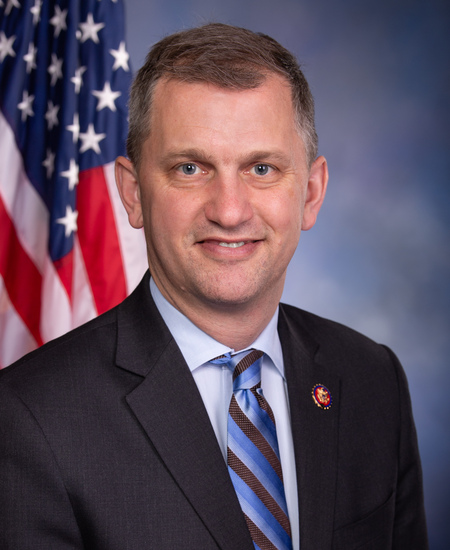
Rep. Sean Casten
Sponsored bills
Maddy summaryThis resolution commemorates the fourth anniversary of the July 4, 2022, Independence Day Parade shooting in Highland Park, Illinois, which resulted in seven deaths and over 40 injuries. It formally honors the seven victims by name and acknowledges the bravery of the numerous law enforcement officers, first responders, and medical personnel who assisted during the attack and in the aftermath. The document also recognizes the ongoing efforts of volunteer counselors supporting the community and expresses continued support for Highland Park as it marks this tragic milestone.
Maddy summaryThis resolution commemorates the 250th anniversary of the United States by reaffirming the nation's historical commitment to separating church and state. It highlights key constitutional principles, such as the First Amendment and the prohibition of religious tests for public office, which protect individual religious freedom and prevent government endorsement of specific beliefs. The document cites historical figures like Thomas Jefferson and James Madison to underscore the importance of maintaining a secular government that safeguards religious pluralism. Ultimately, the measure serves as a formal statement of values rather than a law that changes existing policies or imposes new requirements.
Maddy summaryThe LIFT the BAR Act aims to restore access to federal benefits for lawfully present noncitizens by repealing several restrictions imposed by the 1996 welfare reform law and a 2024 reconciliation bill. Specifically, it would allow eligible noncitizens to receive SNAP food assistance, Medicaid, CHIP, and child nutrition programs, while also updating legal terminology to refer to "noncitizens" rather than "aliens" in relevant statutes. The legislation includes provisions to ensure these individuals can qualify for premium tax credits and would require federal agencies to issue implementation guidance within 180 days of enactment.
Maddy summaryThe Next Generation Shipping Act establishes a $10 billion funding program over ten years to support the development and deployment of zero-emission vessels and clean alternative fuel technologies. Administered by the Department of Transportation, the program provides grants, low-interest loans, and loan guarantees to eligible entities such as shipowners, manufacturers, and port authorities, while explicitly prohibiting the use of funds for automated vessel systems. To guide these efforts, the bill creates an advisory committee representing diverse stakeholders including labor groups, environmental organizations, and industry leaders to evaluate technologies and identify gaps. Additionally, the legislation mandates that funded projects prioritize workforce training, community benefits, and environmental justice, ensuring that laborers receive prevailing wages and that local communities are engaged throughout the project lifecycle.
Maddy summaryThe Global Climate Resilience Act of 2026 establishes a program to reduce the debt owed by vulnerable countries to the United States, directing those savings toward climate adaptation and disaster recovery efforts. To qualify for these benefits, nations must be classified as low or middle-income or small island developing states, have democratically elected governments that respect human rights, and submit plans involving local communities to build resilience against extreme weather and slow-onset climate disasters. The bill authorizes the President to cancel or exchange existing U.S. loans for new obligations tied to resilience projects and directs U.S. representatives at international financial institutions to advocate for similar debt relief and a new parametric climate insurance program at the World Bank.
Maddy summaryThis bill redesignates the existing National Parks and Public Land Legacy Restoration Fund as the America's Legacy Restoration Fund to address deferred maintenance on federal lands. It directs revenue from recreation fees and a portion of energy development income into the fund, which must be used primarily for repairing critical infrastructure like roads, trails, and buildings managed by agencies such as the National Park Service and the Forest Service. The legislation establishes strict rules requiring that most funds go toward non-transportation projects, mandates transparency through public dashboards tracking project status, and sets aside a small percentage for matching private donations. Additionally, the bill increases entrance fees for foreign visitors to ensure they contribute to the fund, while prohibiting the use of these specific funds for land acquisition or employee bonuses.
Maddy summaryThe Juvenile Firearms Safety Act of 2026 makes it illegal for adults to give non-handgun firearms to minors who intend to use them for self-harm or crimes, and it also restricts adults from storing firearms in places where minors can easily access them. The law allows adults to avoid penalties if they keep guns locked up or on their person, and it considers factors like prior knowledge of a minor's mental health or violent behavior when determining liability. Penalties range from one year in prison for simple violations to up to ten years if a minor causes injury or death after receiving a prohibited firearm.
Maddy summaryThe Keep Public Funds in Public Schools Act of 2026 eliminates a federal tax credit that allowed parents to deduct contributions to scholarship granting organizations from their income. By removing these specific tax breaks, the bill prevents the use of public tax dollars to support private school vouchers and scholarship programs. This change directly affects families who currently rely on these tax incentives to fund education outside the public school system. The provisions take effect for taxable years beginning after December 31, 2026.
Maddy summaryThe Stop Crypto ATM Scams Act requires digital asset kiosk operators to register their locations with the Treasury Department and makes this information publicly available. To combat fraud and money laundering, the bill mandates strict identity verification, transaction limits of $2,000 per day for new customers, and the use of blockchain analytics to monitor suspicious activity. Operators must also provide clear, standardized disclosures about fees and risks, display scam warnings, offer live customer support, and issue detailed receipts to users. Additionally, the law sets federal transaction limits that supersede state restrictions while allowing states to issue compliance decals and maintain their own licensing requirements.