Maddy summaryThis bill designates the Department of Veterans Affairs community-based outpatient clinic at 207 Hamilton Road in Bloomington, Illinois, as the "Andrew Jackson Smith Medal of Honor Department of Veterans Affairs Clinic." It honors Color Sergeant Andrew Jackson Smith, a Medal of Honor recipient from the Civil War, by naming the facility after him. The bill makes this name official for all federal references, including laws, maps, and documents. It is a commemorative resolution with no policy changes or new services.
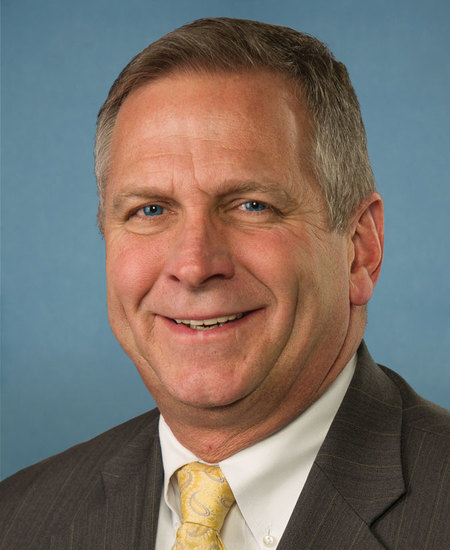
Rep. Mike Bost
Sponsored bills
Maddy summaryHR 4217, the VA COST SAVINGS Enhancements Act, requires the VA Secretary to identify Department of Veterans Affairs facilities that could save money over five years by using on-site medical waste treatment systems instead of sending waste off-site. The bill mandates the development of a uniform cost model comparing off-site contract costs to on-site system costs (including equipment costs spread over 10 years), and directs the installation of these systems at qualifying facilities. It applies directly to VA medical facilities nationwide and specifies no new funding will be provided - existing resources must cover implementation. The law focuses on operational cost savings through standardized waste management practices at VA facilities.
Maddy summaryHR 472, the Restore VA Accountability Act of 2025, creates new disciplinary procedures for VA supervisors and management officials. It requires the VA Secretary to consider specific factors like the seriousness of misconduct and the employee's role when deciding on removal, demotion, or suspension, and limits the entire disciplinary process to 15 business days. The bill prevents courts from reviewing penalty amounts but allows review of whether procedures were followed correctly. It also strengthens whistleblower protections by requiring Special Counsel approval before disciplining employees who report misconduct, affecting VA supervisors and management officials but excluding senior executives and political appointees.
Maddy summaryHR 6876, the "Protecting Children from Foreign Mutilation Act," imposes visa bans on foreign medical professionals or facilities that provide certain gender-affirming treatments to U.S. minors under 18. It targets foreign physicians or clinics performing "chemical or surgical mutilations" (defined as puberty blockers, hormones, or surgeries altering physical sex characteristics for transgender youth), excluding medically necessary care for intersex conditions or injuries. The bill requires the President to revoke visas for qualifying foreign providers and mandates a report to Congress on enforcement within 180 days. It explicitly excludes detransition treatments and medically necessary care for conditions like intersex variations or trauma. The law applies solely to foreign providers, not U.S. healthcare.
Maddy summaryThis bill requires states to include specific safety plans in their highway-rail grade crossing reports. It mandates that states collaborate with railroads, mental health agencies, and law enforcement to address pedestrian fatalities - including suicides - along railroad rights-of-way. States must now submit these updated safety plans every five years, replacing the previous reporting schedule. The bill directly affects state transportation agencies responsible for maintaining grade crossings and coordinating with rail operators. It focuses on concrete reporting changes rather than new funding or enforcement measures.
Essential Caregivers Act of 2025 This bill prohibits certain health care facilities from limiting the access of essential caregivers to residents of those facilities, including during designated emergency periods. Specifically, the bill generally prohibits Medicare skilled nursing facilities, Medicaid nursing facilities, Medicaid intermediate care facilities, and associated inpatient rehabilitation facilities from restricting the access of essential caregivers to residents of the facilities, including during emergency periods in which visitation rights are otherwise restricted. During emergency periods, facilities may restrict access for an initial period of up to seven days and for one additional maximum seven-day period (if the additional period is approved by the state health department). Facilities may restrict access for a total of 7 days (or 14 days with the approval of the state health department) during an emergency period. Essential caregivers must agree to comply with any safety protocols set by the facility, which may be no more stringent for caregivers compared to those for staff. Caregivers who fail to comply with these requirements may be denied access, subject to an appeals process.
Maddy summaryThis bill authorizes the Department of Veterans Affairs to construct a major medical facility project in St. Louis, Missouri, during fiscal year 2026. It specifically approves funding up to $1.76 billion for building a new bed tower, expanding clinical facilities, constructing a consolidated administrative building and warehouse, upgrading utility systems, and adding parking garages. The bill directly affects VA medical infrastructure in St. Louis by enabling this physical expansion project. It does not change veteran benefits or eligibility but provides the funding authorization for the facility construction.
Miracle on Ice Congressional Gold Medal Act This act provides for the award of Congressional Gold Medals to the members of the 1980 U.S. Olympic men's ice hockey team in recognition of the team's achievement at the 1980 Winter Olympic Games.
Maddy summaryHRES 934 is a symbolic resolution designating November 2025 as "Carbon Monoxide Action and Awareness Month" to promote public safety. It does not create new laws or funding but encourages nationwide education, prevention, and detection efforts to protect families from carbon monoxide poisoning. The resolution urges all U.S. households to install and maintain certified carbon monoxide alarms, test them regularly, and recognize poisoning symptoms. It specifically highlights that 36% of homes lack detectors and emphasizes collaboration between government agencies, health organizations, and communities to reduce risks. This resolution directly affects all U.S. residents, particularly vulnerable groups like children and the elderly, by advancing existing prevention strategies.
Maddy summaryHR 6466, the Forced Abortion Prevention and Accountability Act, prohibits non-consensual administration of abortion drugs (like mifepristone or misoprostol) to pregnant women without their informed consent. It criminalizes this act with penalties up to 25 years in prison and allows victims to sue for triple damages, psychological/physical injury compensation, and attorney fees. The bill directly affects pregnant women who might face coerced procedures and medical providers or others who administer such drugs without consent. Key provisions include criminal penalties for the act itself, enhanced penalties for serious injury or death, and a civil remedy framework for victims seeking compensation.