

Maddy summaryThe Books Save Lives Act requires public libraries and schools receiving federal funding to maintain diverse book collections that include works by and about members of underrepresented communities. It mandates that covered schools employ trained librarians and establishes that excluding books with a disparate impact on underrepresented groups serves as initial evidence of discrimination under existing civil rights laws. Additionally, the bill directs the Comptroller General to produce a report within 180 days on how recent book ban campaigns have affected underrepresented communities. The legislation defines underrepresented communities to include racial and ethnic minorities, LGBTQ+ individuals, religious minorities, and people with disabilities.
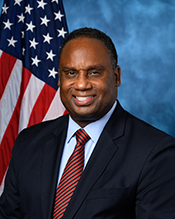
Rep. Jonathan L. Jackson
Sponsored bills
Maddy summaryThis resolution formally acknowledges historical and ongoing injustices in women's healthcare, particularly affecting marginalized groups such as Black, Indigenous, immigrant, LGBTQ+, disabled, and low-income women. It highlights specific issues including dismissed pain, lack of bodily autonomy, and past medical abuses like non-consensual sterilization and coercive contraceptive testing. The bill calls for patient-centered care, expanded research, and stronger protections for reproductive and gynecological health, while urging the federal government to address systemic bias in medical settings.
Maddy summaryThis bill directs the Secretary of Health and Human Services to conduct a study on barriers that prevent patients from accessing pain management during gynecologic procedures. The study will examine factors such as insurance coverage, provider training, and resource availability, and will include input from patients, medical professionals, and health equity experts. Within 24 months of enactment, the Secretary must submit a report with findings and recommendations to relevant congressional committees. The bill does not change current laws or funding but establishes a research requirement to inform future policy decisions.
Maddy summaryThis bill would create a federal paid leave program allowing employees to take up to 96 hours of paid time off each year for reproductive health needs, including menstrual care, endometriosis, fertility treatments, and pregnancy-related procedures. It applies to private employers with at least five employees and certain government workers, requiring employers to grant this leave upon request without requiring employees to find replacements during their absence. The legislation prohibits retaliation against employees who use this leave and establishes enforcement mechanisms through the Department of Labor, including civil penalties for violations. Employers with existing paid leave policies that already cover these reproductive health reasons would not need to provide additional leave under this bill.
Maddy summaryThis bill directs the National Institutes of Health to expand research into Premenstrual Dysphoric Disorder, a severe mood and physical condition affecting 5 to 8 percent of women and people assigned female at birth. It requires the agency to collect data on PMDD prevalence, economic impact, and treatment barriers while ensuring diverse populations are included in studies. The legislation also funds public awareness campaigns and grants to train healthcare professionals in diagnosing and treating the condition. Additionally, the bill mandates a report to Congress within two years detailing progress on research, education, and access to care.
Maddy summaryThe Maternal Vaccination Act amends the Public Health Service Act to expand a federal campaign focused on increasing vaccination rates among pregnant and postpartum individuals and their children. This legislation directly affects public health programs by updating language to explicitly include these populations and directing funding toward outreach efforts that address disparities among racial and ethnic minority groups. Key provisions modify existing sections of the Public Health Service Act to broaden the campaign's scope and increase the authorized funding amount from $15 million to $17 million per fiscal year for the period 2027 through 2031. The bill aims to improve vaccination equity by ensuring federal resources specifically target maternal and pediatric immunization efforts.
Maddy summaryThis concurrent resolution formally recognizes the ongoing disparity between wages paid to men and women in the United States and reaffirms Congress's commitment to supporting equal pay. It highlights statistical data showing that women earn approximately 81 cents for every dollar earned by men, with significant variations across racial and ethnic groups, and notes that the gender wage gap has widened over the past two years. The document also identifies contributing factors such as occupational segregation, lack of family-friendly workplace policies, and workplace harassment, while emphasizing the economic impact on women's retirement security and family incomes.
Maddy summaryThis bill directs the Joint Committee of Congress on the Library to commission and install a statue of Shirley Chisholm in a permanent public location within the United States Capitol. The legislation requires the committee to secure the statue within two years of enactment and authorizes the Architect of the Capitol to handle related contracts on the committee's behalf. Funding is authorized to cover the costs of obtaining and placing the statue, with appropriated funds remaining available until used. This measure directly affects the Capitol's art collection and honors Shirley Chisholm through physical representation in the legislative building.
Maddy summaryThis bill prohibits the use of federal funds for military force in or against Cuba from its enactment until December 31, 2026, unless Congress declares war or passes specific statutory authorization. The restriction applies to all government funds and prevents military actions without congressional approval under the War Powers Resolution. An exception allows military force consistent with the War Powers Resolution's provisions for urgent situations requiring immediate action. The legislation directly affects the U.S. Department of Defense and federal budget processes by limiting how funds can be used for military operations targeting Cuba.
Maddy summaryThis bill designates tax return preparers as official voter registration agencies, allowing them to distribute voter registration forms to clients. It requires in-person tax preparers to display registration forms visibly in their offices and online preparers to provide a prominent hyperlink to registration forms during their services. The law applies to professional tax preparers who handle at least 100 individual tax returns annually and to certified volunteer tax preparers receiving federal funding. Tax preparers are exempt from certain administrative duties like accepting completed forms or submitting them to election officials, and the Secretary of the Treasury must provide guidance and update volunteer tax site requirements to support these new responsibilities.