Maddy summaryThe Foreign Propaganda Disclosure Act amends the Foreign Agents Registration Act to explicitly include social media influencers in its regulatory scope. The bill defines a social media influencer as any individual who maintains a monetized account on a social media platform, using an existing definition from the Trafficking Victims Prevention and Protection Reauthorization Act of 2022. By making this addition, the legislation requires these specific digital content creators to comply with the same registration and disclosure obligations currently applied to other foreign agents.
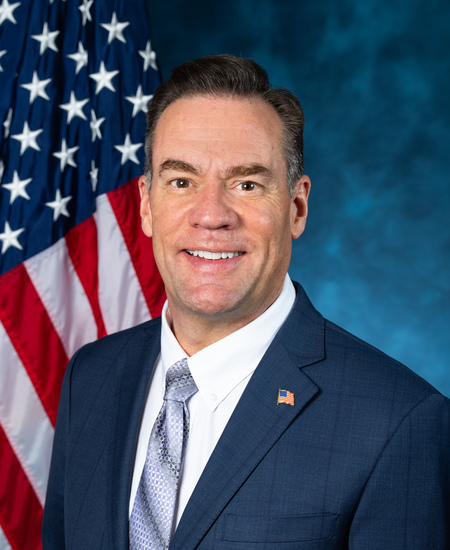
Rep. Russ Fulcher
Sponsored bills
Maddy summaryThis bill streamlines geothermal exploration on federal lands by defining small-scale "geothermal exploration projects" (e.g., limited drilling with <8 acres disturbance, <180 days duration, and 3-year land restoration). It exempts such projects from major federal environmental reviews under NEPA, requires leaseholders to provide 30-day notice before drilling, and establishes "geothermal leasing priority areas" on eligible federal land. The Secretary must designate these priority areas within 3 years (considering economic viability and transmission access), review them every 5 years, and use programmatic environmental reviews for future leasing. The bill directly affects geothermal leaseholders and federal agencies managing public lands, reducing regulatory hurdles for initial exploration while creating a structured framework for future leasing.
Maddy summaryThe Stealth Bot Prohibition Act makes it illegal to use automated software, known as stealth bots, to access websites without revealing their identity or purpose. Specifically, the law bans deploying these bots in ways that harm online services and prohibits disguising them as human users when interacting with generative artificial intelligence systems. Violations can result in civil penalties of up to $53,000 per incident, which are enforced by the Federal Trade Commission and state attorneys general. The bill defines a stealth bot as any program that scrapes or scans the internet without disclosing its nature or intended use to the website operator.
Maddy summaryThe Wildfire Reduction Market Expansion Act of 2026 updates the Clean Air Act to broaden the definition of renewable biomass eligible for carbon credits. It specifically allows materials from forest management, such as slash, storm debris, and wood residuals, to be counted as renewable fuel if they come from sustainably managed lands or public forests designated for fuel reduction. The bill also includes vegetation cleared from defensible space around buildings and from wildfire risk reduction projects in the wildland-urban interface. By clarifying these categories and establishing certification requirements, the legislation aims to increase the supply of biomass available for generating renewable energy credits.
Maddy summaryHR 6213, the Heat Workforce Standards Act of 2025, prohibits the U.S. Department of Labor from finalizing, implementing, or enforcing OSHA's proposed "Heat Injury and Illness Prevention" standard (published August 30, 2024). This bill directly blocks the specific regulatory proposal targeting heat safety in both outdoor and indoor work settings. It does not create new requirements or affect workers; it solely prevents the implementation of the existing OSHA proposal. The bill is procedural, focusing on halting a regulatory action rather than establishing new policy.
Maddy summaryThe PRIVACY Act restricts Federal law enforcement agencies from accessing surveillance data collected by State or local agencies without a warrant issued by a Federal judge. It establishes a "Jurisdictional Wall List" maintained by the Attorney General that includes technologies like automated license plate readers and long-range microphones, prohibiting the use of Federal funds to purchase these specific devices. While the bill allows for limited exceptions in emergencies or with consent, it mandates strict rules on data retention, requiring agencies to delete most collected information within 30 days unless it becomes evidence in an active prosecution. Additionally, the legislation bans the use of this data to monitor individuals exercising First Amendment rights and requires regular reporting to Congress on how these surveillance tools are utilized.
Maddy summaryThe Essential Caregivers Act of 2026 requires nursing homes, long-term care hospitals, rehabilitation facilities, and intermediate care facilities to allow two chosen family members or friends to visit residents during times when regular visitation is suspended. These essential caregivers must agree to follow the facility's existing safety and infection control rules, which are no more restrictive than those applied to staff. While facilities can limit access for the first seven days of a suspension or deny entry if a caregiver shows symptoms of a serious infectious disease, they cannot block visits for end-of-life care. Additionally, the bill mandates that complaints about denied access to essential caregivers be investigated and resolved within three days.
Maddy summaryThis bill, HR 1687 (the CLEAN Act), modifies geothermal leasing and permitting processes on federal lands. It shortens geothermal lease terms from two years to one year and requires the Interior Secretary to hold replacement lease sales if a sale is canceled or delayed. The bill also sets strict 30-day deadlines for the Interior Secretary to notify applicants about complete permit applications and issue final decisions on those applications. These changes directly affect geothermal energy developers seeking to lease federal land for energy projects.
Maddy summaryHR 5549, the Efficient Nuclear Licensing Hearings Act, streamlines the licensing process for nuclear facilities by reducing mandatory hearings. It allows the Nuclear Regulatory Commission (NRC) to issue construction permits, operating licenses, or amendments without a hearing if it provides 30 days' notice and Federal Register publication, skipping the hearing requirement only when an amendment involves "no significant hazards." This change applies to all pending NRC applications after enactment, shifting from current rules requiring hearings unless waived. The bill directly affects nuclear facility developers, the NRC, and communities potentially impacted by licensing decisions through its revised notice and hearing procedures.
Maddy summaryThe PARKS Act amends federal law to provide free annual recreation passes to families operating licensed foster homes. This change allows these families to visit national parks and federal lands without paying entrance or amenity fees, with provisions for additional passes if the family is too large to fit within a single pass limit. The legislation directly impacts foster families by removing financial barriers to outdoor recreation for their wards and household members. It requires families to submit proof of their foster home status to receive the benefit, which remains subject to approval by the relevant federal secretary.