

Maddy summaryHJRES 126 is a joint resolution directing the removal of U.S. Armed Forces from military operations against specific targets without congressional authorization. It requires the President to end hostilities involving: (1) foreign terrorist organizations designated after February 20, 2025; (2) countries where those groups operate; or (3) non-state groups trafficking illegal drugs, unless Congress explicitly authorizes such actions through a war declaration or specific law. The bill cites recent military strikes on vessels as examples of unauthorized hostilities and emphasizes that drug trafficking alone does not justify military force under the War Powers Resolution. This resolution applies to all current and future operations targeting these groups without prior congressional approval.
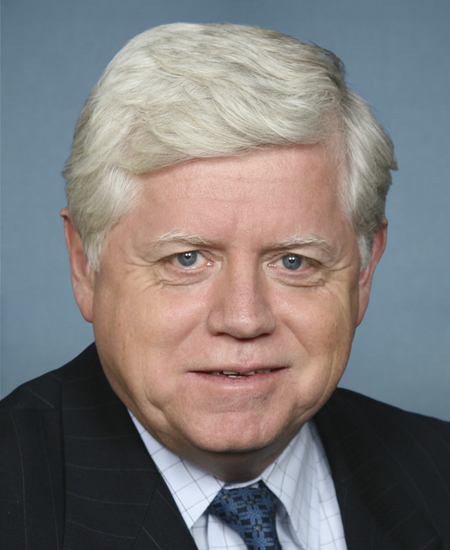
Rep. John B. Larson
Sponsored bills
Maddy summaryThis resolution condemns the use of federal regulatory agencies (like the FCC) or lawsuits to suppress lawful speech critical of political parties or the President, specifically referencing concerns about tactics mirroring authoritarian practices. It does not create new laws but formally warns that such actions undermine First Amendment protections and democratic norms. The resolution directly affects media organizations, journalists, and public discourse by calling on government agencies to avoid using their power for political retaliation. It reaffirms the House’s commitment to protecting free expression and urges officials to refrain from pressuring media to silence criticism.
Maddy summaryThe POJA Act of 2025 amends the Age Discrimination in Employment Act to explicitly prohibit age discrimination against job applicants, not just current employees. It directly affects job seekers aged 40 and older who face bias during hiring. The bill requires the Equal Employment Opportunity Commission to conduct a study within one year of enactment, counting age discrimination claims filed since 2015 (including closed cases), and issue a public report with prevention recommendations for employers. This study aims to address gaps in protecting applicants during the hiring process.
Maddy summaryThis bill requires most health insurance plans, Medicare Part D, Medicaid, and CHIP to cover vaccines recommended by the CDC's Advisory Committee on Immunization Practices (ACIP) without cost-sharing (like copays or deductibles). It applies to vaccines recommended as of October 25, 2024, including updates through 2029, and covers all such vaccines for the period starting when the bill is enacted until December 31, 2029. The requirement excludes vaccines given within minimum recommended intervals. It directly affects patients, insurers, and government health programs by ensuring no out-of-pocket costs for covered vaccines during this timeframe.
Maddy summaryHR 5476, the PARA Educators Act, provides federal grants to states to help recruit and retain school support staff (paraprofessionals) in public elementary, secondary, and preschool programs. It allocates funds based on previous Title I education funding, requiring states to prioritize schools serving high numbers of low-income students or those meeting specific poverty criteria. States can use the funds for proven programs like mentoring for paraprofessionals, professional development, helping staff earn credentials (e.g., special education or English learner certificates), and increasing wages or offering retention bonuses. The law mandates annual reporting on wage baselines, paraprofessional employment, and program outcomes. This bill directly affects paraprofessionals and the schools they support, particularly in high-poverty communities.
Maddy summaryThe Redistricting Reform Act of 2025 requires states to use independent redistricting commissions for congressional redistricting, banning partisan gerrymandering and requiring plans to comply with constitutional and Voting Rights Act standards. The bill establishes ranked criteria for redistricting, prioritizing population equality, voting rights protections, and community preservation over partisan advantage. It mandates multi-partisan commission composition with public input and transparency requirements, with states facing court-developed plans if they miss deadlines. The law would apply to redistricting after the 2030 census, affecting all 50 states' congressional district maps.
Maddy summaryHJRES 123 is a congressional disapproval resolution targeting a specific rule by the Centers for Medicare & Medicaid Services (CMS). It seeks to nullify CMS's June 2025 rule titled "Patient Protection and Affordable Care Act; Marketplace Integrity and Affordability," which was published in the Federal Register (90 Fed. Reg. 27074). If passed, the resolution would block this rule from taking effect under procedures outlined in Title 5, U.S. Code. The bill directly affects the CMS regulation governing the Affordable Care Act's health insurance marketplace, not the broader law itself.
Maddy summaryHJRES 122 proposes a constitutional amendment that would grant Congress and states explicit authority to regulate campaign contributions and spending intended to influence elections. It would allow for reasonable, viewpoint-neutral limits on how much money candidates and others can raise or spend, as well as enable public financing systems to reduce private wealth's influence in campaigns. The amendment would permit distinguishing between individuals and corporations in campaign finance rules, potentially banning corporate spending to influence elections. It explicitly states this amendment would not affect the freedom of the press.
Maddy summaryHRES 724 is a symbolic House resolution commemorating the eighth anniversary of Hurricane Maria’s 2017 devastation of Puerto Rico and the U.S. Virgin Islands. It honors victims and survivors while urging the Federal Emergency Management Agency (FEMA) to expedite disbursement of recovery funds and calling for Congress to prioritize resilient infrastructure investments in these territories. The resolution highlights ongoing challenges like power grid fragility, healthcare access gaps, and bureaucratic delays in federal aid - despite $23.4 billion in FEMA assistance and $20 billion in HUD disaster funds already allocated. As a non-binding resolution, it does not create new laws or funding but serves as a formal recognition of the storm’s lasting impacts and a call for continued support.
Maddy summaryThe Billionaires Income Tax Act (HR 5427) would require high-net-worth individuals with annual income over $100 million or assets over $1 billion to pay taxes annually on investment gains rather than deferring taxes until assets are sold. It eliminates the "buy, borrow, die" tax strategy by implementing annual mark-to-market taxation of investment assets and closing loopholes that allow tax-free transfers of appreciated assets to heirs. The bill applies to individuals meeting specific income or asset thresholds, as well as applicable trusts and entities with significant ownership interests, with provisions taking effect for taxable years beginning after December 31, 2025.