

Maddy summaryThis bill would pause most visa issuances and immigration status approvals until specific conditions are met under immigration law. It prohibits access to public schools for unauthorized immigrants, restricts citizenship eligibility to children born in the U.S. with at least one U.S. citizen or permanent resident parent, and bars certain benefits like Medicare, food assistance, and student loans for most non-citizens. The bill also imposes a $100,000 fee on H-1B work visa applications starting in 2026, terminates the Optional Practical Training program for international students, and repeals the Diversity Visa lottery program. These provisions directly affect immigrants seeking visas, students, and applicants for specific immigration pathways.
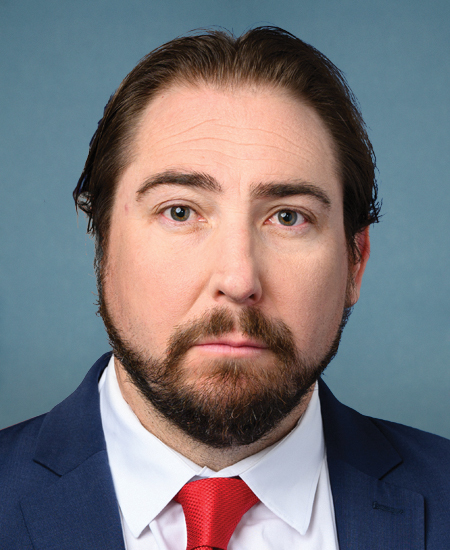
Rep. Elijah Crane
Sponsored bills
Maddy summaryHR 6019 repeals a requirement that Senate offices must be notified when legal requests seek Senate data. Specifically, it removes Section 213 of the 2026 appropriations act, which mandated that Senate offices be informed about legal processes requesting disclosure of Senate data. This change directly affects Senate offices by eliminating a procedural notification step for legal requests involving their data. The bill makes no other policy changes, solely removing this specific administrative requirement.
Maddy summaryHR 5107, the Common-Sense Law Enforcement and Accountability Now in DC Act (CLEAN DC Act), repeals D.C. Law 24-345 (the 2022 Comprehensive Policing and Justice Reform Amendment Act). This bill directly affects Washington, D.C.'s policing and justice systems by reversing all changes made under that 2022 law. The key mechanism is a straightforward repeal, restoring all prior District laws as if the 2022 reform had never been enacted. The bill does not introduce new provisions but undoes existing reforms to the District’s law enforcement framework.
Maddy summaryHR 4070, the Tren de Aragua Border Security Threat Assessment Act, requires the Secretary of Homeland Security to conduct a detailed assessment of the criminal threats posed by the Venezuelan gang Tren de Aragua to U.S. borders within 180 days of the bill's enactment. The assessment must cover the group's origins, methods, funding, and specific threats to the southwest, northern, and maritime borders, followed by a strategic plan within one year outlining how federal, state, and local agencies will counter these threats through information sharing, interdiction, and preventing the group's expansion in the U.S. The bill directly affects DHS, intelligence agencies, and border law enforcement partners by mandating these reports and planning processes.
Maddy summaryHRES 581 is a procedural resolution that establishes rules for the House to consider H.R. 185, the Epstein Files Transparency Act. It waives all points of order against the bill, adopts a specific amendment (the full text of the Epstein Files Transparency Act), and limits debate to one hour equally divided between the Judiciary Committee's chair and ranking minority member. The resolution also requires the Attorney General to release unclassified DOJ records related to Jeffrey Epstein within 30 days, with limited exceptions for privacy or national security.
Maddy summaryHRES 888 is a proposed resolution to formally censure and condemn Delegate Stacey Plaskett for coordinating with Jeffrey Epstein, a convicted sex offender, during a February 2019 congressional hearing. The resolution claims Plaskett received real-time text messages from Epstein with instructions on her questioning during the hearing. If passed, the resolution would remove Plaskett from the House Permanent Select Committee on Intelligence and direct the Committee on Ethics to investigate her ties to Epstein. This action directly affects Plaskett, the Delegate from the U.S. Virgin Islands, and addresses alleged misconduct during official congressional proceedings.
Maddy summaryThis bill amends the Immigration and Nationality Act to add new grounds for deporting non-citizens. It makes any non-citizen deportable if they have been convicted of a felony or two misdemeanors (under either state or federal law) after entering the United States. The key provision expands deportation eligibility beyond previous standards by explicitly including state misdemeanor convictions alongside federal offenses. This change directly affects non-citizens with specific criminal records, potentially increasing deportation risks for those with certain convictions. The policy alters the legal standard for removal but does not change sentencing or enforcement procedures.
Maddy summaryHRES 858 is a resolution by the U.S. House of Representatives to impeach Chief Judge James E. Boasberg of the U.S. District Court for the District of Columbia. It alleges he abused his authority by issuing "frivolous" nondisclosure orders that prevented Members of Congress from being notified of legal process and covered conservative organizations and individuals. These orders, the resolution claims, violated constitutional protections for Congress and a federal law (2 U.S.C. § 6628) safeguarding Senate communications. The resolution would send the impeachment charge to the U.S. Senate for trial, seeking removal from office.
Maddy summaryThis bill creates a temporary exception to the parole fee for non-citizens (aliens) entering the U.S. for sacred Tribal or religious ceremonies, cultural exchanges, or celebrations. During a two-year period starting from enactment, eligible aliens must undergo a background check, submit a written request to the Secretary of Homeland Security, be enrolled in a tribal cultural program operated by a federally recognized tribe with trust land near the Southwest border, and pay a $200 fee instead of the standard fee. The exception applies only when the Secretary determines the entry would provide a significant public benefit. It directly affects non-citizens seeking to participate in these cultural events and federally recognized tribes operating such programs.
Maddy summaryHRES 842 is a non-binding resolution expressing the House's support for placing a statue of Charles "Charlie" James Kirk in the Capitol's House wing. It honors Kirk, founder of Turning Point USA and a conservative political figure assassinated in 2025, for his advocacy of free expression, civic engagement, and conservative principles. The resolution directs the House Fine Arts Board to accept the statue and display it permanently by January 2, 2027, though actual placement remains subject to the Board's approval. This is a symbolic gesture to commemorate Kirk's legacy, not a new law with policy impacts.