

Maddy summaryThis bill directs the Federal Communications Commission to create a new content descriptor for video programming that depicts or discusses gender identity, transgender identity, or non-binary identity. The primary goal is to ensure this descriptor is displayed on children's programming, such as shows rated TV-Y, TV-Y7, or TV-G, so parents can use it with existing parental control tools like the V-chip. The legislation requires the FCC to first check if the voluntary TV Parental Guidelines have already added this descriptor; if they have not, the Commission must establish and enforce the new rating system. A key provision clarifies that the bill does not ban or censor any video content, focusing instead on labeling and parental guidance.
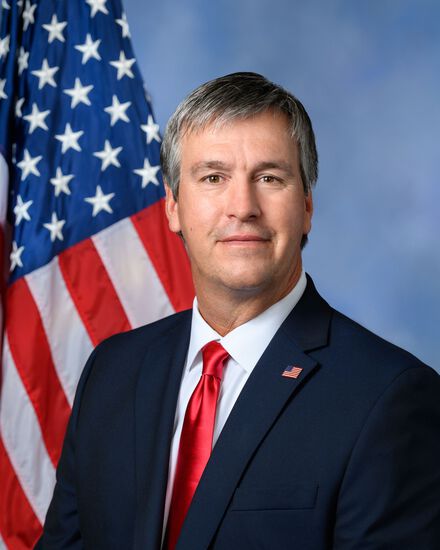
Sponsored bills
Maddy summaryH.Res. 1320 is a non-binding resolution that calls on all Americans to honor military personnel who died while serving in the pursuit of freedom and peace on Memorial Day 2026. The bill does not create new laws or change any policies; instead, it serves as a formal expression of gratitude and remembrance from the House of Representatives. Because it is a commemorative resolution rather than a procedural or funding measure, it has no direct legal effect on individuals or government operations.
Maddy summaryThe Recycling Infrastructure and Accessibility Act of 2025 establishes a competitive federal grant program to fund projects improving recycling access in underserved communities. It authorizes $30 million annually (2025-2029) for grants to states, local governments, tribes, or public-private partnerships to build infrastructure like transfer stations, expand curbside collection, or reduce transport costs. Grants must be $500,000-$15 million, with 70% reserved for projects in communities lacking a materials recovery facility within 75 miles. The program requires grantees to report on implementation and outcomes, excluding funding for recycling education.
Maddy summaryThe Freedom from Taxes Act of 2026 eliminates federal transfer and making taxes on firearms, which directly affects individuals buying or manufacturing guns. By setting these specific taxes to zero, the bill removes the $200 fee previously required when transferring or making certain firearms. The law also adds a time limit to a special tax, ensuring it no longer applies to years beginning after the bill takes effect. These changes would become active on the first day of the first calendar quarter starting more than 90 days after the legislation is signed into law.
Maddy summaryThis bill, titled the Restoring the American Homebuyers Dream Act, aims to share taxpayer information with immigration authorities to help enforce U.S. immigration laws. It modifies the Internal Revenue Code to allow the Department of Homeland Security to request specific details from individuals who use Individual Taxpayer Identification Numbers (ITINs). The information that can be shared includes the person's name, address, ITIN, filing status, and details about their dependents or spouse. The bill states that this data will only be used for immigration enforcement purposes and must be protected under the same rules as other taxpayer information.
Maddy summaryThis bill, titled the Deporting Illegal Poachers Act, would make non-citizens who break hunting or fishing laws subject to deportation. It directly affects foreign nationals who have been convicted of, admitted to, or whose actions constitute violations of state or federal rules regarding licenses, seasons, bag limits, or protected species. Under the new provisions, these individuals would be considered inadmissible to the United States and deportable if found guilty of such offenses, regardless of whether the crime is classified as a misdemeanor or felony. The law applies to violations occurring in any jurisdiction, including Tribal and local areas, without requiring the offense to be labeled as a serious crime under federal standards.
Maddy summaryThe Sister City Transparency Act directs the Comptroller General of the United States to conduct a study of sister city partnerships with foreign communities in countries scoring 45 or lower on the 2019 Corruption Perceptions Index. This investigation will examine how these partnerships are formed, what activities they include, and whether they pose risks such as economic coercion, espionage, or threats to free expression. The report, due within six months, will assess transparency levels and oversight practices while offering recommendations to improve how local governments manage these international agreements.
Maddy summaryThis bill, known as the ASSIMILATION Act, fundamentally restructures the U.S. immigration system by replacing family-based and lottery-based admissions with a merit-based approach that prioritizes economic self-sufficiency and national interest. It directly affects prospective immigrants, current visa holders, and employers by establishing new requirements for entry, employment, and naturalization. Key provisions eliminate the diversity visa lottery, restrict family-sponsored immigration to spouses and minor children, and mandate that all immigrants demonstrate the ability to support themselves without relying on government benefits. The legislation also introduces stricter enforcement measures, such as making visa overstays a criminal offense, expanding E-Verify to all employers, and requiring higher English proficiency and tax compliance for citizenship. Additionally, it tightens asylum rules by adding a transit bar for those passing through other countries and limits parole to specific humanitarian cases rather than broad programs.
Maddy summaryThe In God We Trust Act requires the Administrator of General Services to display the national motto "In God We Trust" on every public building within the United States. This mandate applies to all federal buildings and must be completed no later than one year after the law is enacted. The bill specifies that the motto must be inscribed or displayed in a prominent location on each structure.
Maddy summaryThis resolution formally designates May as Lyme and Tick-borne Disease Awareness Month to highlight the growing prevalence of these illnesses across the United States. The bill cites data showing a significant increase in reported cases and emergency room visits for tick bites, emphasizing the need for public education and early detection. By supporting this designation, the House aims to encourage awareness and promote better clinical responses to Lyme disease and related conditions. The measure does not create new laws or funding but serves as a symbolic gesture to draw attention to the issue.