Maddy summaryThis bill, known as the Direct File Act of 2026, would establish a government-run online platform for taxpayers to prepare and file their individual income tax returns for free. It requires the Treasury Department to create a user-friendly system that uses IRS data to simplify the process, offers customer support, and is available in multiple languages and on mobile devices. The legislation also prohibits the Treasury from entering into agreements that would limit its ability to provide these tax preparation and filing services. Additionally, the bill allows eligible states to integrate their state tax filing with the federal system and provides funding to states that meet certain standards for doing so.
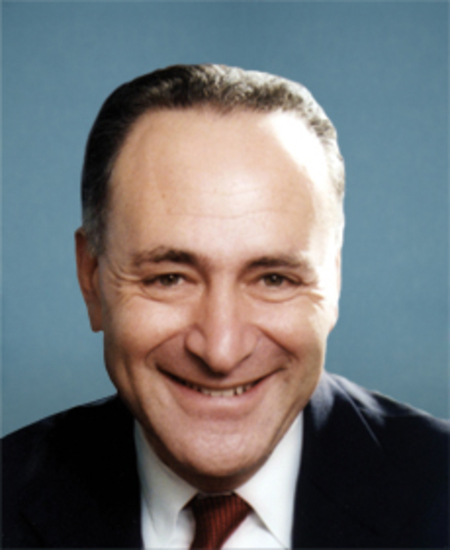
Sen. Charles E. Schumer
Sponsored bills
Maddy summarySRES 615 is a Senate resolution celebrating Black History Month, acknowledging the historical contributions of African Americans to U.S. society across fields like civil rights, arts, science, and leadership. The resolution encourages all citizens to reflect on this history as part of the nation's ongoing journey toward equality, without creating new laws or policies. It specifically recognizes figures such as Frederick Douglass, Maya Angelou, and Rosa Parks, and emphasizes the importance of Black History Month in February as a time for communal learning and inspiration. This ceremonial resolution was introduced by multiple senators and passed unanimously by the Senate in 2026.
Maddy summaryThis bill designates the Pride flag as an authorized flag eligible for display at all National Park System units. It specifically expresses the Senate's sense that the Pride flag should be restored at the Stonewall National Monument in New York City, which commemorates the 1969 LGBTQ rights uprising. The bill aims to affirm the monument's historical significance to LGBTQ rights while establishing the Pride flag as a standard display option across National Parks.
Maddy summarySRES 612 is a non-binding Senate resolution acknowledging the fourth anniversary of Russia’s February 2022 invasion of Ukraine. It reaffirms U.S. support for Ukraine’s sovereignty and territorial integrity within its 1991 borders, condemns Russia’s attacks on civilians and infrastructure, and emphasizes the need for sustained U.S. and transatlantic security guarantees. The resolution does not create new laws or funding but expresses congressional support for Ukraine’s defense and calls for continued international cooperation. It specifically highlights Russia’s targeting of Ukrainian children and U.S. companies as part of its aggression. As a symbolic gesture, it has no legal effect on policy or funding.
Maddy summaryS 3905, the Tariff Refund Act of 2026, requires U.S. Customs and Border Protection (CBP) to refund all duties unlawfully collected under the International Emergency Economic Powers Act (IEEPA) to importers within 180 days of the bill's enactment, including interest. It mandates CBP to reliquidate previously processed imports to calculate refunds and prioritizes small businesses for faster processing, with coordinated outreach to them via the Small Business Administration. The bill also requires CBP to submit regular reports to Congress detailing refund progress and timelines. This directly affects importers who paid IEEPA duties, with specific provisions to streamline refunds for small business importers.
Maddy summaryThe SAVES Act of 2025 establishes a five-year pilot program at the Department of Veterans Affairs (VA) to fund nonprofit organizations that provide service dogs to eligible veterans with specific disabilities, such as blindness, mobility issues, PTSD, or traumatic brain injury. Nonprofits must apply competitively, meet training and animal welfare standards (including ADA compliance), and provide service dogs at no cost to veterans, with the VA covering all program expenses. The VA will also provide ongoing veterinary insurance for the dogs, which continues even after the pilot ends. This program is funded with $10 million annually for five years, targeting veterans as defined by VA medical criteria.
Maddy summaryThis concurrent resolution (SCONRES 25) commemorates the 15th anniversary of the January 8, 2011, Tucson shooting that killed six people and injured 13, including former Congresswoman Gabby Giffords. It honors the victims (such as Judge John Roll, Gabriel Zimmerman, and 9-year-old Christina-Taylor Green), survivors like Giffords and Ron Barber (who later became a U.S. Representative), and the community's response. The resolution expresses support for survivors, recognizes Giffords’ advocacy against gun violence, and reaffirms commitment to respectful dialogue and opposing political violence. As a symbolic gesture, it does not enact new laws or policy changes.
Maddy summarySRES 609 authorizes three specific Senate employees - Ryan Alban (Senator Ted Budd's office), Lisa Gibbens (Senator Kevin Cramer's office), and Jill Wyman (Senator John Cornyn's office) - to testify in the federal criminal case *United States v. Crouse* (Cr. No. 23-393), excluding matters protected by Senate privileges. The resolution also directs the Senate Legal Counsel to represent these employees regarding their testimony in the case. This procedural resolution was adopted to comply with legal requirements and Senate rules governing testimony from Senate offices in federal court proceedings. It does not change laws or policies but addresses a court request for employee testimony related to official Senate duties.
Maddy summaryThe Healthy Families Act would require most private employers and certain government entities to provide employees with earned paid sick time, allowing workers to take up to 56 hours per year for their own health needs, caring for family members, or addressing domestic violence, sexual assault, or stalking. Employees would earn 1 hour of paid sick time for every 30 hours worked, with the ability to use it for medical appointments, caring for family members with health needs, or seeking safety from violence. The bill prohibits employers from retaliating against workers who use this time and requires employers to post clear notices about the policy. It applies to most private employers, with specific provisions for government entities like the Library of Congress and Government Accountability Office.
Maddy summarySRES 606 is a U.S. Senate resolution condemning the Iranian government for violently suppressing peaceful protests and the right to assemble, which has resulted in at least 6,126 reported deaths and 41,800 arrests since December 2025. It highlights Iran's use of internet blackouts, extrajudicial killings, arbitrary detentions, and censorship to crush nationwide demonstrations sparked by economic hardship. The resolution calls on Iran to hold free elections, allow citizens to determine their future, and hold human rights violators accountable, while commending protesters' courage. As a symbolic resolution (not a law), it expresses the Senate's stance without imposing new legal requirements.