

Telehealth Modernization Act This bill modifies requirements relating to coverage of telehealth services under Medicare. Specifically, the bill extends certain flexibilities that were initially authorized during the public health emergency relating to COVID-19 (i.e., coronavirus disease 2019). Among other things, the bill allows (1) rural health clinics and federally qualified health centers to serve as the distant site (i.e., the location of the health care practitioner); (2) the home of a beneficiary to serve as the originating site (i.e., the location of the beneficiary) for all services (rather than for only certain services); and (3) all types of practitioners to furnish telehealth services, as determined by the Centers for Medicare & Medicaid Services.
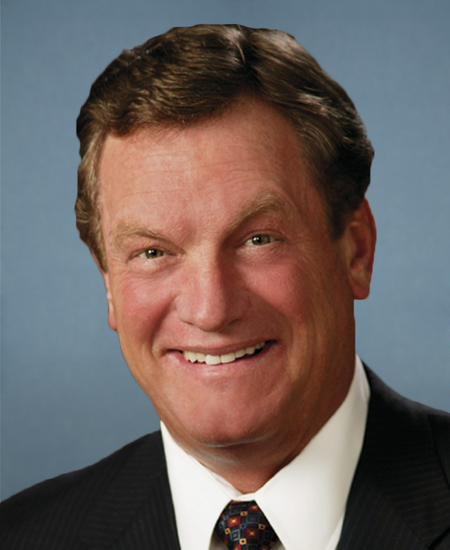
Rep. Michael K. Simpson
Sponsored bills
New Markets Tax Credit Extension Act of 2021 This bill makes the new markets tax credit permanent. It also modifies the credit to (1) provide for an inflation adjustment to the limitation amount for the credit after 2021, and (2) allow an offset against the alternative minimum tax for the credit (determined with respect to qualified equity investments initially made after 2020).
Dental Loan Repayment Assistance Act This bill modifies the requirements for calculating taxable income to exclude from gross income payments received under the federally funded student loan repayment program for full-time faculty members of dental schools with programs in general, pediatric, or public health dentistry. The bill also requires the Government Accountability Office to report to Congress on the participation of dental providers and faculty in areas and schools receiving funding under the program.
Saving America's Mines Act This bill bars the President, the Department of the Interior, or the Department of Agriculture from declaring a moratorium on or reversing any existing lease, permit, or claim, for the mining and extraction of any critical mineral or common varieties of sand, stone, and gravel on National Forest System or Bureau of Land Management land unless specifically authorized by statute or upon the lessee, permittee, or claimant's failure to comply with any of the provisions of its agreement.
Lessening Regulatory Costs and Establishing a Federal Regulatory Budget Act of 2021 This bill establishes procedures and provides statutory authority to reduce the number of federal regulations. Specifically, it requires each agency to establish a regulatory reform task force chaired by a designated regulatory reform officer. Each task force must, among other duties (1) review each existing agency regulation; (2) estimate the potential cost savings of repealing or modifying each regulation; and (3) identify regulations that are appropriate for repeal, replacement, or modification based on cost, effectiveness, and impact on employment. The bill further provides statutory authority for the executive order prohibiting agencies from issuing a new regulation with an economic impact of at least $100 million without identifying two regulations for repeal that will offset the cost of the proposed new regulation. Agencies also must submit a list of all planned regulatory actions for inclusion in the semiannual Unified Agenda of Federal Regulatory and Deregulatory Actions, including (1) the estimated economic effect of each action, and (2) proposed deregulatory actions to offset the cost of each proposed new regulation. Additionally, the Office of Management and Budget must establish an annual regulatory budget for each federal agency that specifies the net allowable increase in regulatory costs for each agency during the next fiscal year.
This concurrent resolution urges the United States to protect existing hydropower resources and increase substantially the capacity and generation of clean, renewable hydropower resources. In addition, it expresses the sense of Congress that hydropower is a renewable resource for purposes of all federal programs.
Pre-existing Conditions Protection Act of 2021 This bill reestablishes requirements for private health insurance plans with respect to preexisting conditions, guaranteed enrollment, and discrimination based on health-related factors if they are repealed by another law. In such event, the bill prohibits private health insurance plans from (1) limiting or excluding benefits covering preexisting conditions; (2) denying enrollment to employers or individual applicants, subject to specified limits; (3) establishing rules for eligibility based on an individual's health status; or (4) requiring an individual to a pay higher premium than similarly situated individuals enrolled in the plan based the individual's health status. The bill also prohibits plans from collecting genetic information in connection with issuing health insurance and provides requirements for workplace wellness programs connected to health insurance.
USPS Fairness Act This bill repeals the requirement that the U.S. Postal Service annually prepay future retirement health benefits.
Protecting Americans from Unnecessary Spread upon Entry from COVID-19 Act of 2021 or the PAUSE Act of 2021 This bill maintains immigration restrictions put in place under public health emergency authorities to prevent the introduction of COVID-19 (i.e., coronavirus disease 2019) from foreign countries. Specifically, the bill prohibits the Department of Health and Human Services from rescinding or reducing the stringency of the restrictions. It also prohibits the Department of Homeland Security from stopping or reducing enforcement of the restrictions. These prohibitions remain in effect until (1) federal and state COVID-19 emergency orders are lifted, and (2) the risk of introducing COVID-19 in or from Canada and Mexico is minimal.
This resolution expresses the gratitude of the House of Representatives to the members of the National Guard and law enforcement agencies who were deployed to the District of Columbia to ensure a safe and secure environment for the 59th inauguration.