

Maddy summaryThis House concurrent resolution supports designating the week of September 21 through September 25, 2026, as National Falls Prevention Awareness Week to highlight fall risks among adults over age 65. The bill cites statistics showing that falls are a leading cause of injury and death in this demographic, resulting in significant medical costs for Medicare, Medicaid, and private payors. It recognizes the effectiveness of cost-effective prevention strategies such as exercise programs, medication management, and home hazard reduction. Additionally, the resolution encourages federal investments in these programs and acknowledges the collaborative efforts of government agencies, health care providers, and community organizations to reduce fall risks.
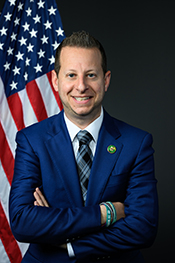
Rep. Jared Moskowitz
Sponsored bills
Maddy summaryThe Relief Without Delay Act ensures that FEMA can continue disaster relief operations and access its Disaster Relief Fund even if the government shuts down due to a lapse in appropriations. It requires FEMA to submit monthly public reports detailing how disaster funds are obligated and spent, while also mandating the Department of Housing and Urban Development to assess unmet housing needs after major disasters. Additionally, the bill directs NOAA and FEMA to improve tornado detection capabilities using new technologies like artificial intelligence and establishes a grant program for communities to build storm shelters and upgrade warning systems.
Maddy summaryThis bill officially changes the title of the U.S. Secret Service's uniformed officers from "Uniformed Division" to "Police" across multiple federal laws. The legislation directly affects the personnel and legal references within the U.S. Code by updating specific sections in Titles 2, 5, 10, 18, 28, and 31. By making these text replacements, the bill ensures that the agency's officers are consistently referred to as police in official statutes and regulations.
Maddy summaryHR 1653, the Civil Investigative Demand Reform Act of 2025, amends rules for the Consumer Financial Protection Bureau's (CFPB) information requests (civil investigative demands or CIDs) under the Consumer Financial Protection Act of 2010. It directly affects financial institutions and businesses under CFPB investigation by requiring CIDs to specify particular facts, extending the violation window to six years, and adding a process for attorneys to seek clarifications from the CFPB within 20 days. Key provisions include clearer legal grounds for challenging CIDs (such as undue burden or duplication) and allowing judicial review if the CFPB denies a request to modify or dismiss a CID. The bill aims to make the CID process more transparent and predictable for regulated entities.
Maddy summaryThis bill, known as the Post-Disaster Protection Act, extends the time limit for appealing federal disaster assistance decisions from 60 to 90 days. It directly affects individuals and communities seeking aid after natural disasters by amending the Robert T. Stafford Disaster Relief and Emergency Assistance Act. The change provides applicants with additional time to contest decisions regarding their eligibility or the amount of assistance they receive. This adjustment aims to give affected parties more time to review and challenge assistance determinations without rushing the appeals process.
Maddy summaryThe Pray Safe Act of 2025 establishes a federal Clearinghouse within the Department of Homeland Security to provide houses of worship, faith-based organizations, and nonprofit groups at risk of threats with evidence-based safety resources. The Clearinghouse will publish online best practices for security planning, facility safety, and incident response, while listing existing federal and state grant programs to help these organizations implement these measures. It requires annual updates based on user feedback and includes a centralized resource section for contacts like Protective Security Advisors and Fusion Centers. The program expires four years after enactment and does not create new funding but coordinates existing federal and state safety resources.
Maddy summaryThe No Grounds for Discrimination Act requires coffee shops, cafes, tea houses, and similar informal dining establishments to provide equal access to their goods and services without discrimination based on factors such as race, religion, sex, or disability. The bill directly affects these businesses by prohibiting segregation or refusal of service on the listed protected grounds. Enforcement of these rules would follow the same procedures used for violations of Title II of the Civil Rights Act of 1964.
Maddy summaryThis bill, titled the Restore Florida Water Independence Act of 2026, aims to streamline environmental permitting for the State of Florida by recognizing a specific federal biological opinion as fully compliant with the Endangered Species Act. By deeming this existing document sufficient, the legislation eliminates the need for additional federal consultations regarding dredge and fill projects under the Clean Water Act. The primary effect is to allow the Environmental Protection Agency to approve Florida's request to manage its own state-level permitting program without further federal oversight on these specific environmental matters.
Maddy summaryThis House resolution marks the 25th anniversary of the September 11, 2001 terrorist attacks by formally honoring the memory of the nearly 3,000 victims and recognizing the sacrifices made by first responders, military personnel, and the passengers of United Airlines Flight 93. The bill acknowledges the ongoing health challenges faced by survivors and responders, highlighting the role of the World Trade Center Health Program in providing long-term medical support. It also credits charitable organizations and community groups that have continued to assist victims' families and veterans over the past two decades. Finally, the resolution urges the American public to observe the anniversary with ceremonies and reaffirms Congress's commitment to remembering the events and lessons of that day.
Maddy summaryThe Foreign Propaganda Disclosure Act amends the Foreign Agents Registration Act to explicitly include social media influencers in its regulatory scope. The bill defines a social media influencer as any individual who maintains a monetized account on a social media platform, using an existing definition from the Trafficking Victims Prevention and Protection Reauthorization Act of 2022. By making this addition, the legislation requires these specific digital content creators to comply with the same registration and disclosure obligations currently applied to other foreign agents.