

Maddy summaryThe Quantum-GUARD Act of 2026 requires the Federal Energy Regulatory Commission to evaluate cybersecurity risks posed by quantum computers and the potential use of post-quantum cryptography when reviewing reliability standards for the bulk-power system. The bill directs the Department of Energy to establish a "PQC sandbox" within one year, bringing together grid operators, technology vendors, and government agencies to test and develop post-quantum security solutions for both information and operational technology systems. Additionally, the Secretary of Energy must conduct a study on the specific vulnerabilities of critical grid infrastructure to quantum threats and submit a report with recommendations to Congress within one year of enactment.
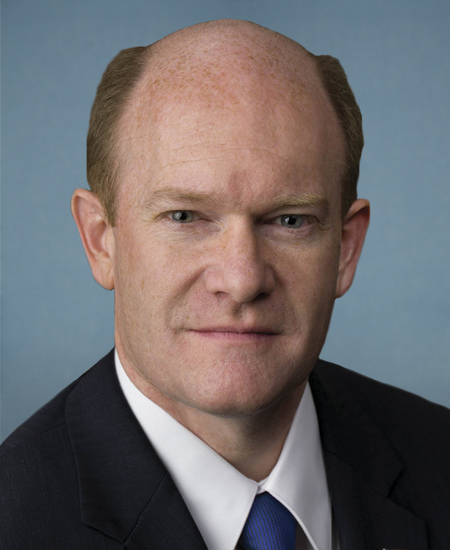
Sen. Christopher A. Coons
Sponsored bills
Maddy summaryThe Afghanistan TPS Act of 2026 grants Temporary Protected Status to Afghan nationals who have been continuously present in the United States since the bill's enactment, providing them with legal protection and work authorization until July 1, 2029. To qualify, applicants must register with biometric data and pass criminal and national security background checks, while the Department of Homeland Security is required to process these applications within 90 days, subject to a potential extension for specific security concerns. The legislation also allows recipients to apply for waivers on filing fees and permits brief international travel in cases of emergency or extenuating circumstances.
Maddy summaryThe Artificial Intelligence and Innovation Talent Act requires the Secretary of Homeland Security, in coordination with other federal officials, to develop a comprehensive strategy within 180 days to align immigration policies with national goals for attracting and retaining high-skilled talent in artificial intelligence and emerging technologies. The strategy must assess how current laws impact U.S. competitiveness, evaluate options for retaining foreign nationals trained in the United States, and identify specific high-priority occupations where domestic talent may be insufficient. Additionally, the plan must outline measures to protect national security through risk-based vetting and provide recommendations for administrative changes, such as revising the H-1B visa selection process, as well as potential legislative actions like creating a new visa class for entrepreneurs in critical sectors.
Maddy summaryThe NIH Mentorship Modernization Act requires the Secretary of Health and Human Services to establish minimum mentorship standards for institutions receiving National Institutes of Health career development, training, and fellowship awards. These standards mandate regular mentor-mentee engagement, professional development support, periodic progress assessments, and specific qualification requirements for mentors. To implement these changes, the bill directs that compliance be verified through existing annual reporting mechanisms to avoid duplicative administrative burdens, while also encouraging the adoption of evidence-based mentorship practices such as individualized development plans. The Secretary may provide supplemental funding to assist institutions with implementation costs, and the new standards will apply only to awards issued two years after the law's enactment.
Maddy summaryThe Protecting Pentagon Press Access Act directs the Secretary of Defense to restore physical access for credentialed journalists to the Pentagon, specifically returning them to the Correspondents' Corridor and other designated workspaces that were accessible prior to May 2025. The bill mandates that reporters regain unescorted entry to these areas and establishes a security credentialing process managed by career officials within the Pentagon Force Protection Agency, explicitly prohibiting political interference or delays in the review. Additionally, it requires the Department of Defense to consult with congressional Armed Services Committees before making any future changes to press access policies, workspaces, or credential requirements.
Maddy summaryThe Kids Online Safety Act (S 1748) requires major social media platforms, online video games, and other "covered platforms" to implement specific safety features for minors (under 17). These features include default privacy settings that limit harmful design features like infinite scrolling and auto-play, parental controls for managing minors' accounts, and restrictions on advertising illegal products to minors. The bill also mandates annual transparency reports about how platforms are used by minors and requires platforms to provide clear notices about their content algorithms. It creates a Kids Online Safety Council to advise Congress on online safety issues for children. The law applies to platforms with more than 10 million monthly users in the U.S. and takes effect 18 months after enactment.
Maddy summaryThe Protect and Serve Act of 2026 creates a new federal crime for willfully attempting to kill a law enforcement officer solely because of their status, provided the act involves interstate travel, commerce, weapons, or affects economic activity. This law applies to both state and federal officers and mandates that any federal prosecution must be certified by the Attorney General, who must determine if state charges were insufficient or if federal intervention serves the public interest. The bill defines a law enforcement officer as anyone authorized to prevent, detect, or investigate crimes, or to detain individuals, and sets specific prison terms ranging from years to life depending on whether the attempt results in serious bodily injury.
Maddy summaryThis resolution designates August 1, 2026, as Gold Star Children's Day to honor the sacrifices and hardships faced by children of fallen members of the U.S. Armed Forces. The bill does not create new laws or change government operations; instead, it serves as a formal expression of gratitude from the Senate and encourages the public to observe this day in support of these families. By establishing this specific date, the measure aims to raise awareness about the legacy carried by children who lost a parent in military service.
Maddy summaryThe Lori Jackson-Nicolette Elias Domestic Violence Survivor Protection Act expands federal firearm restrictions to include individuals subject to any domestic violence restraining order, including temporary or emergency orders issued without the abuser's presence. It broadens the legal definition of an "intimate partner" to cover dating partners and other relationships protected by state laws, closing previous loopholes that allowed some abusers to keep guns. The bill also creates a federal grant program for states and tribes to fund the removal, storage, and return of firearms from individuals subject to these orders, requiring them to partner with local domestic violence service providers to ensure victim safety.
Maddy summaryThe Build to Scale Reauthorization Act of 2026 extends federal funding for the Regional Innovation Program through fiscal year 2030, providing up to $50 million annually to support economic development in specific areas. The bill defines eligible partners as state or nonprofit organizations that offer direct financing, commercialization services, and entrepreneurial support to local businesses. It mandates that the federal government contribute no more than 50 percent of project costs, with an additional 40 percent available based on regional needs, and requires outreach to rural communities and areas facing economic distress. Additionally, the legislation allows agencies to use unspent funds from previous years and updates the program's focus to include specific initiatives aimed at accelerating innovation.