

Maddy summaryThis bill requires the Department of Defense to review and eventually ban contracts with retailers that use payment processing systems from specific countries deemed a national security risk, such as China, Russia, Iran, and North Korea. Effective January 1, 2027, the Defense Department will be prohibited from entering into agreements for payment equipment or services if those tools rely on technology developed, owned, or controlled by entities in these nations. The law defines covered systems broadly to include hardware, software, and firmware linked to these countries, aiming to prevent potential foreign access to sensitive military financial data. Retailers wishing to continue working with the Department of Defense must replace their payment processing infrastructure with systems that do not involve these restricted technologies.
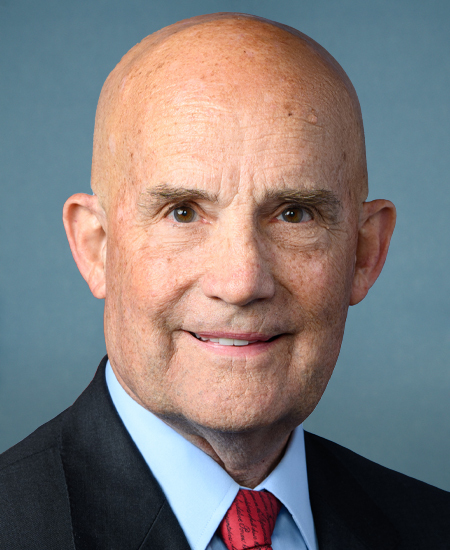
Rep. Keith Self
Sponsored bills
Maddy summaryThis bill repeals or modifies numerous existing laws that require the State Department and other federal agencies to submit specific recurring reports to Congress. By removing or extending the deadlines for these reports, the legislation reduces the frequency of submissions for many foreign policy and security-related topics, such as sanctions compliance, defense trade, and international treaties. The changes primarily affect government agencies responsible for drafting and filing these documents, while also altering the reporting schedules for various legislative acts that have been in place for years. Overall, the bill streamlines congressional oversight by eliminating some mandatory reporting requirements and extending the duration of others.
Maddy summaryThe Military Chaplains Modernization Act of 2026 updates federal laws to clarify the roles, protections, and appointment requirements for Army, Navy, and Air Force chaplains, including those serving the Space Force. The bill establishes specific duties for chaplains to advise commanders on religious freedom, provide spiritual care, and manage religious accommodations while ensuring their work aligns with their sincerely held religious beliefs. It also creates new protections that prevent military members from forcing chaplains to perform rites or tasks contrary to their faith and prohibits retaliation against chaplains who refuse such orders. Additionally, the legislation defines the qualifications for chaplains and sets grade levels for deputy chief positions within each service branch.
Maddy summaryThe CHARGE Act prohibits the sale, import, or distribution of electric vehicles and related equipment manufactured by foreign entities of concern, specifically targeting Chinese companies. To enforce this, the bill adds new definitions to U.S. law that classify vehicles using specific Chinese-made power control components as noncompliant. The legislation aims to protect the national electrical grid from potential disruptions caused by unregulated remote software updates and coordinated attacks from adversarial manufacturers. By restricting these imports, the bill seeks to prevent vulnerabilities that could lead to power outages or damage to connected devices.
Maddy summaryThe PICTURE Act requires the Bureau of Prisons to maintain a photographic directory for all federal prisoners. This directory must include a clear, unobstructed photo of each prisoner's face. The bill amends existing federal law to establish this requirement for record-keeping purposes.
Maddy summaryThe CRUSADE Act amends immigration law to require applicants for special immigrant visas to explicitly disavow Sharia law. Under this provision, individuals seeking these specific visas must take an additional oath affirming their commitment to uphold the U.S. Constitution. The bill directly affects foreign nationals applying for special immigrant status by adding a new eligibility requirement related to their legal and religious beliefs. This change does not alter the general immigration process but imposes a specific condition on one category of visa applicants.
Maddy summaryThe Connected Vehicle Security Act of 2026 restricts the importation, sale, and manufacture of vehicles and related technology from specific countries, including China, Russia, Iran, and North Korea, to address national security concerns. The law defines prohibited items as connected vehicles, their software, and hardware components and sets different effective dates, with vehicle bans starting in 2027 and hardware restrictions beginning in 2030. A government official can grant exceptions for specific items after reviewing security risks and notifying Congress, while the agency must publish annual reports on enforcement actions and compliance.
Maddy summaryThis resolution expresses the House of Representatives' support for keeping United States troops as part of the Kosovo Force (KFOR). The bill directly affects the roughly 600 U.S. military personnel currently stationed in Kosovo and the NATO mission they support. It asserts that maintaining this presence is vital for stabilizing the region amid ongoing tensions between Kosovo and Serbia. The text urges that American forces remain in Kosovo until the peace mission is fully completed.
Maddy summaryThis resolution expresses the House of Representatives' support for Kosovo joining NATO, directly affecting U.S. foreign policy and relations with the Western Balkans. It outlines a specific path for Kosovo to become a full member by first joining the Partnership for Peace and then the Membership Action Plan. The bill also calls on the United States to encourage other NATO countries that do not recognize Kosovo to change their stance and to provide security assistance to Kosovo's defense and intelligence agencies. Additionally, it emphasizes that improving relations between Kosovo and Serbia should not delay Kosovo's progress toward NATO membership.
Maddy summaryThis bill proposes to amend federal law to prohibit marriages between individuals who are first cousins or closer relatives. It directly affects couples seeking to marry within the United States government's jurisdiction by adding them to the list of prohibited relationships. The key mechanism is a specific change to the U.S. Code that removes the legal exception allowing first cousins to marry. This legislation would make such unions federally invalid, though it does not alter state laws regarding marriage.