Academic Partnerships Lead Us to Success Act or the A PLUS Act This bill creates a framework under which states may receive federal elementary and secondary education funds on a consolidated basis and use such funds for any educational purpose permitted by state law.
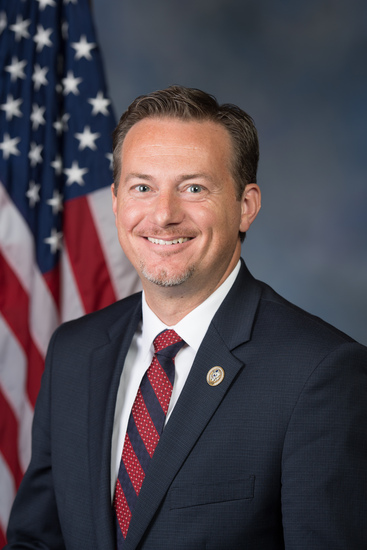
Rep. Michael Cloud
Sponsored bills
Protecting Life in Foreign Assistance Act This bill prohibits the use of federal funds for purposes outside the United States related to abortion. Specifically, the bill prohibits funding to certain foreign or domestic organizations that perform or promote abortions, furnish or develop items intended to procure abortions, or provide financial support for an entity that conducts such activities. Current U.S. policy prohibits the provision of federal funds to a foreign nongovernmental organization unless it agrees to not perform or actively promote abortions.
No Abortion Bonds Act This bill denies a tax exclusion for the interest paid on state and local bonds that are used to provide a facility owned or used (for any purpose) by an abortion provider for more than 30 days during a year in which interest is paid on the bonds. An entity is not considered an abortion provider solely as a result of performing abortions if (1) the pregnancy is the result of an act of rape or incest; or (2) a woman suffers from a physical disorder, physical injury, or physical illness that would, as certified by a physician, place the woman in danger of death unless an abortion is performed, including a life-endangering physical condition caused by or arising from the pregnancy itself. The Department of the Treasury may exempt certain hospitals from being considered an abortion provider by making the name of the hospital available on Treasury's public website.
This bill requires the Department of State to establish the Unit to Audit US Contributions to Multilateral and International Organizations to audit and report on the contributions to those organizations during the preceding fiscal year.
No Taxpayer Funding for the World Health Organization Act This bill prohibits the United States from providing any assessed or voluntary contributions to the World Health Organization.
No Taxpayer Funding for Paris Climate Agreement Act This bill prohibits the use of any funds to take action providing for the United States to become a party to the Paris Agreement.
Transparent Representation Upholding Service and Trust in Congress Act or the TRUST in Congress Act This bill requires a Member of Congress, as well as any spouse or dependent child of a Member, to place specified investments into a qualified blind trust (i.e., an arrangement in which certain financial holdings are placed in someone else's control to avoid a possible conflict of interest) until 180 days after the end of their tenure as a Member of Congress.
Pandemic Healthcare Access Act This bill preserves the eligibility of health savings account (HSA) participants covered by any health plan during the coronavirus emergency period. The coronavirus emergency period is the period beginning on March 13, 2020, and ending on the later of (1) the last day on which a presidential declaration of emergency under the Robert T. Stafford Disaster Relief and Emergency Assistance Act with respect to the coronavirus (i.e., the virus that causes COVID-19) is in effect, or (2) the last day on which a presidential declaration of national emergency under the National Emergencies Act with respect to the coronavirus is in effect.
Federal Reserve Transparency Act of 2021 This bill establishes requirements regarding audits of certain financial agencies performed by the Government Accountability Office (GAO). Specifically, the bill directs the GAO to complete, within 12 months, an audit of the Federal Reserve Board and Federal Reserve banks. In addition, the bill allows the GAO to audit the Federal Reserve Board and Federal Reserve banks with respect to (1) international financial transactions; (2) deliberations, decisions, or actions on monetary policy matters; (3) transactions made under the direction of the Federal Open Market Committee; and (4) discussions or communications among Federal Reserve officers, board members, and employees regarding any of these matters.