

Maddy summaryHR 1653, the Civil Investigative Demand Reform Act of 2025, amends rules for the Consumer Financial Protection Bureau's (CFPB) information requests (civil investigative demands or CIDs) under the Consumer Financial Protection Act of 2010. It directly affects financial institutions and businesses under CFPB investigation by requiring CIDs to specify particular facts, extending the violation window to six years, and adding a process for attorneys to seek clarifications from the CFPB within 20 days. Key provisions include clearer legal grounds for challenging CIDs (such as undue burden or duplication) and allowing judicial review if the CFPB denies a request to modify or dismiss a CID. The bill aims to make the CID process more transparent and predictable for regulated entities.
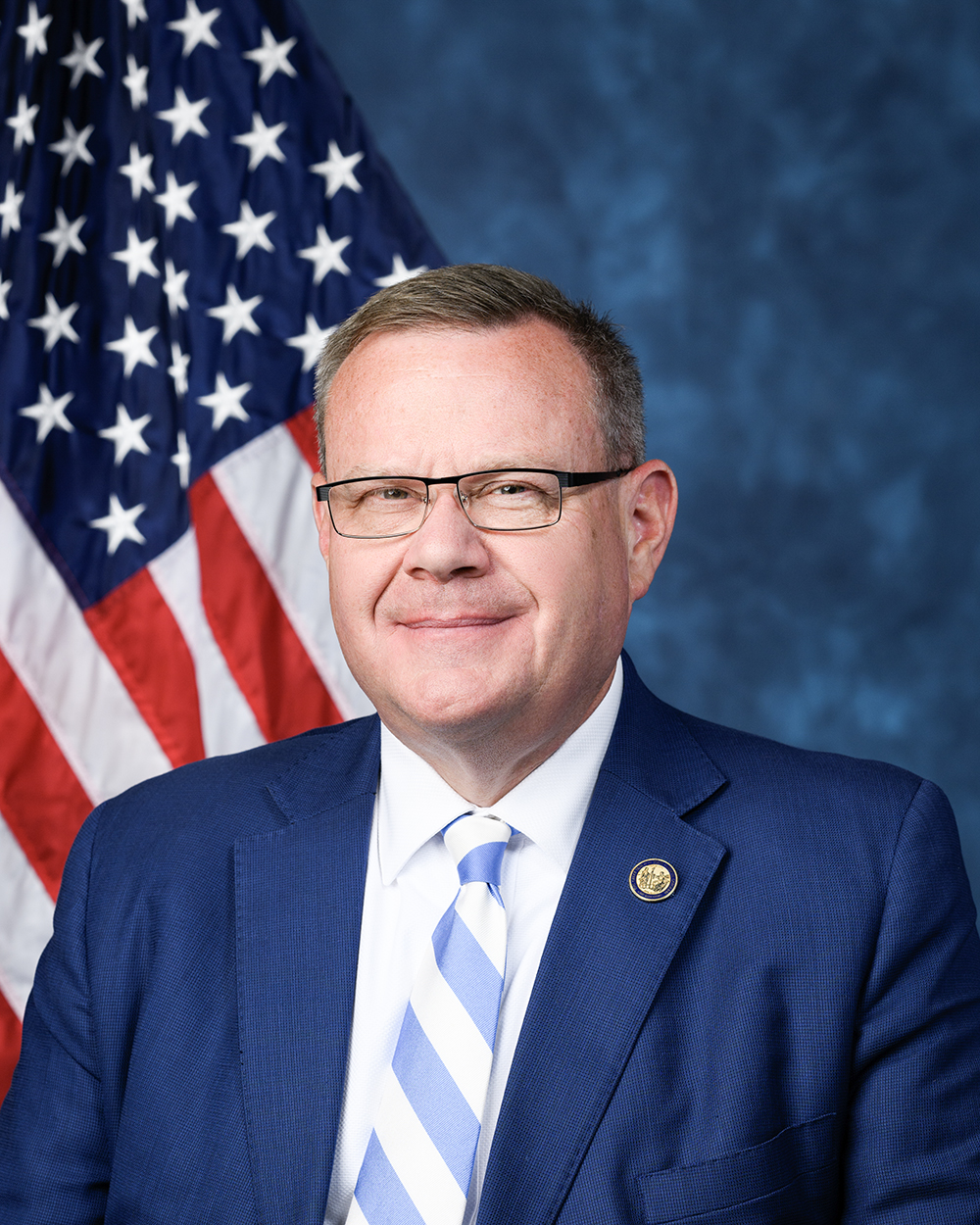
Rep. Tim Moore
Sponsored bills
Maddy summaryThis bill amends the Robert T. Stafford Disaster Relief Act to explicitly prohibit discrimination based on political affiliation when distributing federal disaster assistance. It directly affects all FEMA disaster aid programs by requiring that eligibility and aid distribution consider political affiliation as a prohibited factor, alongside existing protections for economic status. The key change is adding "political affiliation" to the list of protected categories in Section 308(a) of the law. This is a procedural update to existing federal disaster law with no new funding or program changes.
Maddy summaryHR 1266, the Combating Illicit Xylazine Act, adds xylazine - a veterinary sedative increasingly found in illicit drug mixtures - to Schedule III of the Controlled Substances Act, regulating its use and trafficking. It directly affects veterinarians, animal owners, and manufacturers by allowing xylazine to be legally dispensed for animal use under specific veterinary prescriptions, while prohibiting non-veterinary human use. The bill includes transition periods (60 days for practitioners, 1 year for labeling) to ease compliance for manufacturers and practitioners, and requires the DEA and FDA to expedite necessary applications. It also mandates two congressional reports on xylazine's illicit use and trafficking patterns, and directs the Sentencing Commission to review penalties for offenses involving xylazine.
Maddy summaryThis bill requires all new passenger vehicles manufactured for sale in the U.S. to include AM radio as standard equipment (not an optional add-on) by 2027-2028, depending on manufacturer size. It mandates that AM radio receivers must be easily accessible to drivers and allows compliance through digital AM broadcast technology. During a transition period, manufacturers must clearly label vehicles without AM radio but cannot charge extra for this feature. The bill also mandates a GAO study on AM radio's role in emergency alerts and includes a 10-year sunset provision for the rule. It preempts state laws regarding AM radio access in vehicles.
Maddy summaryThis bill authorizes the Secretary of the Army to transfer approximately 20 acres of land at Fort Bragg in North Carolina to the state government without charge. The property is intended for the construction of a veterans' home under the jurisdiction of the North Carolina Department of Military and Veterans Affairs. The state is required to pay all costs associated with the transfer, including environmental reviews and administrative fees, with any excess prepayments refunded by the federal government. If the land is no longer used for the designated veterans' facility, ownership may revert to the United States at the Secretary's discretion.
National Law Enforcement Officers Remembrance, Support and Community Outreach Act. [ sic ] This bill temporarily directs the Department of the Interior to award a grant to the National Law Enforcement Officers Memorial Fund for the expenses associated with operating and enhancing the community outreach, public education, and officer safety and wellness programs of the National Law Enforcement Museum.
Maddy summaryThe Cost Estimates Improvement Act requires the Congressional Budget Office and the Joint Committee on Taxation to include public debt servicing costs in their financial estimates, to the extent practicable. This change directly affects federal budgeting processes by ensuring that the interest payments on national debt are factored into official cost projections for new legislation. The bill amends the Congressional Budget and Impoundment Control Act of 1974 to mandate this specific inclusion in all future estimates prepared by these two bodies.
Maddy summaryThe Title IX Clarification Act of 2026 amends federal education law to explicitly define the terms "sex," "female," and "male" based on biological characteristics. Specifically, it states that "sex" refers to an individual's biologically determined status as male or female, while "female" and "male" are defined by the presence of specific reproductive systems capable of producing ova or sperm, respectively. These definitions apply to all education programs and activities that receive federal financial assistance starting on the date the bill becomes law. The legislation aims to clarify existing statutes by removing ambiguity around biological sex definitions in the context of Title IX protections.
Maddy summaryHR 5267, the American Franchise Act, clarifies when franchisors can be considered joint employers of franchisee employees under federal labor laws. It defines "substantial direct and immediate control" over essential employment terms like wages, benefits, hours, hiring, and discipline - requiring franchisors to actively set these terms to be deemed joint employers. The bill explicitly excludes routine brand standards, training, or minimal safety requirements from constituting such control. This directly affects franchisors and franchisees by limiting joint employer liability to cases where franchisors exert significant, ongoing influence over core employment decisions. The law applies prospectively to new cases after enactment, not past disputes.
Maddy summaryThis House resolution marks the 25th anniversary of the September 11, 2001 terrorist attacks by formally honoring the memory of the nearly 3,000 victims and recognizing the sacrifices made by first responders, military personnel, and the passengers of United Airlines Flight 93. The bill acknowledges the ongoing health challenges faced by survivors and responders, highlighting the role of the World Trade Center Health Program in providing long-term medical support. It also credits charitable organizations and community groups that have continued to assist victims' families and veterans over the past two decades. Finally, the resolution urges the American public to observe the anniversary with ceremonies and reaffirms Congress's commitment to remembering the events and lessons of that day.